
Home Industry Healthcare Could an Armed Rebel Group Def...
CIO Bulletin
,
13 July, 2026
Author:
Gayathri Sr
While the official government struggles with rising casualties eastern rebel forces claim total victory over the outbreak using parallel medical administrations and secret foreign aid.
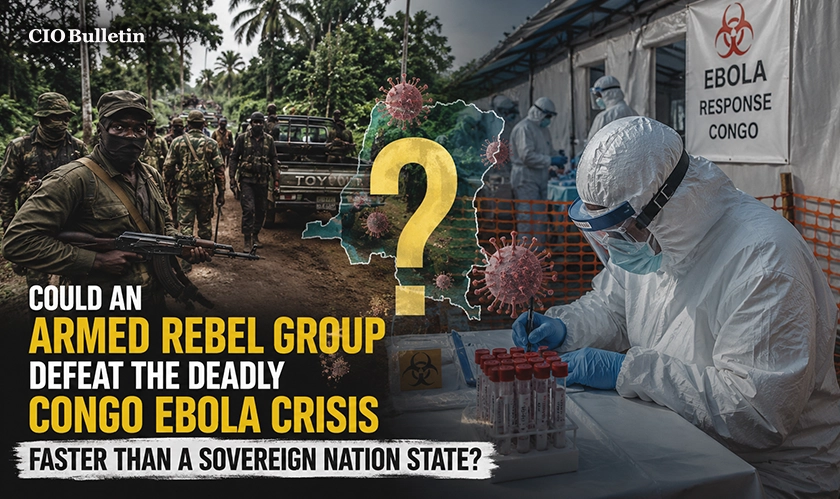
A startling healthcare revolution is shaking eastern Africa as an active rebel army claims to have successfully wiped out a local outbreak of the deadly Congo Ebola virus within its borders. According to an exclusive investigative report tracked by CIO Bulletin, the heavily armed AFC/M23 rebel group has created its own fully operational medical governance system completely separate from the central government in Kinshasa. While the official state healthcare system continues to experience a devastating surge in casualties, these insurgent forces are using strict discipline to manage their own health crisis.
Following a rapid military advance that captured major eastern cities, the rebel forces encountered the dreaded disease. Instead of waiting for official state help, they launched a highly coordinated Congo Ebola response that completely surprised international onlookers.
Extreme Isolation Policies: The group instantly cut off bus travel to government-held regions and enforced mandatory fifteen-day quarantines for traveling journalists and citizens.
Secret Alliances: Bypassing local authorities, the rebels turned directly to neighboring Rwanda for elite medical specialists and thousands of dollars in protective gear.
Zero New Cases: The group recently declared its territory completely virus-free after a flawless three-week monitoring window.
This unprecedented move has sparked massive global debate. While the broader Congo Ebola outbreak has tragically infected over 1,800 people and claimed 672 lives nationwide under state control, the rebel-held zones recorded only four cases before successfully locking down. Political analysts suggest this health initiative is a clever strategy to win international validation.
“AFC/M23 is keen to demonstrate its capacity to function as a state and manage a public health crisis better than the Congolese government,” explained Reagan Miviri, a prominent researcher at the Kinshasa-based Ebuteli institute.
However, the victory remains fragile. With severe shortages of testing kits, fuel, and closed local airports, international experts warn that any sudden spike in frontline infections could instantly shatter the rebels' makeshift medical defenses.
Everything you need to know about this news
While international bodies like the WHO track data globally, local factions controlling physical territories often make independent declarations based on their independent monitoring periods to assert governance.
Through extreme military-enforced discipline, immediate contact tracing, and total isolation of suspect border towns, which stopped internal transmission before it could multiply.
Neighboring countries view highly infectious diseases as borderless threats. Providing direct administrative and medical support ensures the virus does not spill over into their own citizens.
Cooperation is minimal and strictly limited to basic data sharing and laboratory sample testing, facilitated quietly by neutral United Nations aid agencies.
Medical experts fear a massive catastrophe, as the rebel infrastructure suffers from acute shortages of basic protective gear, vehicle fuel, and financial resources.











.webp)



































 consultants ltd.jpg)


Comments