
Home Technology Security Can United Nations Resolutions...
CIO Bulletin
,
30 June, 2026
Author:
Sambhrant Das
International bodies convene an extraordinary session to address military mobilization waves around a critical administrative hub and curb the devastating humanitarian toll of the ongoing regional crisis.
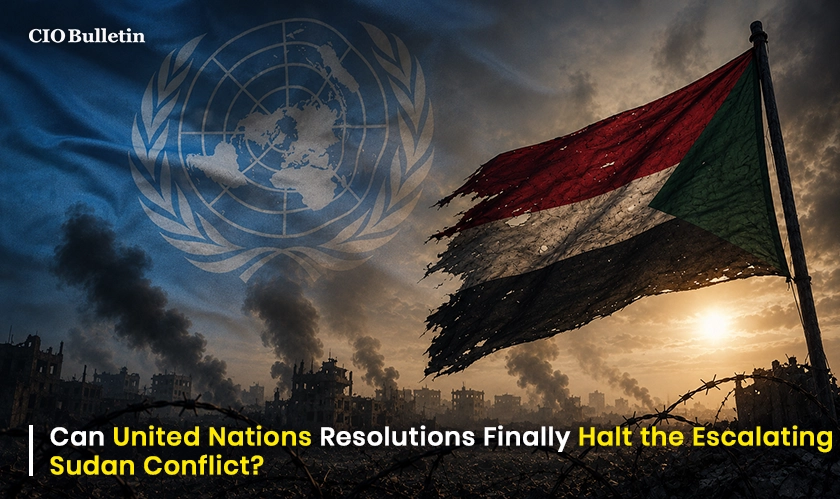
The severe structural fragmentation of regional security zones demands immediate, multi-tiered diplomatic interventions. Confronted by an intensifying humanitarian crisis, the United Nations Human Rights Council formally processed an international appeal to schedule a mandatory extraordinary session to address the worsening Sudan Conflict. This institutional reaction follows definitive monitoring intelligence indicating a substantial gathering of armed forces. Analysts suggest that the tactical encirclement of a pivotal administrative crossroads threatens to completely sever remaining civil distribution networks across the state.
Maintaining basic civil stability during intense military encirclement requires absolute compliance with established international human rights baselines. The impending emergency session explicitly evaluates the tactical build-up of the paramilitary Rapid Support Forces along critical defensive perimeters. Global monitors expect the diplomatic task force to prioritize distinct operational objectives:
Direct monitoring of transport hubs to ensure the unhindered movement of regional medical supplies.
Immediate enforcement of absolute protection parameters for vulnerable non-combatant residential zones.
Independent tracking of unauthorized advanced drone deployments within high-density suburban communities.
Halting regional atrocities requires unified diplomatic accountability over short-term political posturing. The structural blueprint for the upcoming discussions emphasizes creating a transparent verification network to catalog systemic humanitarian breaches in real time.
The formal diplomatic request was jointly presented by a coalition of member states, including Britain and Germany, to address the immediate risk of a catastrophic territorial offensive.
Local distribution corridors within North Kordofan have deteriorated due to extended blockades and regular long-range bombardment campaigns. Standard humanitarian aid channels consistently break down when confronted with evolving front lines and unauthorized municipal governance models. By implementing independent oversight missions, the council aims to counter unauthorized external supply lines that feed the warring factions. This focus on verifiable institutional pressure attempts to establish a standardized accountability structure before large-scale infantry deployments begin.
The operational mechanisms managing regional security interventions are projected to undergo fundamental structural revisions throughout the remainder of 2026. Global legislative assemblies intend to continuously adjust their observation frameworks based on real-time field reports and changing urban security parameters. CIO Bulletin sees this development as a required action to put international legal accountability ahead of uncoordinated territorial concessions.
Everything you need to know about this news
This is because the session answers directly to a huge clustering of paramilitary forces around a crucial city, and the situation could well set off extensive harm to civilians.
A European-led coalition that includes Great Britain and Germany sent in the formal request to address the worsening, multi-regional crisis.
The municipality is bracing for a possible full ground offensive after months of constricting siege conditions, drone strikes, and supply lines that have been cut off.
With the ongoing inflow of foreign arms and automated hardware, both sides can continue high-intensity fighting for a long time.
The Council wants to form an independent fact-finding mission to look into continuing violations and to push for transparency from foreign participants.












.webp)



































 consultants ltd.jpg)


Comments