
Home Industry Fintech What Truly Defines the Best Fo...
CIO Bulletin
,
03 September, 2026
Author:
Guest
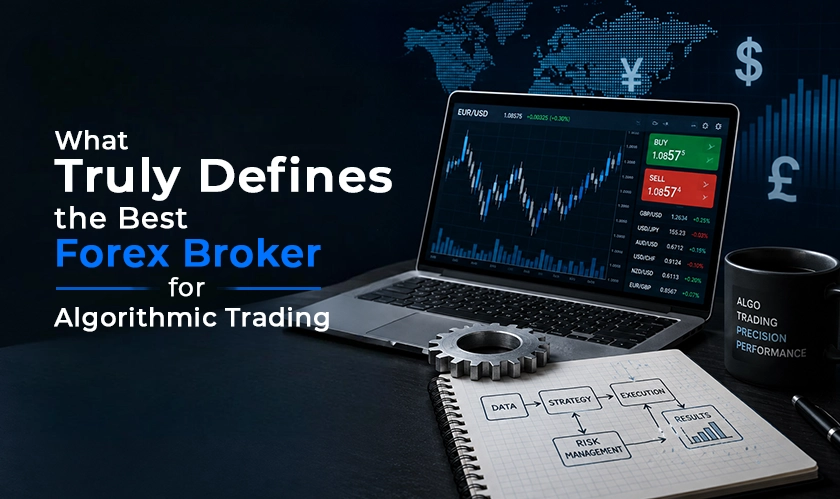
Not that long ago, running trading bots meant you needed a seat at an institutional desk. That has changed. Plenty of retail traders now run automated strategies from a spare room, firing off orders in the time it takes to blink. And here is the part people tend to underestimate: the broker behind your code shapes your results almost as much as the code itself. You can spend weeks tuning a strategy, only to watch a sluggish or expensive broker chip away at every edge you built.
So how do you tell a decent broker apart from one that can actually keep up? It comes down to a few practical things working together rather than any single headline feature. When you go looking for the best forex broker for algorithmic trading, it pays to ignore the marketing gloss and dig into the technical bits that decide whether your bots thrive. What follows are the areas worth checking before you commit.
For anything automated, speed simply matters. A tiny hesitation between signal and fill can flip a winning trade into a loser, and that gap widens fast around news events. The brokers that do this well pour money into the parts of the system nobody ever sees.
Low latency routing: Quick order execution keeps slippage down on high-frequency and automated setups.
Data center proximity: Cross-connects at big hubs like Equinix situate your orders physically nearer the liquidity providers.
Server stability: Reliable uptime and steady routing count for more, day to day, than one impressive speed stat.
Your broker has to work with whatever your bots are built on, and the better platforms leave you room to grow instead of hemming you in. Pick one that fits now, and later, so you are not forced into a painful migration down the road.
MetaTrader 4 and 5: MQL4 and MQL5 support is still the bread and butter of retail automation.
cTrader: Handy if you lean towards C# and want proper depth-of-market detail.
Open APIs: Solid Python or Java access means you can build a fully custom engine on your own terms.
Trade a few hundred times a week and small costs stop being small. That is why the pricing model deserves a proper look. Add up what a full round-turn trade actually costs you rather than glancing at the advertised spread.
Raw spreads: ECN or STP pricing from 0.0 pips keeps your entries and exits tidy.
Transparent commissions: A plain, low per-lot fee beats a spread quietly padded with mark-ups.
No surprises: Predictable costs let you trust the numbers your backtests spit out.
Regulation is what lets you sleep while your algorithms trade for you. A broker holding a recognized regulatory license has to play by strict rules, and getting familiar with those consumer safeguards is worth your time.
Leverage caps: Retail clients face a 50:1 limit on major pairs, which reins in reckless exposure.
Negative balance protection: A wild market swing cannot push you below zero.
Segregated accounts: Your money sits in a separate trust account, ring-fenced if the broker goes under.
First-in, first-out rules can hobble a clever strategy before it gets going. The brokers best suited to automation let you manage positions freely, so your bots can hedge, scale, and run several trades side by side without arbitrary limits. That kind of freedom really shows its worth with grid systems, hedging bots, and anything juggling correlated positions because it lets your code behave exactly how you meant it to.
No two traders want the same thing, so be honest about your own priorities before you sign anything. A few clear answers up front save a world of frustration later.
Define your platform: Work out whether you are set on a Python API, MT5, or cTrader before shopping around.
Clarify your frequency: Scalpers and high-frequency systems live or die on latency, while swing setups can cope with a touch more delay.
Test before scaling: Open a demo and judge real fill quality yourself rather than taking the spec sheet at its word.
The best forex broker for algorithmic trading is hardly ever the one shouting loudest in its ads. It is the quiet performer that gives you fast fills, flexible platforms, honest pricing, and dependable regulatory oversight. Keep in mind that what suits a scalper can look nothing like what a swing trader needs. Focus on these fundamentals instead of surface-level promises, and you give your algorithms an environment where they can do their job properly. Take the time to test, compare, and line a broker up with your particular strategy, and the effort tends to pay you back.




















































 consultants ltd.jpg)


Comments