
Home Industry Healthcare CIO Bulletin Highlights The To...
CIO Bulletin
,
05 November, 2026
Author:
Ravathi Sunil
The US healthcare system is in the midst of a massive structural shift. It's being driven by demographic change, soaring care costs, and the rapid uptake of technology. As the old system grinds to a halt due to all sorts of operational issues and a massive shortage of staff across the US, there is an enormous opportunity for founders to build truly impactful, scalable businesses. The challenge is to find the right operational gaps where modern software, specialist clinical services, and patient-centric care can come together. The way to go about it is to evaluate the range of healthcare business ideas that are sustainable and have the potential to deliver real value. That way you can deploy your capital in a way that makes sense and actually has the potential to improve patient outcomes and reduce the total cost of care across North America.
From remote diagnostic monitoring through to fully automated administrative platforms, commercial health innovation in the U.S. is moving very quickly outside of the traditional hospital setting. The market is currently in favor of nimble business models that eliminate administrative friction, improve diagnostic accuracy, and simplify the insurance process. If you are a clinician moving into venture ownership or an executive moving into the health space, it's absolutely vital that you have a good understanding of the trends in the way care is being delivered. Analyzing CIO Bulletin’s list of high-impact healthcare business ideas is the best way for founders to go about building a high-margin venture that actually delivers something of value to the community.
Top Five High-Impact Opportunities Reshaping American Healthcare
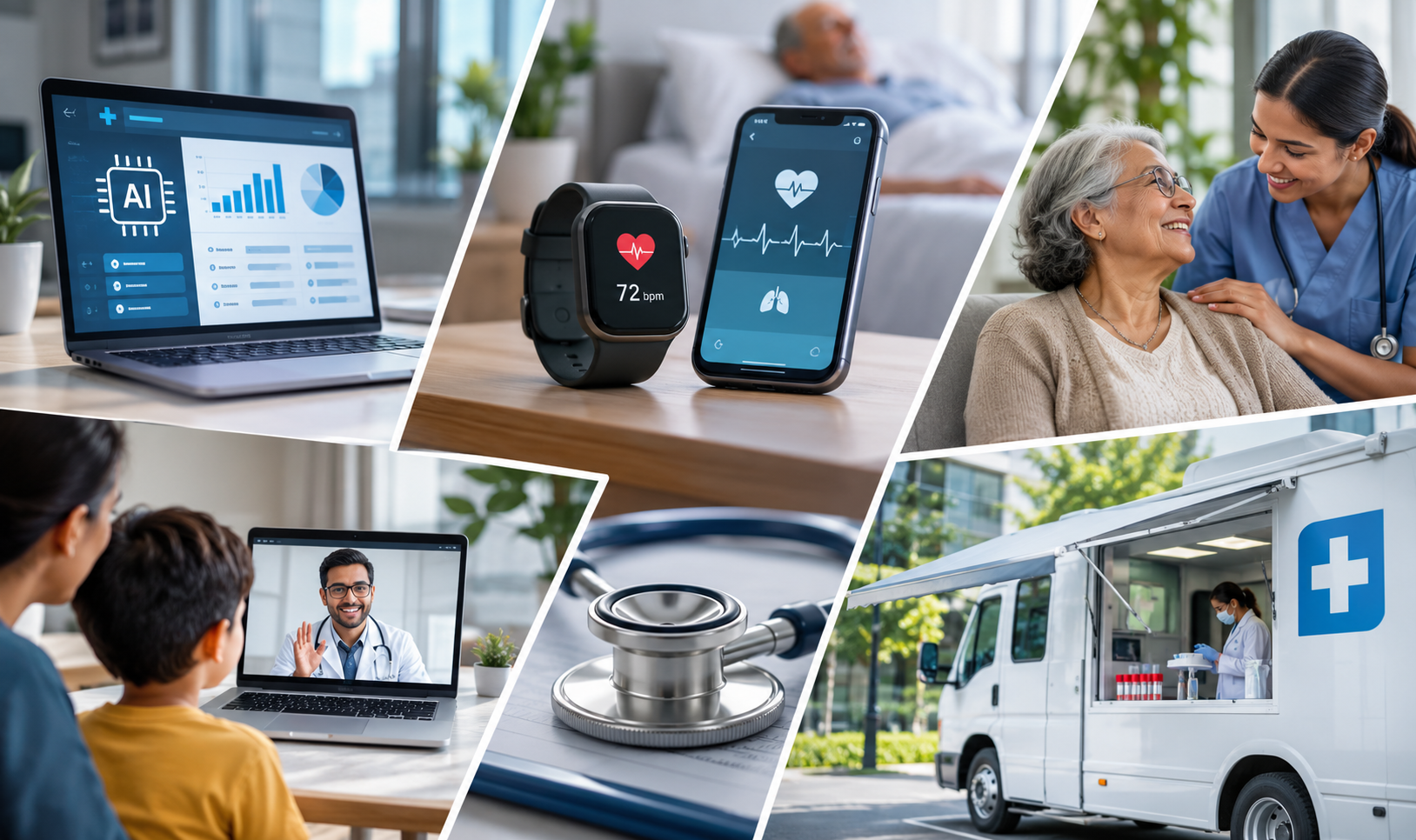
AI-Driven Administrative and Revenue Cycle Management Platforms
Administrative overhead is still one of the highest costs for medical practices across the US. Whether it's a group of physicians, a regional outpatient centre, or an independent clinic, you are going to be spending a fortune on the admin side of things with insurance claims, prior authorizations, and billing codes. A healthtech platform that specializes in automating the revenue cycle via AI provides an instant solution to the admin burden for healthcare providers. You get a reduction in denial rates and a much faster cash collection cycle, which in turn is a very good basis for a platform that will generate a reliable recurring subscription revenue stream, all with very high gross margins.
Remote Patient Monitoring and At-Home Chronic Care Management
With so many of the ageing population out there managing chronic conditions (diabetes, hypertension, heart disease, etc.), the health systems are in the process of shifting care delivery into the home. The way to do this is to establish a remote patient monitoring business. The clinical team can then use FDA-cleared wearables to monitor the patient's real-time physiological data. The platform will collect the continuous data and will trigger an alert to the care manager when it is appropriate to intervene. Looking at these healthcare business ideas 2026 allows you to go in and build a business that is essentially using existing Medicare codes and providing the hospital network with a tool that has a proven track record of reducing the cost of ER readmissions.
Specialized Senior Care Navigation and Concierge Aging-in-Place Services
The sheer scale of the U.S. senior population has created an enormous demand for bespoke ageing-in-place solutions. Families are often left scrambling to get the right mix of home care aides, physical therapy, home safety work, and medication management together for their elderly relatives. A concierge senior care navigation company acts as a trusted advisor to the family, sourcing and vetting caregivers, installing the appropriate smart home monitoring hardware, and managing the clinical coordination. It is a hands-on model which generates a very solid stream of cash pay retainer income and enables seniors to remain safely independent in their own homes.
On-Demand Pediatric and Specialized Virtual Care Networks
General Telehealth adoption has leveled out across North America, but virtual care networks that are focused on specific patient populations are still seeing very strong growth. The model of a dedicated digital health platform for a specific population (e.g., pediatric, women’s health, behavioral health) is a very effective way of overcoming access issues for busy families in both urban and rural parts of the US. You have your board-certified specialists, the ability to book via mobile, and secure messaging to quickly build a brand and gain market share across the various regional payer networks.
Direct-to-Consumer Preventive Diagnostics and Mobile Testing Outlets
American consumers are in the process of taking control of their own health in a very significant way, which is generating enormous demand for personal diagnostic insight. A direct-to-consumer mobile lab or diagnostic clinic would allow the customer frictionless access to a wide range of blood panels, metabolic profiling, and early-stage disease screening without the need for a GP referral at all. Profitable healthcare business ideas with very strong cash-pay margins will help avoid the whole of the insurance admin delays associated with commercial health insurance reimbursement and at the same time meet a very real and growing consumer demand for preventative health.
Why Are Niche Health Innovation Models Overtaking the Traditional Care Venues in 2026?
Healthcare strategists and commercial investors frequently ask the question: Why are the decentralized, technology-enabled health ventures picking up market share so much faster than the traditional hospital-based delivery models?
The shift is driven by changing consumer expectations, the increasing cost of running physical facilities, and the very nature of the economic system. The traditional health system is suffering from acute staff shortages, soaring real estate costs, and massive overheads. The patient experience in a hospital-based system is often one of long waits, poor transparency around pricing, and a generally fragmented experience.
Agile tech platforms and specialist outpatient services are very much the low-cost, customer-focused model. You can go in and develop focused healthcare business ideas and deliver that to the patient in a very direct way with a very low overhead. Furthermore, value-based care initiatives across Medicare and private insurers are now actively incentivizing platforms to prevent hospital admissions. This is a huge financial incentive for the founder who is looking at a platform that's focused on out-of-hospital care.
Balancing Health Market Opportunities with Rigorous Industry Regulations
Primary Commercial Advantages
Building an enterprise in the health space is the most resilient of all. You are not going to see demand for healthcare, for preventative diagnostics, for care of the elderly go away in a downturn. You can also build proprietary clinical workflows or software integrations that create real defensible moats and real brand trust. Aligning venture goals with innovative healthcare business ideas positions founders to achieve sustainable enterprise growth while generating measurable societal impact.
Critical Operational Challenges
Despite compelling financial and social returns, launching a healthcare business involves navigating complex operational barriers:
Strict Regulatory and Data Privacy Compliance: Adhering to HIPAA, state licensing laws, and FDA medical device guidelines (all of which require ongoing legal oversight).
Insurance Payer Onboarding Delays: Insurance payer onboarding can take several months (credentialed clinical providers, secured commercial insurance reimbursement contracts). You need to be very mindful of your cash flow in that situation.
Clinical Quality Control: There's a need for a very strong clinical quality control framework to maintain the high standards of care across a distributed care team, and for that, a robust QI programme and ongoing staff training are needed as well.
Even with those operational requirements, the health space for entrepreneurs remains strong. The founders who are going to be successful are the ones who are focused on compliance, are using scalable technology, and are genuinely focused on the patient experience. This is the model that is going to build successful businesses across the US.
Actionable Execution Strategy for Aspiring Health Entrepreneurs
Identify Unmet Regional Care Needs: Carry out a full market analysis across the various local U.S. healthcare markets to identify the gaps in senior care, access to specialty care and administrative efficiency.
Prioritize HIPAA and Data Security Architecture: Build all your digital platforms, database structures and communication tools around a very strong data privacy and security architecture from the very beginning.
Secure Strategic Clinical Partnerships: Work with regional physician groups, ACOs and hospital systems to secure a steady flow of referrals.
Implement Scalable Software Solutions: Use modern API integrations, automated scheduling and cloud infrastructure to keep fixed operational overhead as low as possible.
Focus on Measurable Patient Outcomes: Track the key clinical and financial metrics (e.g. reduced readmission rates, increased patient satisfaction scores) to provide clear evidence of value to the commercial payers.
Everything you need to know about this news
AI-driven medical billing and revenue cycle automation platforms will get to profitability very quickly as they have virtually no physical footprint, they're built on a recurring subscription model, and they deliver a very clear and immediate cost saving to the practice.
No, non-clinical founders can absolutely build a healthcare business by working with board-certified medical advisors, employing experienced clinical directors, and focusing their own skills on the platform software, the operational side, and the B2B business development.
Healthcare startups achieve HIPAA compliance via end-to-end encrypted cloud environments (e.g., HIPAA-compliant AWS or Azure instances), BAAs with all vendor partners, role-based access controls, and regular third-party security audits.
Direct-to-consumer health services are growing rapidly as consumers want immediate, transparent access to their own health data without having to go through the hassle of a doctor's referral or the various hoops of insurance coverage.
Value-based reimbursement models encourage providers to improve patient outcomes and at the same time reduce the overall cost of care. There's therefore a very strong commercial imperative for startups to come up with remote monitoring, chronic care management, and preventative health solutions that keep patients out of A&E.


















































 consultants ltd.jpg)


Comments