
Home Technology IT Services CIO Bulletin Spotlights The To...
CIO Bulletin
,
05 October, 2026
Author:
Sambhrant Das
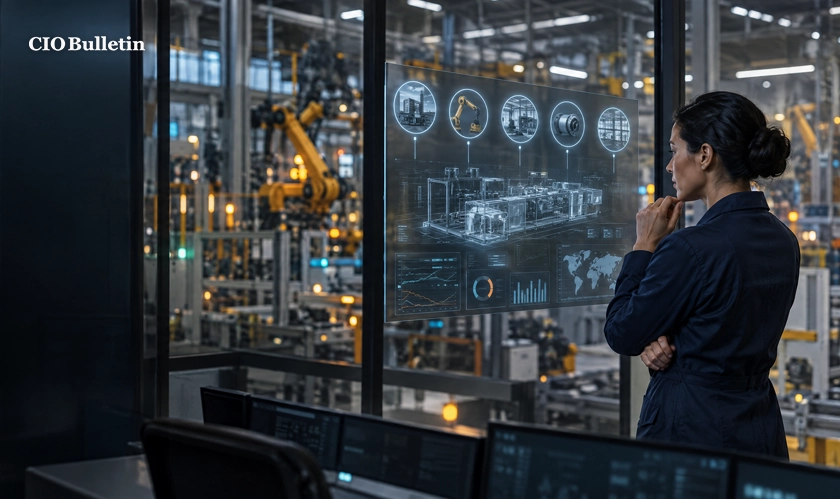
Major changes are taking place in the field of operational technology throughout the American industrial sector. Hardware devices that used to be separate are now closely integrated with cloud platforms, artificial intelligence systems, and sophisticated cybersecurity frameworks. In order to increase resilience and ensure high uptime, it has become essential for businesses to select the right infrastructure partners if they are to survive in the long term. To protect their vital infrastructure, modern industrial sites need real-time visibility, automated telemetry, and zero-trust perimeter defenses provided by the top OT companies.
To deal with this changing digital infrastructure environment, progressive manufacturing companies, local utility providers, and energy producers place their trust in leading firms that combine knowledge of physical hardware with state-of-the-art digital intelligence. Today's OT companies supply the essential SCADA platforms, distributed control systems, and edge automation stacks that ensure that assembly lines, power grids, and refineries continue to operate continuously.
Upon analyzing CIO Bulletin’s list of the top OT companies in 2026, a lively mix of OT companies that make specialized industrial cybersecurity tools, big global automation firms, and cloud‑native security leaders can be observed. All of these companies work together to protect the important systems that keep our world running.
By virtue of being the biggest company in the United States with its headquarters in Milwaukee that is wholly devoted to industrial automation and digital transformation, Rockwell Automation continues to play a central role in industrial activities in North America. By means of its principal Allen-Bradley range of hardware and its FactoryTalk software collection, Rockwell achieves smooth integration between the hardware elements and cloud-based data platforms. The company's edge computing solutions allow plant operators to carry out predictive analytics right next to the actual machinery, thus reducing unplanned downtime and improving supply chain operations.
Honeywell Process Solutions, which is based in Charlotte, North Carolina, holds the leading position in the areas of continuous automation, process safety, and instrumentation for complex manufacturing. Its enterprise performance management platform, Honeywell Forge, functions as a central control system for heavy industries such as oil refining, the chemicals sector, and pharmaceutical manufacturing. The company achieves this by using physics-based digital twins and machine learning models, which allow facility operators to optimize energy usage and keep the highest possible standards of operational safety across its various enterprise locations.
Emerson Electric Co., which has its headquarters in St. Louis, Missouri, is a leading company in the fields of process control and automation technology. The company concentrates on improving the complicated operational procedures used in the power generation, water management, and life sciences industries through its industry-standard DeltaV distributed control system and Ovation automation platform. It also offers a Plantweb digital ecosystem with widespread sensing technologies that enables industrial operators to move smoothly from reactive maintenance practices to real-time asset performance monitoring.
GE Vernova, a historic giant in the American industrial sector, is carrying out modernizations in the areas of power generation, grid electrification, and renewable energy. The company, which is headquartered in Cambridge, Massachusetts, uses heavy physical equipment together with advanced software packages such as the Mark VIe control systems and Proficy automation software. Through the incorporation of advanced telemetry into power plants and electrical grids, it allows utility companies to keep a high level of system availability while dealing with complex hybrid energy resources.
Fortinet, which is based in Sunnyvale, California, has positioned itself as a vital pioneer in the field of operational technology cybersecurity and in the protection of industrial networks. Seeing that today's industrial sites need strong cyber resilience, the company offers hardened firewalls, zero-trust network access (ZTNA), and tailored threat intelligence that is designed for non-standard industrial protocols such as Modbus and DNP3. The Security Fabric platform makes it possible to fully protect essential manufacturing equipment against remote attacks without disrupting the sensitive operational timing requirements.
The industrial sector is currently experiencing a historic change thanks to massive demand for supply chains, the availability of incentives for domestic manufacturing, and growing cybersecurity weaknesses. In the past, traditional industrial setups depended on air-gapped networks that physically separated the machinery from the enterprise IT networks. Nowadays, the quick implementation of Industrial Internet of Things (IIoT) sensors, the use of generative AI for predictive maintenance, and the practice of remotely managing sites have completely removed that boundary.
Industrial leaders have no choice but to modernize since the existing hardware platforms are incapable of providing the real-time telemetry needed if they are to remain competitive in fast-moving markets. Moreover, current federal regulatory guidelines and the strict compliance requirements mean that there must be thorough visibility over all physical endpoints. Upgrading industrial control systems is no longer merely an optional IT decision; it has become a basic business necessity in order to ensure operational continuity and to protect the nation's infrastructure from advanced cyber threats.
The immense operational advantages offered by the evolution of modern industrial technology go hand in hand with certain implementation difficulties.
On the positive side, upgrading the physical industrial infrastructure provides unprecedented visibility, improves energy efficiency, and greatly reduces maintenance costs as a result of predictive machine learning. It is now possible to operate multi-site industrial ecosystems with a precision of less than one millisecond while at the same time preventing catastrophic equipment failures from occurring.
Yet, these advances in technology bring about considerable operational difficulties. The process of combining modern cloud systems with old hardware usually involves a great deal of custom engineering and is expensive because of the need for retrofitting. Moreover, linking up physical equipment to corporate networks increases the attack surface, so that industrial companies have to deal with complicated cybersecurity risks without interfering with their continuous production cycles.
Even though there are these areas of difficulty, it is clear what the course of industrial modernization will be. Among the leading OT companies to watch, the providers highlighted above offer the exact tools, architectures, and strategic partnerships necessary to achieve continuous, secure industrial growth.
Everything you need to know about this news
Information Technology (IT) is concerned with the management of data, enterprise software, and communications within business networks, while Operational Technology (OT) keeps an eye on and controls physical devices, machinery, valves, and industrial processes directly on the plant floor.
Since industrial networks have been connected to cloud platforms and to IoT devices, isolated systems can no longer be maintained. Today's cyber-attacks are able to directly aim at physical controllers, which put operational downtime, damage to physical assets, and risks to worker safety at risk.
AI is able to analyses the continuous telemetry from physical machines in order to predict equipment failures, optimize energy usage, automate inspections for quality control, and optimize production schedules in real time.
The main sectors are discrete manufacturing, oil and gas refining, chemical processing, electric utilities, municipal water management, pharmaceutical production, and transportation networks.
Yes, it is common for industrial organisations to upgrade their existing equipment by using external IIoT sensors, edge gateways, and protocol converters in order to send operational data into modern analytics engines without having to replace the capital hardware.












































 consultants ltd.jpg)


Comments