
Home Industry Law ethics and legal services How a Truck Accident Attorney ...
CIO Bulletin
,
03 July, 2026
Author:
Guest
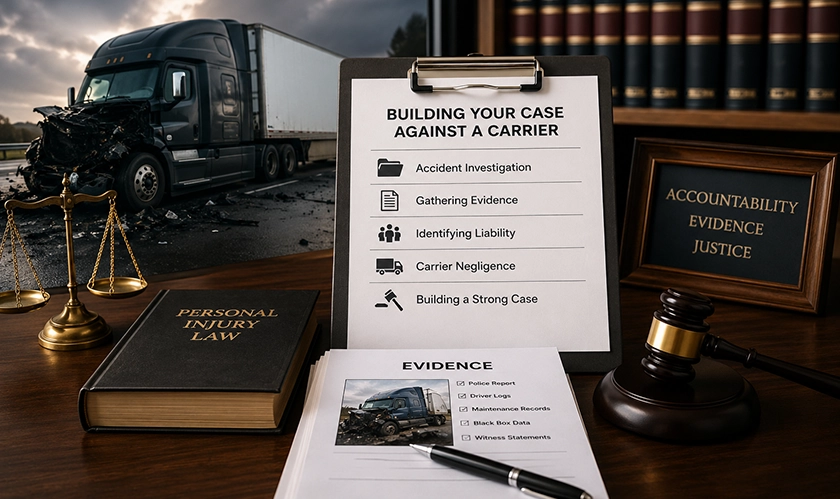
A truck crash claim rarely rests on one driver’s mistake. The strongest proof often sits in carrier files, truck data, repair notes, cargo paperwork, and dispatch records. An attorney protects those materials early, then links each safety lapse to the injury. That process helps an injured person face commercial insurers with organized facts, clear damages, and a case theory grounded in what happened before impact.
Soon after a serious collision, counsel reviews the police report, scene photographs, emergency records, and vehicle damage. A Las Vegas truck accident attorney may also study local freight routes, traffic controls, and carrier activity across Clark County. That first review separates driver error from company scheduling, repair neglect, loading errors, or unsafe dispatch decisions.
Important records can vanish within days. Attorneys send preservation letters to carriers, insurers, repair shops, brokers, and freight handlers. These notices demand retention of electronic logs, dash camera footage, inspection sheets, dispatch messages, and personnel files. If a company destroys material after notice, a court may allow sanctions or unfavorable inferences during litigation.
Commercial trucks often record speed, braking, throttle position, engine load, and drive time. That information can reveal whether the operator slowed, swerved, or ignored traffic conditions. Attorneys compare digital records with road evidence. Crush patterns, debris location, skid marks, and final resting points help test whether the carrier’s timeline matches the physical scene.
Driver behavior needs close review. Counsel looks for fatigue, distraction, impairment, speeding, unsafe lane movement, and missed rest breaks. Hours logs may show excessive time behind the wheel. Phone records, onboard messages, and delivery schedules can reveal pressure from dispatch. Those details clarify whether a crash stemmed from a single error or a broader safety breakdown.
A carrier may share fault even if its employee caused the direct impact. Attorneys examine hiring files, training records, safety manuals, supervision notes, and prior violations. Weak screening can place an unqualified operator inside a heavy rig. Poor oversight may allow risky habits to continue. Repeated inspection failures can show the company knew its safety program was failing.
Mechanical trouble often leaves a paper trail. Brake wear, tire defects, steering issues, and lighting failures may appear in repair logs before a crash. Attorneys request inspection forms, mechanic notes, service histories, and out-of-service reports. These records can show whether the truck should have been removed from the road until repairs were completed.
Loading errors can cause rollovers, jackknife crashes, and longer stopping distances. Counsel reviews bills of lading, weight tickets, loading diagrams, and shipper instructions. Overweight freight strains braking systems. Unbalanced cargo may shift during turns or sudden stops. If a loader, broker, or shipper created the hazard, responsibility may extend beyond the driver and carrier.
Truck cases often involve layered business relationships. The driver, motor carrier, trailer owner, maintenance contractor, cargo loader, broker, or parts manufacturer may each hold responsibility. Attorneys trace contracts, insurance policies, equipment ownership, and shipment control. This work matters because every defendant may have separate duties, records, and coverage available for the injured person’s losses.
A complete claim measures more than ambulance charges or hospital invoices. Attorneys document surgery, therapy, medication, lost wages, reduced earning power, pain, disability, and future care. Severe injuries may require opinions from physicians, rehabilitation planners, and financial experts. Their analysis helps prevent an insurer from treating permanent harm like a short recovery period.
Carrier insurers usually move quickly after a crash. Adjusters may seek recorded statements, broad medical authorizations, or early settlements before the injury picture is clear. Attorneys manage communication and limit requests to relevant material. They also compare each offer against liability proof, documented losses, and trial exposure. Evidence, rather than pressure, should drive negotiations.
Settlement remains common, but careful preparation assumes court may become necessary. Attorneys draft pleadings, obtain sworn testimony, consult experts, and test defenses. Reconstruction specialists may explain speed, sight distance, braking force, or impact angles. Discovery can expose missing records and inconsistent accounts. Trial readiness often changes negotiation because weak offers carry a greater risk for the defense.
A truck accident case takes shape through early preservation, disciplined record review, and a clear link between safety failures and injury. The attorney’s role is to connect carrier conduct, driver choices, vehicle condition, and cargo handling with the harm claimed. That structure matters because commercial insurers defend these cases aggressively. Organized proof gives an injured person a fact-based path forward, even when delay or denial begins immediately.





















































 consultants ltd.jpg)


Comments