
Home Industry Law ethics and legal services What a Motion to Suppress Actu...
CIO Bulletin
,
08 September, 2026
Author:
Guest
Clients ask about this early, usually as a question about whether something can be thrown out. Sometimes they've heard a story from a friend whose case disappeared because of a bad stop.
Those stories are real. They're also incomplete, and the version that circulates skips the parts that determine whether the same thing could happen in your case.
A criminal defense law firm in California handling a case with a search or a statement in it will look hard at this, because it's one of the few tools that can change an outcome without persuading anyone of anything about the underlying facts. It's also misunderstood more than almost anything else in the process.
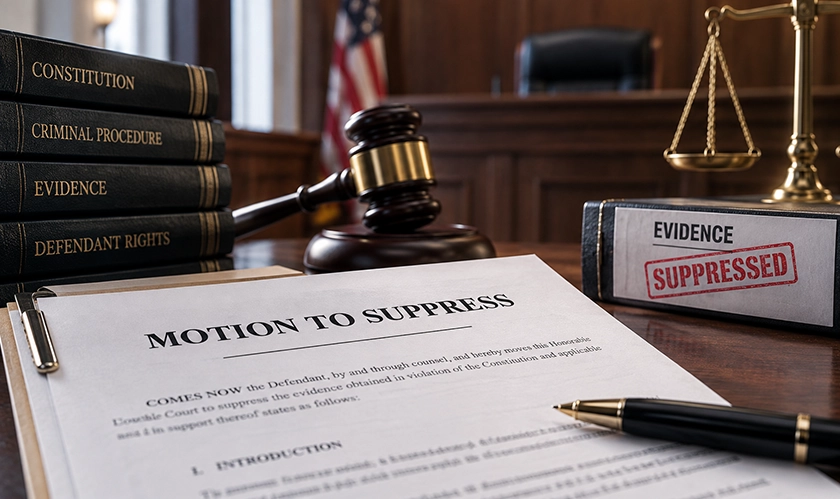
A suppression motion doesn't claim you didn't do it. It claims the government obtained something in a way the rules don't allow, and asks the court to keep that item out.
Those are different arguments, and they can coexist. You can bring a motion and still contest the facts later. Losing the motion doesn't mean conceding anything about guilt.
The distinction matters because clients sometimes resist the idea, feeling it looks like an admission. It isn't one, and prosecutors don't read it that way.
Most of these motions grow out of a handful of situations.
A traffic stop made without a legitimate basis
A stop that was lawful at first but got extended without justification
A search conducted without a warrant and without a recognized exception
A warrant that was issued on a thin or inaccurate affidavit
Consent that was given under circumstances suggesting it wasn't really voluntary
Statements taken after someone asked for a lawyer, or without required advisements
Note how many of these turn on details nobody was thinking about at the time. How long the stop lasted before the dog arrived. What exactly the officer said before the person opened the trunk. Whether a request sounded like a request.
A limit that surprises people.
You typically can't challenge a search that violated somebody else's rights. If police searched a friend's apartment improperly and found something they're now using against you, your ability to complain depends on whether you had a protected interest in that place or property.
It's a real constraint, and it comes up more than you'd expect, particularly in cases involving cars, shared spaces, and other people's belongings.
It's a proceeding on its own, usually well before trial.
The officers involved testify under oath about what they did and why. Your attorney cross-examines them. The judge decides whether the law was followed, and whether the evidence stays in.
Something worth understanding about this, even if the motion fails: the testimony is now locked in. An officer who has committed to a version of events at a suppression hearing can't quietly adjust it later at trial without that being visible.
Defense lawyers sometimes file motions they expect to lose for exactly this reason. The hearing is an opportunity to pin down the state's account under oath, months in advance.
The evidence in question is excluded, meaning the prosecution can't use it in their case.
Depending on the case, evidence that flowed from the unlawful act may go too. A search that produced a package, which produced a statement, which produced a second search, can unravel in sequence.
That doesn't automatically end the matter. A judge granting a motion isn't dismissing the case. But if the excluded item was the case, the prosecution frequently can't proceed, and a dismissal follows because there's nothing left to try.
These motions have to be raised properly and on schedule.
Waiting too long, or resolving the case first and raising the issue afterward, generally forfeits it. This is one of the reasons the early stage of a case matters even when nothing appears to be happening.
It's also why the details need to reach your attorney early. A client who mentions three months in that the officer searched the trunk before saying anything about consent has lost time that might have mattered.
Set expectations honestly. Most suppression motions are denied. Judges are frequently persuaded that the officer's account was reasonable, and the standards leave real room for that.
But the ones that succeed can end a case outright, and even the ones that don't often produce something useful.
Which means the question worth asking your attorney isn't whether they can get the case thrown out. It's whether there's an issue here worth litigating, and what it gets you either way.





















































 consultants ltd.jpg)


Comments