
Home Technology Medical technology India to Amend Rule 26 of Medi...
CIO Bulletin
,
27 May, 2026
Author:
Gayathri Sr
A landmark regulatory shift set to reshape healthcare technology compliance and patient safety standards across the country.
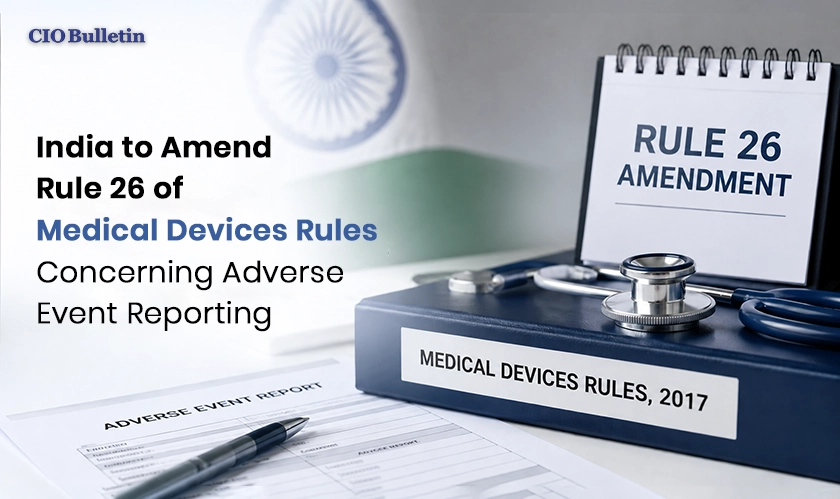
The medical technology sector in South Asia is on the verge of a major regulatory transformation. In an effort to tighten oversight on patient care, the central government of India to amend Rule 26 of the Medical Devices Rules 2017, introducing strict mandatory guidelines for reporting unforeseen equipment failures and adverse health events.
According to an industry analysis published by CIO Bulletin, this strategic shift marks a transition from a voluntary reporting ecosystem to a legally enforceable framework. For years, tracking medical device malfunctions relied on loose guidelines, but the incoming legislative update changes the landscape completely for manufacturers and healthcare providers alike.
The decision follows a high-level meeting of the Drugs Technical Advisory Board, where officials finalized plans to integrate a strict definition of reportable safety events. This policy update works in tandem with the country's Materiovigilance Programme, ensuring that everything from advanced implants to everyday diagnostic tools undergoes rigid scrutiny.
Key changes that industry leaders must prepare for include:
Enforceable Accountability: Device manufacturers and importers will face strict legal obligations to report safety incidents directly to licensing authorities.
Broader Scope: The mandate covers all medical equipment, including intricate in-vitro diagnostic software and hardware.
Enhanced Surveillance: Companies must establish active tracking systems rather than waiting for post-market complaints to surface.
As the government prepares to publish the final legal drafts, international companies operating in the region must re-evaluate their local compliance strategies. Ensuring that local teams can quickly identify and process data anomalies will be crucial to avoiding severe legal penalties.
Experts observing the shift emphasize that this is a massive step toward aligning regional practices with global healthcare benchmarks. Industry analysts suggest that while the transition requires quick adaptation, it ultimately builds a safer, more transparent healthcare environment for millions of patients relying on modern medical technology.


















































 consultants ltd.jpg)


