
Home Technology Networking Meta and Braverman clash over ...
CIO Bulletin
,
20 September, 2023
Author:
CIO Bulletin Team
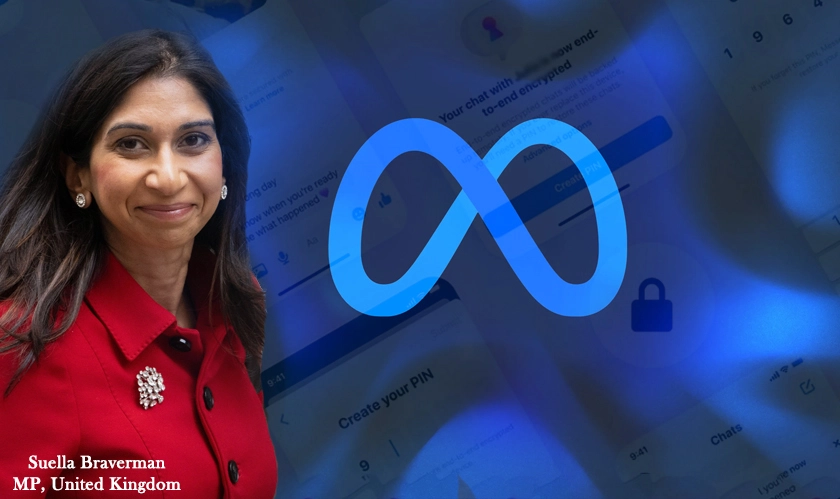
Home Secretary Suella Braverman stated that children's safety could not be compromised by encryption due to worries that it could be used to hide child abuse.
End-to-end encryption would make messages unreadable to anyone but the sender and recipient.
Due to concerns that encryption could be used to cover up child abuse, Home Secretary Suella Braverman stated that encryption could not come at the expense of children's protection.
According to Meta, encryption shields users against privacy invasions.
In a letter to Meta in July, Ms. Braverman expressed her worries in the presence of top child safety charities, law enforcement, technology experts, and survivors.
In order to avoid, identify, and combat misuse while maintaining online security, Meta claimed to have spent the last five years creating strong safety mechanisms.
The home secretary claims that hundreds of child offenders could avoid punishment as a result of the plans.
If the platform implements end-to-end encryption, according to James Babbage, director of general threats at the National Crime Agency (NCA), this will "massively reduce our collective ability" to safeguard minors.
Security Minister Tom Tugendhat hinted at the new initiative in a speech in May.
At the time, he criticized what he called Mark Zuckerberg's "extraordinary moral choice" to widen encryption, blaming him for the scheme.
End-to-end encryption, or E2EE, will be made standard for all Facebook Messenger communications by Meta, the American business of which Mr. Zuckerberg is the CEO, by the end of the year.


















































 consultants ltd.jpg)


