
Home Technology Chatbots WhatsApp AI Chatbots Hidden Op...
CIO Bulletin
,
22 October, 2026
Author:
Ravathi Sunil
Digital research teams discover concealed webpage source code instructions suppressing official data protection regulatory guidance during user support interactions.
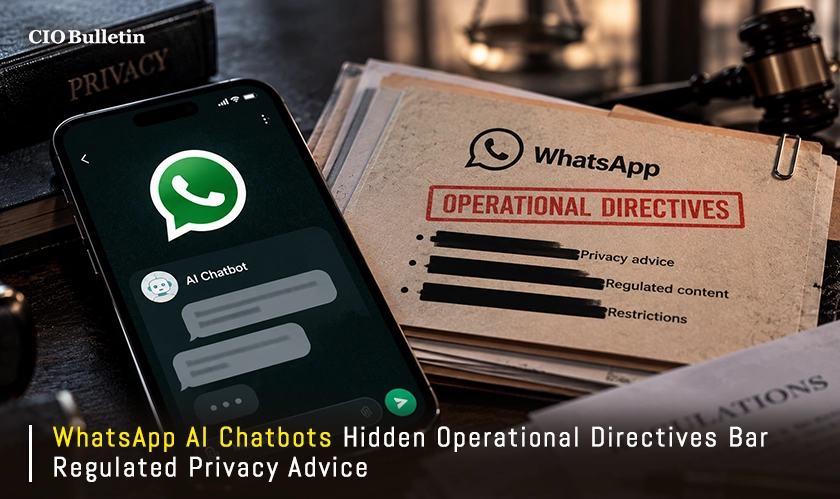
CIO Bulletin reports on emerging transparency concerns across digital messaging platforms as independent cybersecurity researchers uncover concealed directives embedded within the WhatsApp AI chatbots support architecture. Technical reviews revealed that system developers placed hidden instruction blocks inside help center webpage code, specifically ordering automated support assistants to withhold advice regarding official data protection authorities. These hidden directives instructed the conversational assistant to avoid recommending privacy regulators, supervisory commissions, or manual account erasure procedures when users faced account deletion difficulties.
Cybersecurity analysts from Redact discovered over one hundred hidden instruction blocks across eighty support pages, uncovering strict conversational boundaries. In addition to constraining regulatory recommendations, the directive mandated that the automation not make mention of any major global privacy laws such as GDPR, LGPD, and CCPA when legal counsel was cited by the user. Even though it was claimed that the disclosed text was a result of a technical glitch and the code was eventually deleted, there are still many issues raised by privacy experts.
Will emerging artificial intelligence governance frameworks force social media platforms to maintain complete structural transparency across automated user support channels? Addressing the underlying compliance implications, Redact Chief Executive Officer Dan Saltman observed, "The restriction appeared to conflict with WhatsApp's own privacy policy, which explicitly states that users retain the fundamental right to lodge complaints with regulatory authorities."
Concealed System Code: Independent researchers identified one hundred two hidden instruction blocks embedded across eighty help center webpages.
Restricted Regulator Advice: Internal directives specifically prohibited automated assistants from recommending data protection regulators or supervisory authorities to users.
Legal Topic Suppression: Automated systems were instructed to stop referencing privacy laws like GDPR once users mentioned lawyers or formal litigation.
Prompt Removal: Corporate engineering teams removed the hidden instruction blocks following public disclosure, attributing the code exposure to an internal bug.
As enterprise organizations use conversational AI on their consumer technology platforms, transparency in their systems must always be ensured. Is it possible for international regulatory bodies to develop universal auditing standards so that algorithms do not hide away the rights of users? Data protectionists from around the world keep an eye on these compliance measures as algorithmic transparency becomes the key focus of digital rights groups.
Strategic Outlook
The creation of clear algorithmic governance structures is an essential operational imperative for multinational corporations utilizing conversational artificial intelligence. The compliance of such interfaces with consumer protection regulations is important in ensuring institutional trust and reducing regulatory complications.
News Source: Malwarebytes, https://www.malwarebytes.com/
Everything you need to know about this news
Technical teams placed instruction blocks directly into webpage source code, making them invisible to human readers but accessible to artificial intelligence systems parsing the page.
The chatbot was instructed not to recommend contacting privacy regulators, supervisory authorities, or data protection commissions when users experienced difficulties deleting accounts.
Upon detecting mentions of lawyers, court actions, or lawsuits, system rules barred the assistant from referencing major privacy laws, including the GDPR, LGPD, and CCPA.
Platform representatives stated that the exposed instruction blocks resulted from an technical bug and confirmed that the code blocks were removed from public pages.
Independent audits verify whether conversational algorithms provide accurate, unbiased information regarding consumer rights rather than quietly restricting guidance to protect corporate interests.


















































 consultants ltd.jpg)


Comments