
Home Industry Oil and gas Will Strait of Hormuz Oil Tank...
CIO Bulletin,
18 June, 2026
Author:
Gayathri Sr
A shaky peace begins as global energy lifelines reopen amid lingering regional friction.
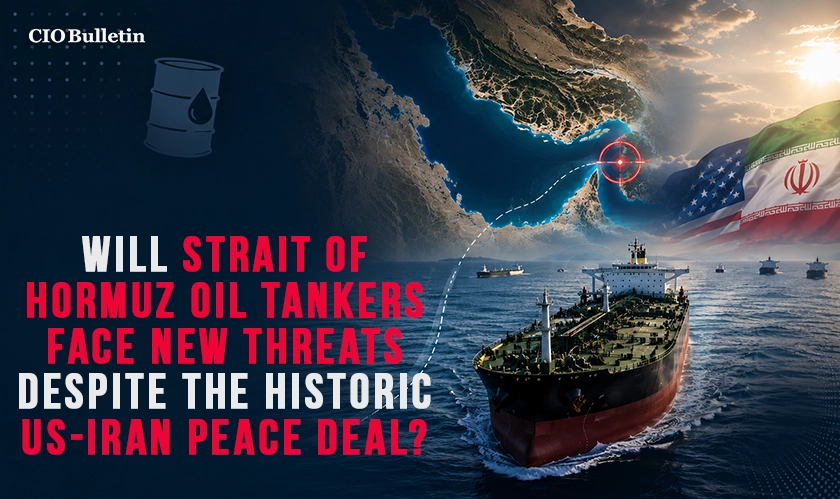
A high-stakes diplomatic gamble has sent shockwaves through global energy markets, but a sudden outbreak of violence threatens to shatter the peace before the ink even dries. Hours after U.S. President Donald Trump and Iranian President Masoud Pezeshkian signed an interim pact, the world watched anxiously to see if Strait of Hormuz oil tankers would truly find safe passage. While three Saudi supertankers carrying 6 million barrels of crude successfully cleared the chokepoint, fresh Israeli airstrikes in Lebanon have immediately cast a dark shadow over the historic truce.
The maritime industry responded instantly to the diplomatic breakthrough, marking a historic moment as the first tankers cross Hormuz under the new terms. Nearby vessels that had previously hidden their positions quickly flipped on their transponders, signaling a collective rush to resume transit. This sudden wave of activity sent Brent crude futures tumbling below $78 a barrel, reaching its lowest point since the conflict ignited back in February.
However, the exclusion of Israel from the US-Iran negotiations has triggered a massive geopolitical rift. While the signed memorandum explicitly demands a permanent termination of the war in Lebanon, Israeli forces launched fresh artillery fire and airstrikes on Thursday morning. Displaced citizens and international onlookers are now left wondering if the peace agreement is merely a superficial cover for an unyielding war.
Industry analysts tracking the situation are urging the commercial shipping sector to remain highly vigilant.
“The signature on the paper is a vital step, but clearing mines and establishing true security on the water will take time,” noted a global maritime logistics analyst interviewed by CIO Bulletin.
As Israeli Prime Minister Benjamin Netanyahu fiercely negotiates with Washington to maintain a military buffer zone, the durability of the trade route hangs in a delicate balance. For international markets, the ultimate test is whether this diplomatic breakthrough can genuinely stabilize the world's most critical energy artery.
Immediate Transit: Six million barrels of crude successfully cleared the chokepoint on day one.
Market Reaction: Brent crude dipped under $78 a barrel following the treaty's signature.
Lingering Flashpoints: Ongoing military maneuvers keep maritime insurance rates highly volatile.















 consultants ltd.jpg)


Comments