
Home Industry Oil and gas China’s Crude Oil Drop Cause...
CIO Bulletin
,
14 July, 2026
Author:
Ravathi Sunil
A dramatic drop in fuel buying pushes manufacturing down to historic lows.
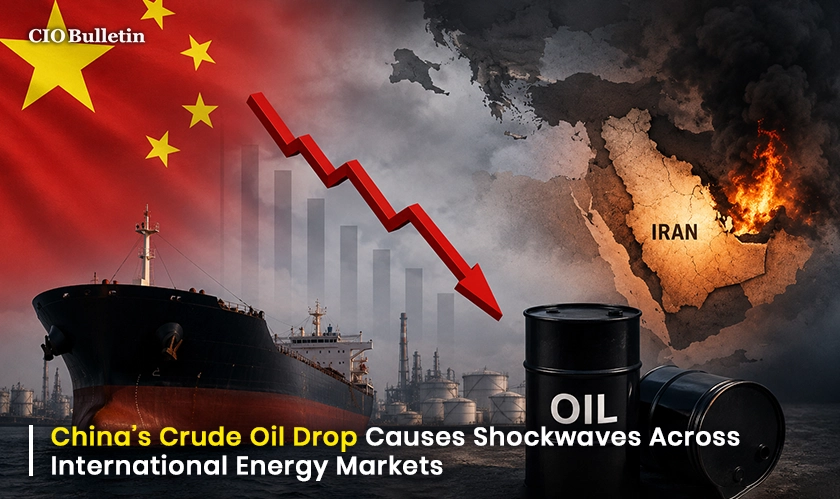
The international energy landscape is entering uncharted territory as the world's leading economic engine pulls back on primary fuel purchases. Official customs data shows that China’s crude oil imports plummeted by 41.3% year-over-years. The country brought in just 29.27 million tons of raw oil, averaging roughly 7.12 million barrels per day.
The steep drop officially marks the lowest level of incoming energy shipments recorded for the nation since late 2016. Reports analyzed by CIO Bulletin indicate that a combination of local industrial deceleration and a booming electric vehicle fleet are permanently rewriting global energy trade dynamics.
"Refinery run rates were likely near a 10-year low, weighed down by weak domestic demand and refined oil product export restrictions." - Emma Li, Analyst at Vortexa.
The sudden contraction is driven by deep domestic operational choices and structural updates within the Asian superpower:
Refinery Reductions: Processing facilities dropped their utilization rates to 57.72%, approaching a ten-year low.
Export Caps: Strict restrictions on shipping out refined products were enacted to reinforce domestic energy cushions.
Alternative Transport: Accelerated transition toward alternative energy passenger vehicles continues to wipe away historical gasoline usage permanently.
This logistical shift has been heavily compounded by ongoing geopolitical clashes in the Middle East. Seaborne arrivals from traditional Gulf exporters fell to their lowest mark in a decade, while standard supply streams from regional partners dropped by 40% month-on-month.
This supply decline is currently freeing up surplus oil barrels for other international buyers. Analysts predict that unless Beijing authorizes a partial lifting of fuel export limits later this quarter, manufacturing hubs will likely remain heavily underutilized. Meanwhile, global energy developers are forced to come to terms with the reality that the largest consumer market can function comfortably on significantly lower fuel reserves.
Everything you need to know about this news
A combination of lower local consumer demand, strict export curbs on fuel products, and a massive national shift toward electric vehicles drastically reduced overall import requirements.
The incoming volume has dropped to 29.27 million metric tons, which represents the lowest inbound shipping volume documented since October 2016.
Local processing operations have reduced their running capacities significantly, dropping processing rates down by more than 13 percentage points compared to last year.
Ongoing military tensions have disrupted the Strait of Hormuz, forcing a major 40% month-over-month drop in standard imports from key Middle Eastern oil partners.
Market experts note that volumes might experience a temporary, minor rebound only if authorities eventually decide to ease current export boundaries on refined goods later this winter.





















































 consultants ltd.jpg)


Comments