
Home Platforms Others Was a Fatal System Glitch to B...
CIO Bulletin
,
20 June, 2026
Author:
Gayathri Sr
Did human error or mechanical failure allow two fast passenger trains to collide on a single track?
A wave of shock has rippled through the global transportation community following a catastrophic train collision in London that has left a seasoned driver dead and dozens of everyday commuters fighting for their lives. The fatal accident occurred roughly 60 miles north of the capital city near Bedford, raising immediate and deeply troubling questions regarding the modern safety networks meant to protect millions of daily rail travelers.
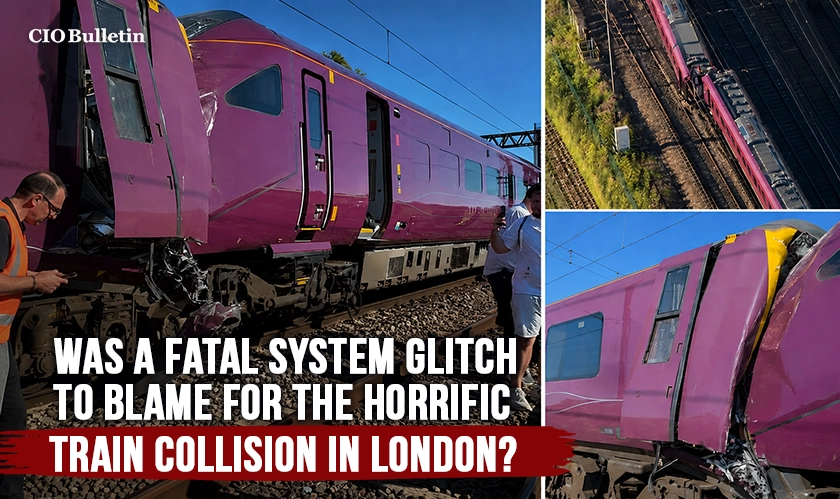
As closely monitored by infrastructure risk experts at CIO Bulletin, the devastating crash involved two separate London-bound commuter services operating on the East Midlands Railway network. Rather than safely navigating their routes, the physical reality turned into a nightmare when the front of one fast passenger train collide into the rear of another traveling along the same line.
The force of the impact created total chaos inside the passenger cabins, throwing commuters from their seats and leaving wreckage scattered along the tracks. Local medical crews rushed to the site to treat scores of victims suffering from varying degrees of trauma.
The East of England Ambulance Service provided a grim breakdown of the human toll:
1 confirmed fatality at the scene (the train driver)
11 passengers suffering from critical, life-threatening injuries
22 individuals sustaining serious traumatic injuries
56 additional travelers treated for minor cuts and shock
Eyewitnesses described a sudden, violent deceleration that tore through the quiet evening.
While United Kingdom Prime Minister Keir Starmer extended public condolences to the grieving families, Transport Minister Heidi Alexander announced that a full forensic investigation is officially underway. Analysts at CIO Bulletin emphasize that the investigation will intensely scrutinize the signal routing data and automatic braking systems to determine exactly why the redundancy safety nets completely failed to prevent this tragic disaster.


















































 consultants ltd.jpg)


Comments