
Home Platforms Others Has Sudden Seismic Tremor Spar...
CIO Bulletin
,
27 August, 2026
Author:
Ravathi Sunil
Satellite data reveals how a massive high-altitude ice collapse triggered catastrophic surge waters downstream, exposing severe climate vulnerabilities across the Himalayan region.
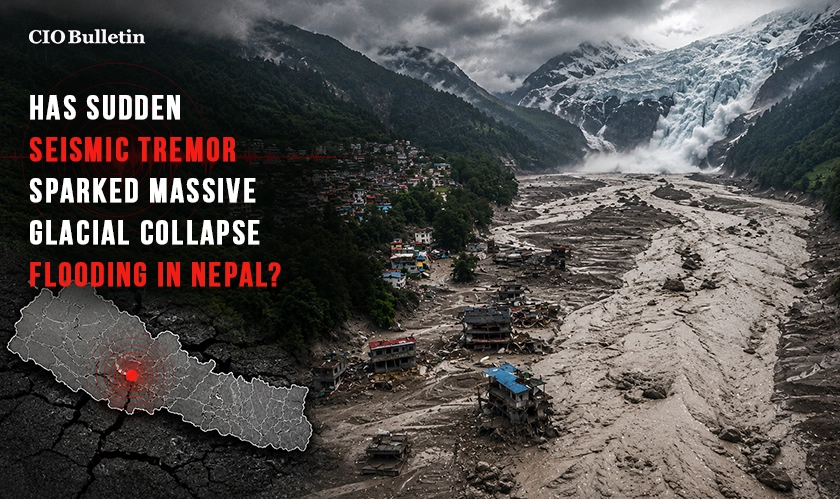
According to CIO Bulletin, destructive flash floods have struck the border areas of Nepal, with people trying hard to cope with the destruction. The initial seismological information indicated that there was an occurrence of a tectonic earthquake causing the mountains to slide off. This theory, however, does not hold after the analysis of satellite and geological evidence.
The disaster commenced when a chunk of the glacier, which was situated many thousands of meters above sea level on the Tibetan side, separated from the glacier in one go. The heavy chunks tumbled down through the steep cliffs and disintegrated into a massive debris flow. This sudden avalanche unleashed massive amounts of water, mud, and rocks directly into the Lhende and Bhote Koshi rivers.
Scientists studying satellite images observed significant recent snow and ice melt in the high-altitude zone. Analyzing the structural failure, Daniel Shugar, an Associate Professor of Geomorphology at the University of Calgary, explained:
"My guess is that snowmelt, and glacier ice melt as well, injected a lot of liquid water into the glacier, which percolated down to the bed and lubricated it. That was enough for it to collapse."
Could rapid environmental changes make these unexpected high-mountain ice breaks far more common across fragile river valleys? The downstream areas sustained heavy damage, as raging waters submerged houses and damaged vital hydroelectric power plants.
Glacial Origin: Satellite evidence confirms a pure ice collapse caused the disaster.
Seismic Revision: Geological agencies updated initial readings to reflect a non-tectonic event.
Sudden Surge: Floodwaters rapidly inundated valleys, sweeping away vital infrastructure.
High Vulnerability: The event highlights mounting climate risks across Himalayan river basins.
Local disaster management teams work on rescue missions and analyze information to improve early warning systems.
Everything you need to know about this news
Satellite analysis confirmed the disaster was caused by a massive glacial ice collapse that swept mud and debris into river systems, rather than an earthquake.
The massive impact of falling ice crashing into the valley floor created strong ground vibrations that initial sensor readings misidentified as a small earthquake.
The surge rushed heavily through the Lhende River tributary before sweeping downstream into the Bhote Koshi and Trishuli river networks.
The fast-moving torrent destroyed residential buildings, washed away key transportation bridges, and significantly damaged several operational hydropower plants.
Geologists suggest that intense surface warming forced meltwater deep into the glacier bedrock, reducing friction until the massive ice block detached.




















































 consultants ltd.jpg)


Comments