
Home Industry Proptech Can Interoperable Trust Framew...
CIO Bulletin
,
12 June, 2026
Author:
Sambhrant Das
By running live sandboxes with leading digital firms, OPDA is building an open source trust framework to cut transaction delays and secure property moves.
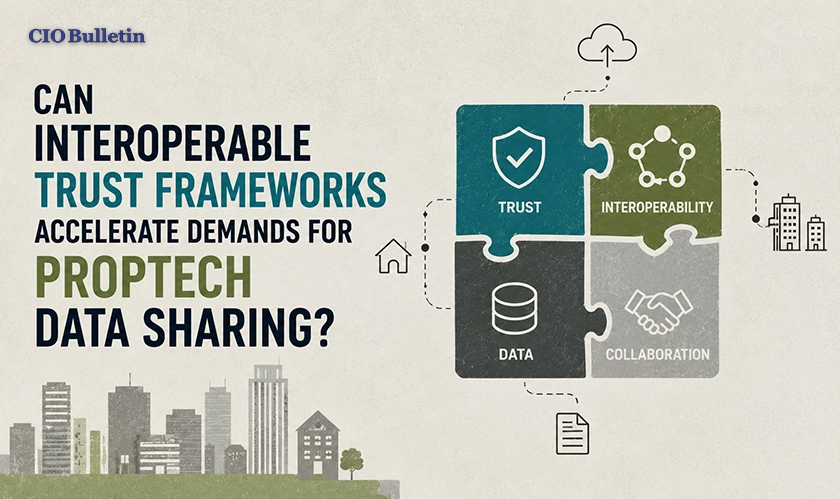
The Open Property Data Association (OPDA) has launched a collaborative testing program alongside several prominent property technology firms to overhaul how information moves during property sales. Running inside the newly created Smart Property Data Trust Framework sandbox, the joint initiative targets the historical delays caused by isolated database networks and slow corporate updates. This live trial establishes a modern precedent for proptech data sharing across the real estate landscape, directly addressing the massive operational friction that currently stalls over one-third of all residential housing transactions. By constructing a secure, consent-based digital highway, the group aims to turn fragmented record-keeping into a single, highly reusable public resource.
The collaborative development phase utilized a series of targeted hackathons to stress-test data flowing across different critical stages of the standard consumer moving journey. Software engineers from participating companies successfully plugged directly into unified data rails to simulate live consumer transactions.
Property Pack Automation: Technical teams from Smoove and PropXchain retrieved vital material attributes instantly, integrating full property packs directly into consumer-facing platforms.
Identity and Verification Checks: Digital authentication protocols were embedded alongside anti-money laundering frameworks to confirm client credentials instantly without paper records.
Transaction Completion Workflows: Systems handled secure, multi-party documentation transfers seamlessly, reducing the typical back-and-forth delays between home buyers, sellers, and mortgage lenders.
While the early technical results show massive speed improvements, moving this model into mainstream market operations requires solving deeper legal and operational puzzles. Industry representatives involved in the sandbox testing noted that establishing absolute data provenance remains the biggest hurdle for long-term real estate digitization. The sector must establish rigid, unified rules regarding consumer privacy consent, corporate liability boundaries, and individual data security standards before a national rollout can happen. Creating a fixed, unchanging Property ID framework is increasingly recognized as a mandatory requirement to keep records accurate across competing commercial platforms.
Shifting the real estate sector away from manual email attachments and physical paper documentation fundamentally alters the competitive economics of the property tech market. Historically, small software companies faced massive financial barriers when attempting to purchase or license proprietary property data from traditional institutional monopolies. Utilizing a completely open-source, royalty-free data standard allows tiny three-person startup companies to access the exact same digital infrastructure as massive multi-national banking systems.
"The Framework gives the industry the infrastructure to stop treating property data as a series of isolated requests and start treating it as a shared, trusted resource." - Christian Woodhouse, Head of Partnerships at Sprift
Transitioning the broader housing industry onto synchronized digital standards is expected to provide a substantial financial injection to the regional economy by slashing failed sales. Streamlining the early administrative stages allows legal firms, real estate agents, and mortgage providers to scale up their daily operational capacities without hiring massive waves of temporary staff. Maintaining a transparent database minimizes transactional risk, giving financial institutions greater security when approving high-value mortgages under tight timelines. CIO Bulletin views this development as a foundational milestone for the real estate economy, demonstrating that open-source technical trust frameworks are the most reliable tool to modernize outdated manual legacy industries.



















































 consultants ltd.jpg)


