
Home Industry Proptech InRento Financing Growth Cross...
CIO Bulletin
,
28 May, 2026
Author:
Gayathri Sr
A digital platform reshapes property investments across Europe by turning vacant offices into modern residential hubs.
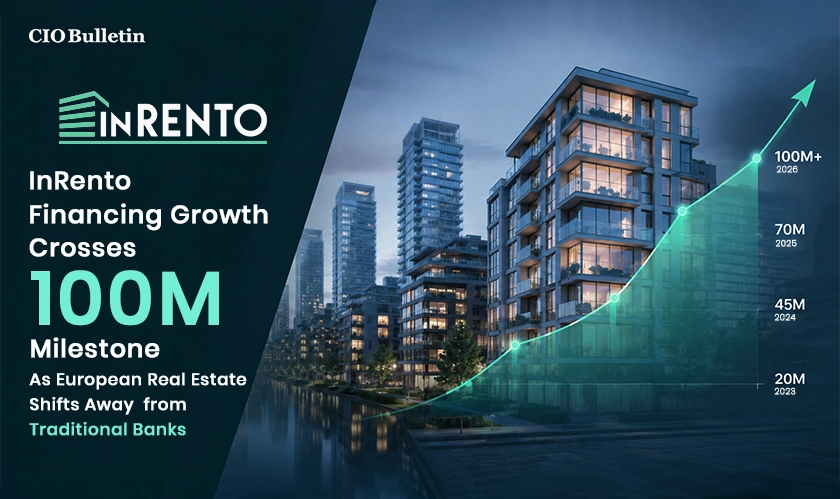
The European real estate market is undergoing a massive shift as traditional bank loans become harder to secure. Standing at the forefront of this transformation is InRento, an innovative crowdfunding platform that connects everyday investors with major property projects. By providing a faster, more flexible alternative to traditional banking, InRento financing growth has officially crossed the €100 million milestone in financed projects across Europe. This major achievement highlights a growing demand for alternative funding in key markets like Lithuania, Poland, and Spain.
According to reports tracked by CIO Bulletin, this modern approach allows people to invest smaller amounts into asset-backed, lower-risk commercial properties. Investors earn steady returns through rental income and potential capital gains, while developers gain quick access to vital capital without bureaucratic delays.
Traditional banking structures have left many medium and large borrowers looking for better options. InRento steps into this gap by focusing strictly on projects that already hold development approvals, completely eliminating permitting risks for its investors.
A primary driver behind this growth is the rising cost of traditional debt. Property experts note that developers in Eastern Europe have become highly sophisticated, actively seeking diverse capital sources to keep their projects moving forward.
“Real estate lending has become significantly more expensive. Debt costs have increased substantially since we launched. At the same time, developers, particularly in Eastern Europe, have become much more sophisticated in how they source capital, with access to more options than ever before,” stated Gustas Germanavicius, Founder of InRento
A major area of activity fueling this momentum is the conversion of outdated office spaces into residential apartments.
Smart Urban Adaptation: Aging office buildings are becoming inefficient and expensive to maintain.
Meeting Housing Demand: Instead of leaving these spaces vacant, developers transform them into modern residential lofts.
Lower Risk, Higher Efficiency: Investing in existing structures bypasses many zoning hurdles, ensuring faster project completion.
As traditional financing models struggle to keep pace with changing economic realities, digital platforms are proving to be the future of property development, keeping European real estate vibrant and resilient.



















































 consultants ltd.jpg)


