
Home Industry Recycling and waste management Can Massive Waste Streams Be D...
Recycling And Waste Management
CIO Bulletin
,
09 July, 2026
Author:
Sambhrant Das
Brazil launches a major reverse logistics project to transform everyday oral hygiene waste into valuable raw industrial polymers.
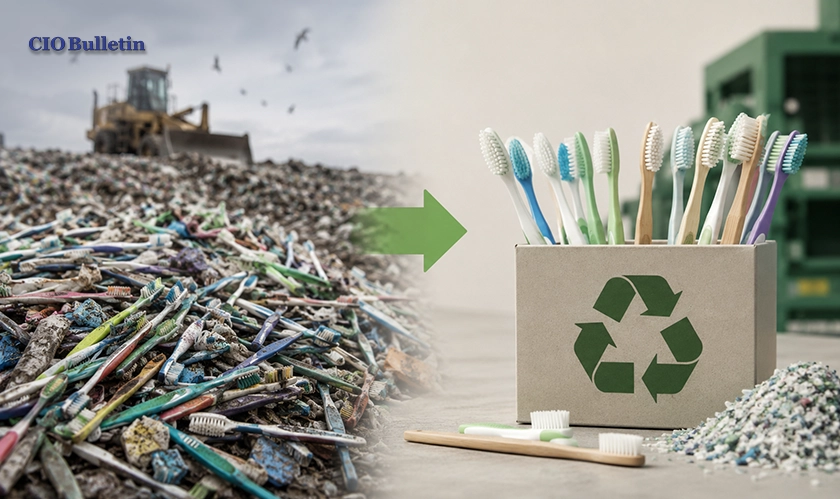
Municipal sorting networks across South America are facing massive structural changes to catch up with evolving post-consumer manufacturing targets. To successfully process everyday personal care items that usually end up in local municipal dumps, corporate leaders in Brazil have launched an institutional collection campaign. This dynamic initiative establishes specialized collection pipelines specifically targeting extensive toothbrush recycling alongside modern high-density polyethylene toothpaste tube processing.
The operational success of this waste project relies entirely on combining consumer drop-off spots with mechanized material sorting hubs. To make sure old oral hygiene items move seamlessly into regional industrial manufacturing setups, logistics teams have built a multi-layered sorting chain:
Deploying specialized reverse logistics collection points in large urban retail spaces.
Directing raw post-consumer drop-offs to dedicated recovery centers for systematic sorting and shredding.
Re-engineering everyday packaging requires eliminating composite materials that traditionally clog industrial separation machinery.
This transformation brings together recyclable packaging, collection programs, and consumer guidance.
Moving toward a unified high-density polyethylene construction ensures that everyday bathroom disposables can be completely ground down and remanufactured without contaminating broader corporate recycling pipelines.
Securing high participation rates from busy urban consumers requires creating highly visible, low-friction regional collection infrastructure. Industry groups are actively teaming up with localized recycling co-ops to handle secondary sorting bits in a safe yet efficient way, involving less hassle for all stakeholders. This decentralized setup helps prevent consumer waste landing in overworked city dumps, which in the long run reduces plastic pollution risks that could drift into nearby waterways.
Global packaging protocols are facing severe administrative updates as international consumer brands try to hit strict circular economy metrics. Manufacturing operations must aggressively simplify structural raw materials to stay profitable during regional regulatory shifts. CIO Bulletin views this development as a critical step forward for global product makers who want to reduce scope three operational emissions. At the same time, they are also trying to secure steady, low-cost supplies of post-consumer plastic in a more predictable manner.
Everything you need to know about this news
The redesigned consumer packaging is mainly made of high-density polyethylene, the number two type. Meanwhile, the caps use regular polypropylene, number five.
No, consumers are instructed to simply squeeze out the remaining product and securely replace the cap, as industrial machinery handles shredding and washing later.
The localized collection network operates with support from the Mãos Pro Futuro program and strategic partnerships with Ambipar Triciclo centers.
Older product tubes combined multiple thin sheets of aluminum and technical plastics together, making them impossible to separate in traditional plants.
The collected materials are processed into small raw plastic pellets that can be directly reused to manufacture new consumer items and industrial transport casings.














































 consultants ltd.jpg)


Comments