
Home Industry Renewable energy Can Rapid Growth in Renewable ...
CIO Bulletin
,
20 July, 2026
Author:
Sambhrant Das
Asian clean energy developers face intense operational delays as equipment export rebates disappear
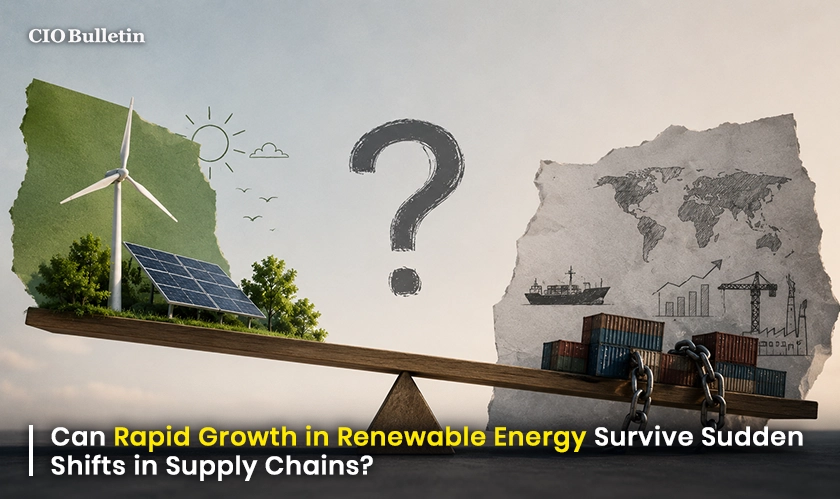
An extraordinary regional transformation is reshaping the international utility sector as regional developers systematically outpace historical installation benchmarks. The dynamic acceleration of global renewable energy networks owes its recent momentum almost entirely to a massive construction boom sweeping across eastern territories. A definitive energy market review reveals that a staggering 74.2% of all new global clean power installations were concentrated within this single region, yielding an unprecedented 513.3 gigawatts of newly grid-tied clean capacity.
Despite spectacular investment flows, severe international trade fragmentation creates unprecedented systemic hurdles for active utility projects. The primary vulnerabilities currently destabilizing regional energy pipelines stem from:
Excessive reliance on centralized production hubs for vital components like solar PV modules, battery cells, and wind turbine pieces.
Sudden adjustments to state fiscal frameworks, including China's elimination of export-linked value-added tax rebates for critical clean technologies.
These shifting economic parameters have completely changed how financial syndicates evaluate project feasibility and underwrite development hazards. With equipment shortages turning into severe transit bottlenecks, financial backers are demanding strict engineering due diligence before releasing capital.
Insurance has shifted from a transactional requirement to a strategic enabler of bankability, lender confidence and capital mobilization.
Compounding these logistics issues, developers are facing rising extreme weather patterns that test the physical limits of new installations. Consequently, the commercial insurance landscape has turned highly selective, applying strict engineering standards to large-scale hybrid systems and battery arrays. To protect their initial capital outlays, corporate groups must involve risk management specialists early to ensure adequate delay-in-startup coverage periods.
Trying to move through this complicated environment requires developers to form solid partnerships with regional supply chains and international financiers. Adjusting contract terms to handle higher procurement costs is essential for keeping green projects profitable amid shifting trade dynamics. CIO Bulletin views this development as a stark reminder that physical clean capacity acceleration cannot succeed without flexible, well-insulated logistics networks and highly advanced risk management frameworks.
Everything you need to know about this news
The region completely dominated the international market, accounting for a massive 74.2% of all global clean power capacity additions.
A lot of projects get squeezed by single-source supplier concentration, geopolitical tensions, and longer shipping delays. Moreover, there are constantly rising component procurement costs.
China's removal of export-linked VAT rebates for solar and battery products has driven up global procurement costs and squeezed margins.
Insurance is no longer just a bureaucratic checkbox; it has become a strategic necessity to guarantee project bankability and secure lender confidence.
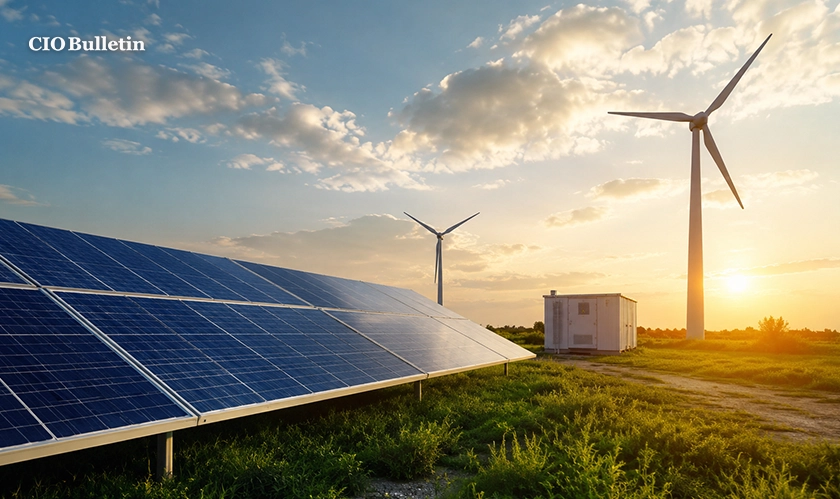
The historic grid expansion leans on a blend of utility-scale solar, onshore and offshore wind, as well as battery storage systems and even floating solar.















































 consultants ltd.jpg)


Comments