
Home Industry Renewable energy Portugal Maps Low-Conflict Ren...
CIO Bulletin
,
22 January, 2026
Author:
CIO Bulletin Team
The new smart siting system in Portugal is a framework that helps to balance the interests of the community and biodiversity protection with the development of renewable energy.
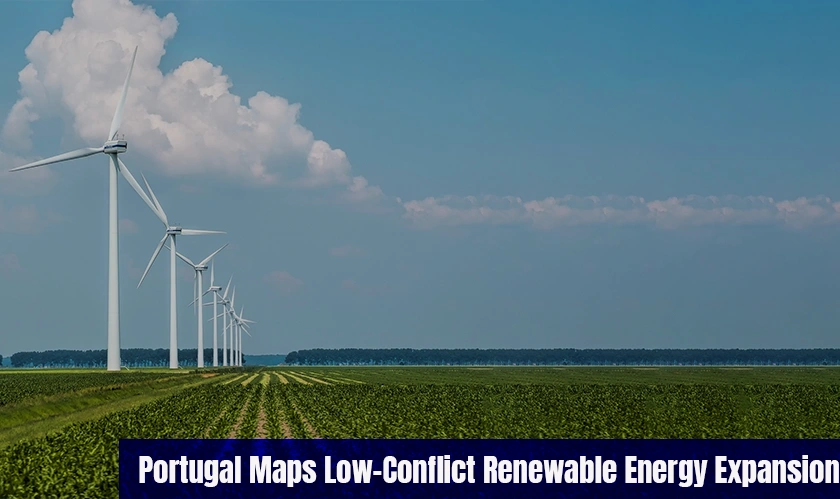
Portugal has presented a scientifically led plan to fast-track renewable energy in the country without damaging biodiversity and social values as the country aims to produce 93 percent of its electricity using clean sources by 2030. The new edition of Smart Sitting Guide: Portugal is expected to assist policymakers, developers, and civil society in determining appropriate sites for wind and solar projects with the least amount of environmental and social conflict.
Using predictive modeling, the guide maps regions where there is high technical potential of renewable energy with considerations on real-world constraints, including land use grid access and terrain. These results are superimposed with biodiversity data and social value data, such as cultural heritage, landscape sensitivity, and community perceptions based on geo-tagged social media data.
Based on the study, the low-conflict land in mainland Portugal can support over fivefold its solar potential in 2030, and thereby it provides flexibility to developers to increase renewable energy production in a sustainable manner For wind power, 70 percent of the potential can be reached in low-conflict areas, and the rest can be used by upgrading current facilities and carefully developing in areas with some conflict.
The plan also facilitates grid expansion planning and conforms to the Renewable Energy Directive III in the EU that encourages Renewable Acceleration Areas and quicker permitting. This combination of science, policy, and involvement of people makes the approach of Portugal to renewable energy development climate-friendly and environmentally friendly.




















































 consultants ltd.jpg)


