
Home Technology Science and technology Laboratory Dispersers vs. Homo...
CIO Bulletin
,
14 May, 2026
Author:
Guest
In the world of science, mixing is not as straightforward as it sounds. Different techniques serve different purposes. A laboratory disperser is not the same as a lab homogenizer.
Looking for high shear homogenizers for liquid mixing or dissolving solid particles? Utilize the right tools to speed things up.

Both laboratory dispersers and homogenizers are used for mixing. They are common lab tools that are often found together.
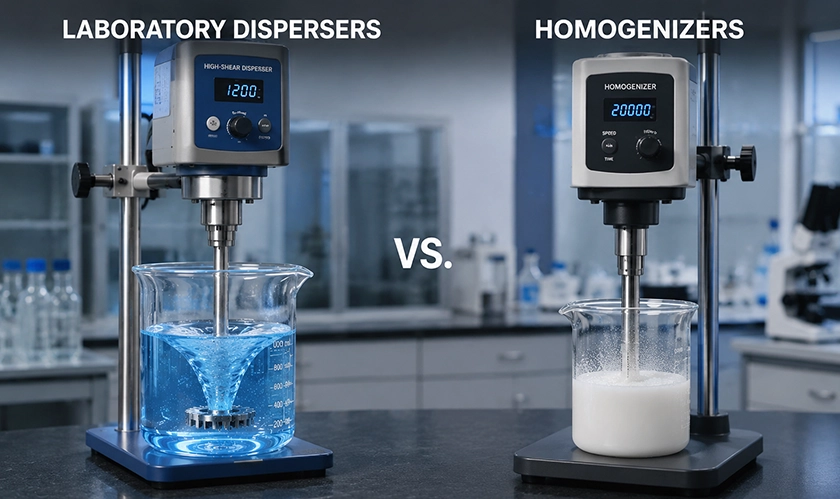
The high-speed rotational blades on laboratory dispersers help dissolve solids into liquids. It is commonly used for creating suspensions and the initial mixing steps in formulations. They ensure consistency and reliability due to uniform dispersion.
A lab homogenizer is designed to turn samples into fine particles with uniform mixing. It uses high pressure and ultrasonic energy. It helps produce stable mixtures for emulsions and cell lysis.
Let’s take a look at this disperser vs homogenizer comparison to understand how each tool can fit your lab’s needs.
Dispersers are often excellent at handling high viscosity. They are used for high shear mixing and can handle non-liquid materials, such as gels and pastes, quite well. On the other hand, homogenizers cater to low to medium-viscosity samples better.
In general, dispersers are less complicated to install. They are more cost-effective. Homogenizers have a higher upfront cost and operating costs due to the high-energy demand.
Dispersers are used for the early-stage mixing, while homogenizers tend to be used for later-stage refinements. Homogenizers can deliver more stable results for fine particles than dispersers.
Both dispersers and homogenizers are not single categories. There are plenty of different subtypes under each category that affect performance and results
High-speed
The most common type of disperser. It provides high-speed rotational force to mix non-liquid materials.
Inline
It allows for continuous processing and is often integrated into the production line. The mixing materials are pumped through a chamber.
Ultrasound
It uses high-frequency sound waves to break down particles for efficient and effective mixing.
High-pressure
It pushes liquids through a narrow gap at high pressure, creating high shear. Its applications can be widely found in the food and pharmaceutical industries for mixing formulas.
Ultrasonic
It uses sound waves to create cavitation, which is effective for cell disruption and fine emulsions.
Using a disperser correctly can speed up the research and formulation process.
A disperser is the right choice for turning powders into liquids. It ensures even distribution and a smooth mixing process.
It is often used for food powders and pigments. It is an effective method to break down agglomerates for further processing and development.
For the beauty industry, dispersers are regularly used for creating emulsions for creams and lotions.
Discover when to use a lab homogenizer to yield the best results.
A homogenizer can effectively break down microorganisms. It releases proteins and allows the extraction of DNA and RNA.
If you need very fine particles, this piece of equipment can reduce particle size to improve stability and product texture.
It is often used after a disperser to further create an even mixed product. It is commonly used in the food and cosmetics sectors.
Although both lab mixers do not serve the same purpose, they are not entirely separate. Oftentimes, scientists use them together.
Homogenizers do not work well on large particles. Therefore, pre-mixing with a disperser may be required before using a homogenizer.
New researchers may be confused about using dispersers and homogenizers. While they are both used for mixing, a disperser functions by using a blade or an impeller. A homogenizer mixes through high-pressure and ultrasonic.
Follow this simple selection guide to determine the right piece of equipment to add to your research process. If you are unsure about the best pick, you can consult with an expert like IKA for more information.
Choose a disperser for:
Breaking down large particles for further mixing later with homogenizers
Turning solids into liquids
Creating uniform distributions without focusing on particle size reduction
Working with high-viscosity materials
Choose a homogenizer for:
Creating fine particles with consistency and stability
Dealing with liquids with low to medium viscosity
Precise mixing to ensure final product quality
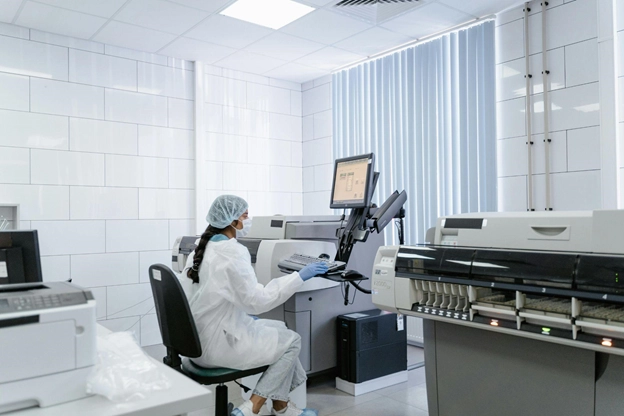
Both dispersers and homogenizers are important tools in the lab. In practice, they are not mutually exclusive and are regularly used together. You can start with a disperser for the initial mixing. And then move on to a homogenizer to produce a high-quality final product.





















































 consultants ltd.jpg)


