
Home Technology Science and technology New Analytical Chemistry Techn...
CIO Bulletin
,
18 April, 2026
Author:
Gayathri Sr
A breakthrough in trace analysis allows scientists to study protected mountain plants without harming the ecosystem.
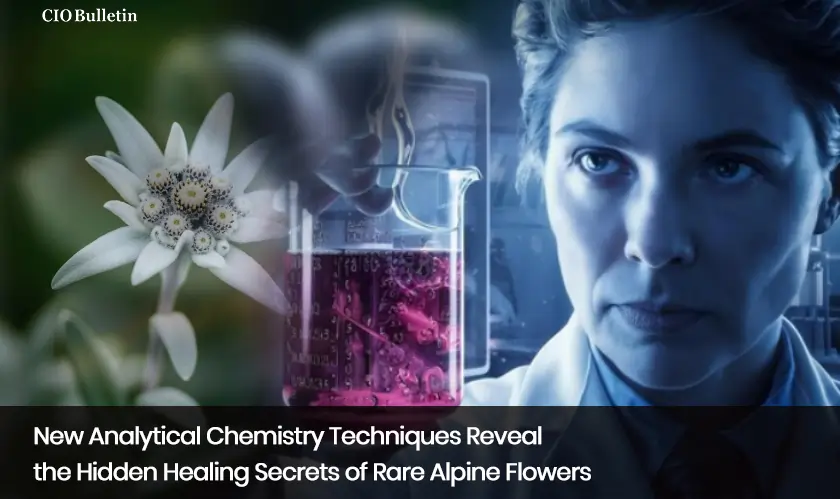
For centuries, the tiny flowers clinging to the frozen peaks of the world’s highest mountains have kept their secrets locked away. These hardy survivors produce unique chemicals to shield themselves from blistering UV rays and sub-zero chills, chemicals that could hold the key to the next generation of medicines. Recently, a brilliant team at the Tokyo University of Agriculture and Technology pioneered analytical chemistry techniques that finally allow us to peek inside these rare blossoms without damaging their fragile habitats.
That is, until now. In a story recently highlighted by CIO Bulletin, a brilliant research team led by Tokyo University of Agriculture and Technology has achieved what was once thought impossible. Using revolutionary analytical chemistry techniques, they have successfully mapped the complex chemical structures of over ten different compounds taken from just a single, tiny flower.
The team, including graduate student Hyuga Hirano and senior curator Yoshinori Murai, combined high-powered lasers and advanced electron microscopy to look deeper into plant biology than ever before. This new workflow allows researchers to identify "phenolic glycosides,” natural compounds with massive potential for human health, without needing bags full of rare petals.
By utilizing these precise chemical analysis methods, the team analyzed the Diapensia lapponica, a resilient alpine species. They discovered a treasure trove of flavonoids and antioxidants that could soon find their way into pharmaceutical labs.
For industries ranging from agriculture to drug development, this breakthrough proves that sometimes, the biggest secrets are found in the smallest packages. Stay tuned to CIO Bulletin as we continue to track how these tiny mountain blossoms might change the future of medicine.



















































 consultants ltd.jpg)


