
Home Technology Security Can Unexpected US Iran talks D...
CIO Bulletin,
19 June, 2026
Author:
Sambhrant Das
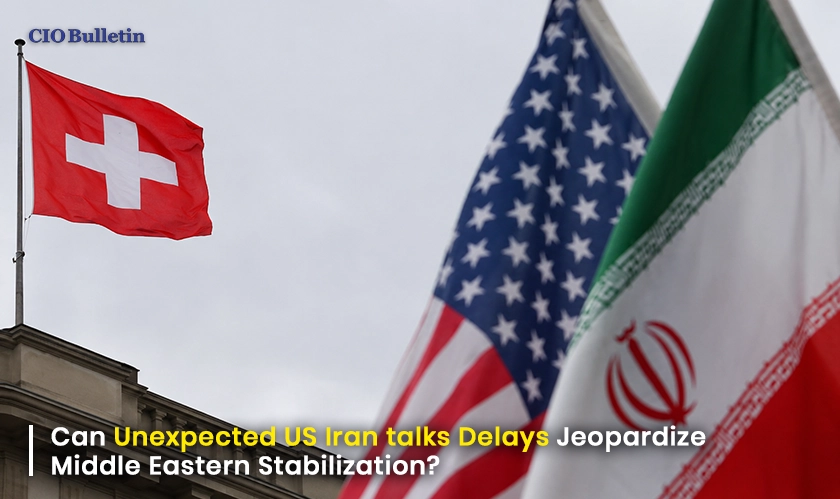
The structural foundations of international conflict resolution are experiencing profound friction as delicate cross-border security arrangements face immediate procedural delays. The Swiss Foreign Ministry has officially confirmed that the highly anticipated US-Iran talks scheduled to convene at the Bürgenstock mountain resort have been abruptly called off. This critical operational setback occurred immediately after the White House announced that Vice President JD Vance had canceled his planned departure for the European neutral zone. By halting these high-profile technical communications, international observers face renewed uncertainty about the immediate implementation of a fragile geopolitical ceasefire intended to restore access to oceanic shipping.
The administrative collapse of this targeted diplomatic meeting stems from deep disagreements regarding localized military troop withdrawals and unresolved maritime transport rules. While top executive leadership teams had previously signed preliminary memorandums of understanding, deep systemic distrust continues to paralyze direct engagement pipelines.
Regional Hostilities Escalate: Renewed physical clashes along the Lebanon-Israel border corridor have severely compromised the foundational security guarantees underpinnings the broader diplomatic framework.
Logistical Security Bottlenecks: Official administrative statements confirm that complex technical and defensive arrangements remained entirely unresolved prior to the scheduled ministerial arrival.
Hormuz Monitoring Gridlock: Despite the official lifting of the American naval blockade, verification procedures inside crucial global energy transit chokepoints remain deeply contested.
"The logistics of these negotiations have never been simple or predictable. As of now, the Vice President is not departing tonight." – The White House
The sudden cancellation of the formal US-Iran talks in Switzerland illustrates the extreme vulnerability of modern diplomatic protocols when confronting multi-front regional conflicts. By delaying these vital, face-to-face evaluation sessions, intermediary authorities have completely lost their immediate window to formalize a permanent, cross-border security structure. This deep systemic pause means that senior diplomatic teams must restart basic exploratory messaging channels, delaying the creation of a definitive 60-day stabilization window designed to audit sensitive nuclear development sites and reduce structural regional blockades.
Transitioning away from active, high-intensity naval warfare toward a stable, rules-based diplomatic matrix requires absolute domestic alignment from all involved sovereign entities. However, mixed ideological communications from clerical command centers continue to introduce intense volatility into active peace negotiations.
Sovereign executive branches express formal commitment to regional stabilization, yet internal defense planners maintain aggressive forward military postures.
Chief maritime negotiators warn of immediate, decisive operational retaliation if any unilateral adjustments are made to existing transit understandings.
International mediating bodies report that face-to-face structural dialogues remain a necessity, even if direct policy viewpoints remain fundamentally unaligned.
As contemporary international energy markets become increasingly reliant on the immediate, unhindered flow of industrial assets through vital maritime straits, the long-term predictability of global trade depends on robust communication networks. Moving past outdated, reactive crisis management models toward decentralized, highly resilient diplomatic structures is transforming into an absolute necessity for nations seeking to preserve global transport margins. Overhauling basic sovereign mediation frameworks to manage complex, multi-tiered geopolitical disputes ensures that global hubs maintain baseline regional safety while pursuing long-term economic normalization. CIO Bulletin views this development as a foundational security realignment that will permanently alter multinational burden-sharing obligations.














































 consultants ltd.jpg)


Comments