
Home Technology Security Strait of Hormuz Threat Downgr...
Security
CIO Bulletin,
18 June, 2026
Author:
Ravathi Sunil
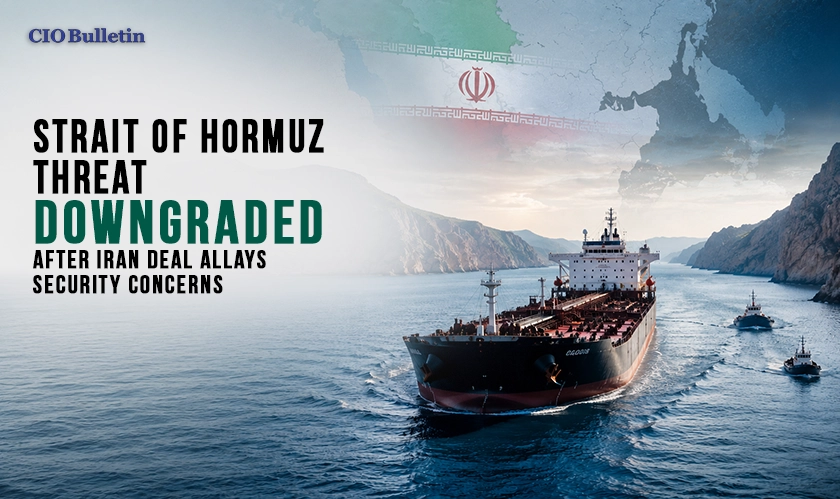
Following an agreement with Iran, a U.S.-led maritime security group decreased the threat level in the Strait of Hormuz, allaying worries about interruptions to regional trade and shipping.
The U.S.-led naval coalition advised shipping companies this week that while the threat level for ships passing through the Strait of Hormuz threat downgraded, shipping companies should still be vigilant about the possibility of attacks, following the announcement of a memorandum of understanding between the United States and Iran.
In a recent report, the Joint Maritime Information Center (JMIC) reduced the Strait of Hormuz's hazard rating from "Severe" to "Substantial." Coordinating activities between commercial vessels and allied naval forces in the Middle East is the responsibility of the JMIC, a maritime security organization with its headquarters located in Bahrain.
However, tanker traffic across the Strait of Hormuz has not increased considerably since the United States and Iran announced their agreement on Sunday. Six of the thirteen commercial vessels that crossed the strait on Tuesday local time were tankers, according to data from Kpler. More than 100 ships passed across the strait every day before hostilities started.
“Shipping traffic through the Strait of Hormuz remains substantially reduced.” - JMIC advisory.
Enhanced Maritime Security: Commercial ships may be able to cross the Strait of Hormuz more safely if there are fewer threats.
Stable Energy Supplies: Lowered tensions could contribute to the Gulf region's continuous shipments of gas and oil.
Reduced Shipping Costs: Shipping firms may profit from lower insurance rates and security-related costs.
Positive Effect on Oil Prices: Increased regional stability could lessen the likelihood of abrupt increases in the price of oil worldwide.
Boost to International Trade: More efficient transportation of products via one of the busiest maritime lanes in the world could promote global trade.
Improved Diplomatic Relations: More regional stability may result from Iran's ongoing communication with international stakeholders.
CIO Bulletin is of the view that the global trade, energy markets, and regional stability all benefit from the Strait of Hormuz threat level being downgraded. The canal is still a crucial geopolitical chokepoint that needs constant observation, even though the Iran deal has helped allay short-term security worries.


















 consultants ltd.jpg)


Comments