
Home Technology Software How Shameer Erakkath Is Modern...

CIO Bulletin
,
20 August, 2026
Author:
Gayathri Sr
Software delivery speed has become a competitive metric in its own right. For large development organizations running thousands of daily builds, the systems that compile, test, and package code are no longer background utilities — they are infrastructure that determines how fast a company can ship. Shameer Erakkath Saidumuhammed, Principal Software Engineer at HPE, has spent nearly two decades building that infrastructure.
Over almost 20 years across enterprise infrastructure and systems engineering, Erakkath Saidumuhammed's work has centered on distributed build platforms, automation frameworks, and the engineering systems that keep large-scale development pipelines reliable. Before his current role at HPE, he served as a senior engineer at Juniper Networks, where several of his most cited projects originated. His LinkedIn profile outlines a career built on solving one recurring problem: how to make software compile, test, and deploy faster without sacrificing reliability.
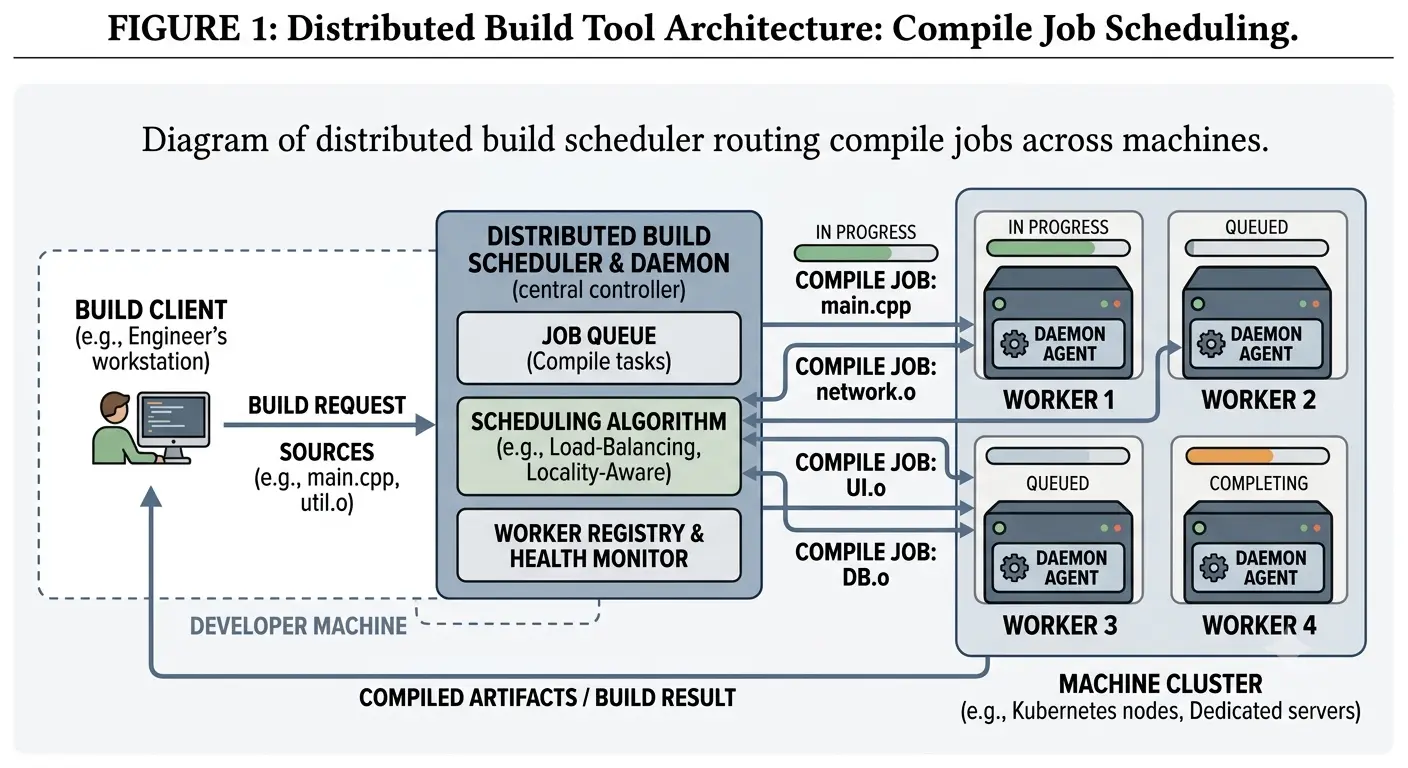
At Juniper Networks, later absorbed into HPE, Erakkath Saidumuhammed architected the Distributed Build Tool, a system that spreads compilation workloads across a network of machines using a scheduler-and-daemon framework. Instead of one machine grinding through a compile job alone, the tool routes pieces of the workload to available compute resources across the network.
The scale is specific. The platform runs across more than 2,000 machines and processes over 1,000,000 builds annually. According to Erakkath Saidumuhammed's account of the project, distributing that workload produced engineering productivity savings estimated at approximately $2.5 million per year — a figure driven by faster compile times translating directly into engineer-hours saved.
FIGURE 1: Distributed Build Tool Architecture: Compile Job Scheduling
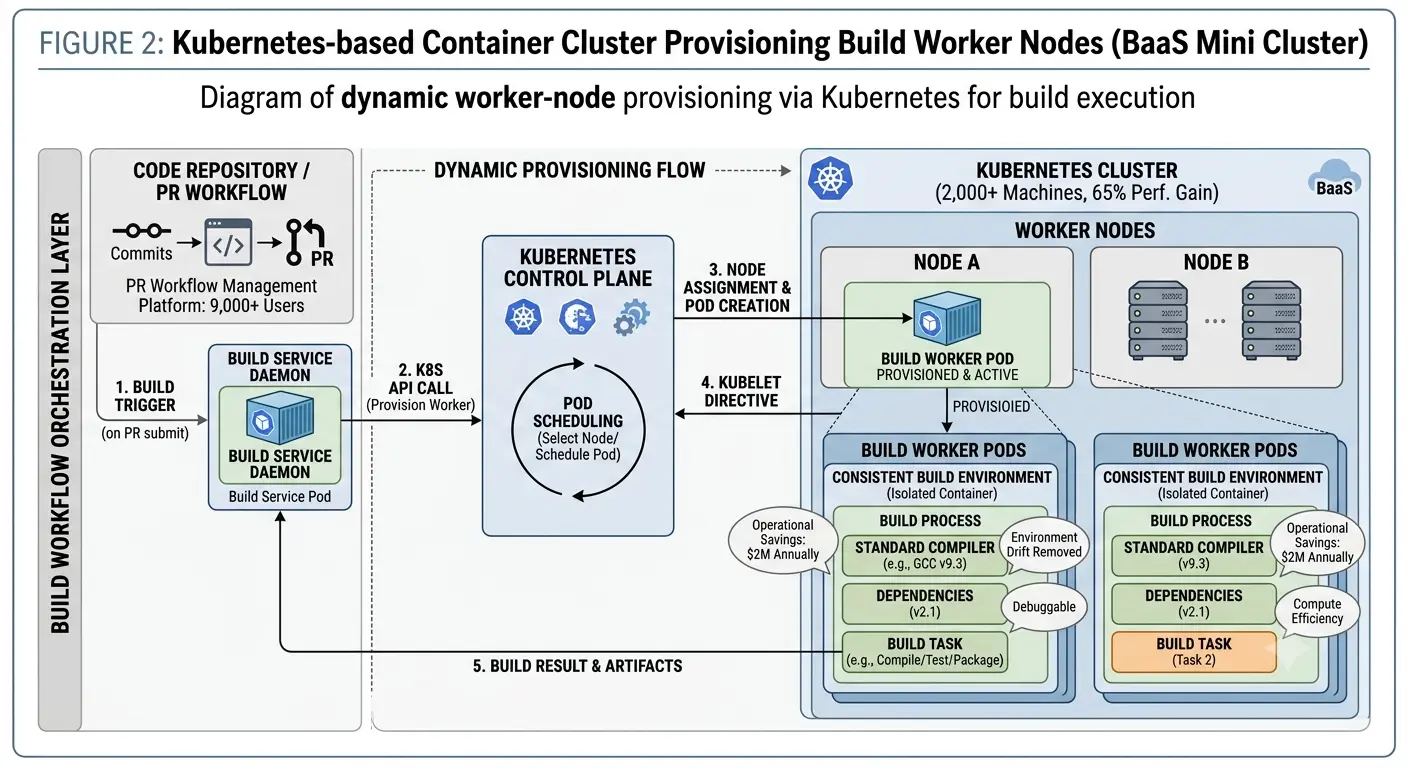
A second initiative, the BaaS Mini Cluster, extended that philosophy into containerized infrastructure. Erakkath Saidumuhammed designed the system to provision remote worker nodes dynamically using Kubernetes, giving each distributed build task a consistent, isolated environment rather than whatever state a shared machine happened to be in.
That consistency mattered as much as the speed gain. Build failures caused by environment drift — a missing dependency, a mismatched compiler version — are notoriously difficult to reproduce and debug. By standardizing the environment through containers, the Mini Cluster removed a category of failure before it happened.
The reported results: build performance improved by approximately 65 percent, with operational savings estimated at $2 million annually through more efficient compute utilization.
Distributed compute is only half the picture; the other half is how engineers interact with the system day to day. Erakkath Saidumuhammed also led development of a PR Workflow Management Platform that replaced a legacy internal tool at Juniper Networks. The new platform became the central system used by approximately 9,000 users to manage software issues and development workflows.
FIGURE 2: Kubernetes-based Container Cluster Provisioning Build Worker Nodes (BaaS Mini Cluster)
The bio material provided for this profile attributes roughly $4 million in first-year revenue impact to the efficiency gains from that rollout, with recurring operational benefits continuing in subsequent years. In an organization that size, a workflow tool used by thousands of engineers daily compounds small time savings into a substantial figure over a year.
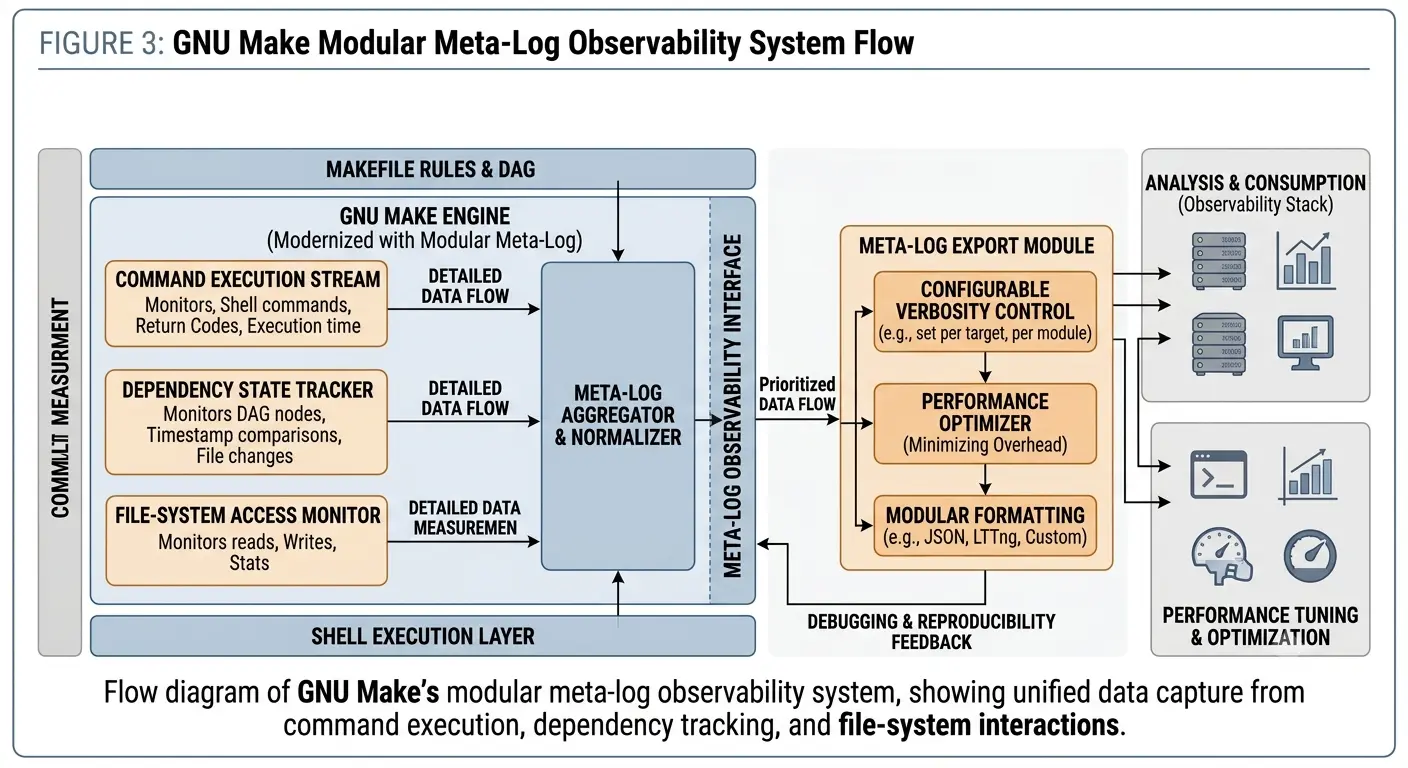
Beyond internal systems, Erakkath Saidumuhammed has documented his engineering approach through peer-reviewed research. His most recent paper, "Modernizing GNU Make's Meta Log System", published in the International Journal of Computational and Experimental Science and Engineering (IJCESEN), proposes a redesigned logging architecture for GNU Make — a build tool that has been in continuous use for roughly 40 years. The paper argues that adding modular, configurable observability to command execution, dependency state changes, and file-system access lets teams debug builds and reproduce results without the heavy performance cost of logging everything by default.
FIGURE 3: GNU Make Modular Meta-Log Observability System Flow.
He has published three additional papers covering related ground: "Designing Sequential Servicing Algorithms for High-Throughput Enterprise Build and Test Pipelines" in JISEM; "Ensuring Deterministic Outputs in Distributed Build Systems Through Runtime-Based Verification" in the Eudoxus Press journal; and "Augmenting Large Language Models" in JICRCR, which extends his systems background into how large language models can be integrated with engineering tooling. He has also written companion explainers on Medium covering Rust build orchestration with GNU Make and Cargo, and eigenvector centrality in graph machine learning.
Erakkath Saidumuhammed's work has been recognized with the Aureum Technology Award, and he has been invited to review submissions for conferences including RAEEUCCI, ICISCN, and ISGAIE — a role that puts him on the other side of the peer-review process he has published through himself.
Looking ahead, his stated focus is on continuing to build scalable infrastructure systems that improve enterprise software development efficiency, alongside mentoring engineers earlier in their careers. For an engineering discipline where build systems are often treated as invisible plumbing, his work makes the case that the plumbing is where a meaningful share of engineering productivity is actually won or lost.




















































 consultants ltd.jpg)


Comments