
Home Industry Travel and hospitality FIFA World Cup 2026: How the H...
Travel And Hospitality
CIO Bulletin, 27 March, 2026 Author: CIO Bulletin Team
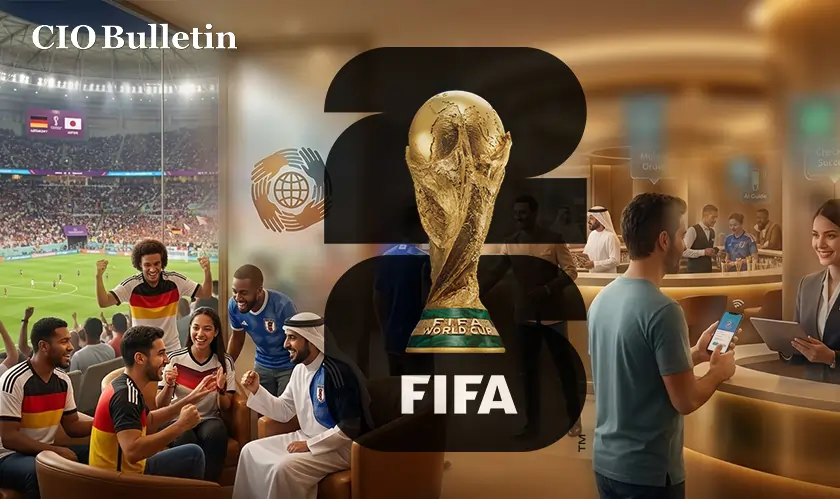
With just over two months to go before the FIFA World Cup 2026, the global hospitality industry is gearing up to meet customer demand of unprecedented proportions. Millions of international and domestic travelers are expected to attend this year’s expanded edition of 48 teams, with matches to be held across different venues in the US, Canada, and Mexico. The hospitality sector, which comprises hotels and dining establishments, is transforming its business operations to address the upcoming requirements for additional accommodations and fresh visitor experiences. It is increasingly using a data-driven approach to achieve its future goals while maintaining operational efficiency. Here is CIO Bulletin’s assessment of the measures undertaken by the hospitality industry.
A Shift Toward Measured Expectations
Unlike previous editions of the World Cup, the tourism industry is adopting a cautious approach as it enters 2026. Despite indications of strong demand, the current Middle East conflict is casting a dark shadow over otherwise demand-led guaranteed sell-outs and high occupancy rates across properties. Travelers are not finalizing their plans as quickly as they did earlier because they need to wait for confirmation of their tickets, calculate their travel expenses, and complete their visa applications. Hotels have developed flexible pricing systems and active inventory control systems that operate in line with anticipated guest numbers, aligning with actual market demand.
Why is the Industry Taking a Cautious Approach?
Hospitality leaders currently face workforce-related challenges, with an available “two-speed” labor market presenting a deep shortage of quality among the abundant number of applications. The gap in skilled food service and hospitality personnel is likely to hit cities like Kansas City that expect over 600,000 visitors the hardest.
The industry is responding to these challenges by treating staffing like a high-stakes draft and moving away from reactive hiring. Following similar trends during big-ticket events, demand is expected to be very unevenly, peaking around match days while reducing during off-days. Thus, hotels have taken to focusing on long-term measures like building talent pipelines well in advance and focusing on “cross-training” where a server can perform check-ins if required. Furthermore, the industry is also prioritizing “Decent work” frameworks to ensure that employees do not feel burned out at the end of the tournament.
Technology Driving Efficiency and Experience
In 2026, those who can effectively utilize technology in their operations stand to benefit the most. However, this is not a generic AI that arranges guest logistics. Instead, an “intelligence layer” personalizes their experiences. Hotels are using AI to forecast the exact period when demand will be at its peak to staff the front desk or the bar accordingly. Through hyper-personalization strategies, the hotel already knows guests’ preferences, such as their preferred cuisine and ambient room temperature. Additionally, contactless check-ins and AI-powered mobile concierges have become the norm across several establishments, allowing staff to focus on providing the best hospitality to guests.
The Rise of the “Living Room” Traveller
The fan in 2026 desires comprehensive, curated experiences and not just a room to rest in, allowing them to celebrate their team’s cherished moments in style and comfort. Short-term rentals and serviced apartments can expect a steady inflow of budget-conscious fans that prefer to share costs by cooking together. On the other hand, luxury travellers are seeking spaces such as hotels that are integrated with fan zones and offer perks like “solo VIP” packages and priority access to matches. To meet diverse needs, the industry is diversifying its offerings. Traditional hotels are upgrading their systems to offer extended-stay formats and “hybrid lodging” that promise both the comfort of an Airbnb and the security of a 5-star hotel chain.
Restaurant and Food Services Adopt Strategically
The food and beverage sector is focusing on engaging customers by remaining authentic to its business values. While inflationary pricing of a themed “World Cup Burger” might rake in profits in the short term, long-term success depends on customer loyalty. Restaurants are planning menus that have become a conversation starter and are looking to turn their physical space into a spot where fans can bond over support for their favorite team. By keeping cultural sensitivities at the forefront of the experience, chefs are gearing up to create unique match-day offerings, such as pop-up bars and regional food festivals, for maximum engagement. The businesses aim for people to remember them as the unique establishment, which, during the 2026 tournament, is not the one that charged customers excessively for a pint of beer.
Sustainability Takes Center Stage
The 2026 tournament requires no new stadium construction, which makes sustainability an essential operational requirement instead of a marketing strategy. The hospitality industry is riding the tide by initiating several “Regenerative Hospitality” measures. These include hotels using smart Internet of Things (IoT) systems to reduce energy consumption in empty rooms, restaurants obtaining all their food from a 50-mile radius, and fans zone trash being transformed into local compost for efficient waste management. As per CIO Bulletin’s assessment, eco-conscious travelers of 2026 choose to support brands that share their values, which makes brand reputation the primary focus.
Building a Multi-Year Legacy of Infrastructure and Investment Momentum
As part of World Cup preparations, the industry and Governments are collaborating to invest significantly in renovating hotels, developing new properties, and improving transportation networks to serve the large number of anticipated visitors, among other measures. Through the “Halo Effect”, the host cities will continue to enjoy the benefits of better public transport, efficient service models, and being viewed suitably by potential tourists even after the tournament’s culmination through the next decade. Thus, the tournament is the catalyst that is driving all stakeholders to invest in the larger public good through reforms on a war footing.
A Human-Centric Kickoff
The hospitality industry will experience its first difficulties with the onset of the tournament. The existence of different demand levels, together with difficult labor availability conditions and worldwide economic challenges arising from the Middle East Conflict, can create obstacles preventing sustained fan engagement.
However, the maturing industry is adept at the task of delivering its best despite the adverse circumstances. Exhibiting “cautious optimism”, it is relying on AI to process data, focusing on humane working norms for staffers, and above all, focusing on creating a pool of future customers through brand loyalty.
The 2026 FIFA World Cup provides an opportunity for people from different cultures to come together and celebrate their shared love of soccer. North America, as the host, has the opportunity to send the message of peace in these troubled times. It has the chance to shine by offering warm welcomes and seamless stays for passionate supporters of the game. According to CIO Bulletin, high-tech automation and complex logistics are limited to bringing people closer, with heart-to-heart connections being impossible to replace with even the most advanced technologies.
The stage is set. The whistle is about to blow. And for those who have spent years preparing, the "Golden Opportunity" of 2026 is finally here.
FAQs
The hotel industry is using an intelligence layer system to predict peak demand times while streamlining contactless check-in procedures and delivering customized guest services that include their preferred room temperature settings.
2.Why is the hospitality industry taking a cautious approach?
The current global conflicts combined with economic challenges and travel restrictions such as visa processing have resulted in "measured expectations", leading to more adaptive pricing systems that rely on actual market demand.
3.What is the "Living Room" traveler trend?
The term describes fans who want specially designed home-like environments, ranging from fans who want economical serviced apartments that allow group cooking and others who desire luxurious hybrid lodging spaces featuring fan zones.
4.How is the 2026 World Cup addressing labor shortages?
The industry now hires personnel through permanent employee development programs which include staff training for various job functions and the establishment of decent work policies that safeguard against employee exhaustion.
5.What makes the 2026 tournament sustainable?
The tournament has stopped building new stadiums to concentrate on regenerative hospitality practices which use Internet of Things technology to achieve energy reductions while restaurants source food within a 50-mile radius and fan zones compost their waste.








 consultants ltd.jpg)


