
Home Technology Medical device Top Three Firms Pioneering Wea...
CIO Bulletin
,
14 April, 2026
Author:
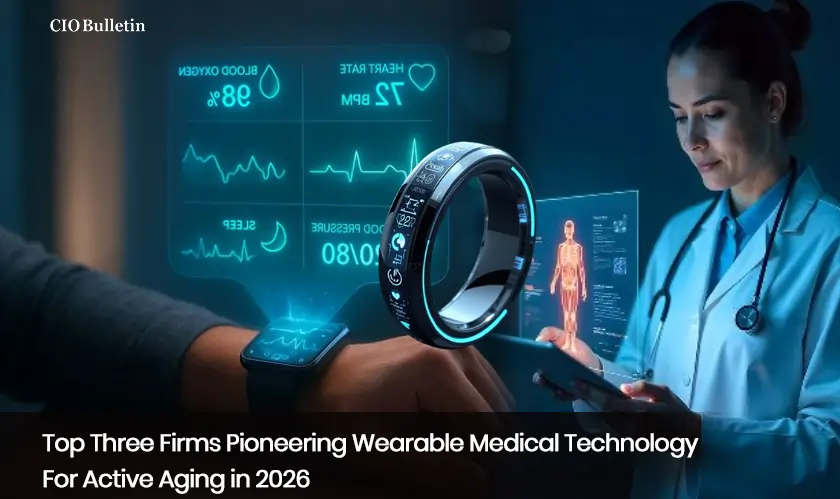
With the global population shifting tremendously in both historical and demographic terms in 2026, the current year stands at the crossroads of advancements enabling “Active Aging”. According to World Health Organization projections, one in six people will be aged 60 or older by 2030. Therefore, there is an imperative need to lay the conditions for individuals to flourish in the golden years of their life, and not merely to endure for survival. Crucial to the realization of this mission is rapidly evolving wearable medical technology; these are devices that have developed from rudimentary step-trackers to multifaceted clinical interventions that have been designed for portable use across various parts of the body, including the skin and around joints.
The maintenance of physical function, cognitive health, and social engagement constitutes active aging. Historically, two of the many factors preventing individuals from enjoying this lifestyle included chronic pain and the fear of injury. Today, several forward-thinking companies are striving to dismantle these barriers through technological advancements. By integrating bioelectric medicine, AI-driven diagnostics, and soft robotics, these companies are redefining the lived experiences of aging. Here is CIO Bulletin’s researched list of the top three firms pioneering wearable medical technology for active aging in 2026.
ZetrOZ Systems sustains movement through ultrasonics and has developed the Sustained Acoustic Medicine) device for pain management. SAM is a wearable, long-duration ultrasonic device that betters the traditional bulky ultrasound machines seen in physical therapy clinics, requiring professional intervention to operate. Patients with chronic musculoskeletal pain and soft tissue injuries stand to benefit the most from this device, designed specifically for them.
Moreover, seniors who maintain an active lifestyle can now use a non-invasive, drug-free alternative to opioids or surgery. By delivering low-intensity ultrasound waves deep into the tissue, the device stimulates the body’s natural healing mechanism and increases local circulation in the affected region. In this manner, users can treat chronic conditions such as arthritis or tendonitis by wearing the SAM device during daily activities, which ensures an effective recovery through a home-based wellness regimen.
ZetrOZ Systems’ device is based on over 30 rigorous clinical studies, ensuring that it is medically approved and not a generic “gadget”. An associated benefit of using the device is observed in many seniors, reducing their dependence on pharmaceutical procedures and avoiding potential gastrointestinal and cognitive side effects arising from NSAID or opioid use.
Enovis, particularly through its renowned brand DJO, has popularized the concept of “orthotics”. In 2026, preventing injuries proactively and recovering after operations is the core focus of its wearable technology. The company’s DonJoy line of products includes sensor-integrated “smart” bracing systems to track differing motion and muscle engagement in real-time.
For individuals recovering from knee and hip replacements and aging athletes, Enovis’ solution is a “digital coach” wrapped around the limb. Users and their physicians receive biofeedback through these wearables, ensuring that patients perform rehabilitation exercises correctly and do not overstrain themselves. By reducing the risk of secondary injuries that affect seniors more prominently than the main injury, this technology occupies the center stage of active aging.
Furthermore, Enovis’ wearables stand out in providing “mechanical” assistance (bracing) along with “digital” insights. Its “Motion iQ” software fulfills users’ need for physical stability in 2026 by providing a seamless interface for patients and physicians to connect for aligning daily activities and the prescribed recovery plan.
CalaHealth differs from the hitherto described companies by addressing the neurological hurdles of aging. Its flagship product, Cala klQ™, is engineered to be worn around the wrist and treat essential tremors. In simple terms, tremors are a common condition among the elderly that entail high social costs for seniors by rendering efforts to perform basic tasks such as eating, writing, or using a smartphone impossible.
Cala Health’s device uses a technology called transcutaneous afferent patterned stimulation (TAPS). The wearable’s modus operandi is to send electrical signals through the skin to the nerves in the wrist, which subsequently travel to the brain to disrupt the “tremor circuit”. This bioelectronic approach calibrates to users’ specific tremor patterns through a personalized approach. The company’s technology is a prime example of how medical wearables have evolved in 2026 to actively suppress symptoms in real-time.
Moreover, the company’s “closed-loop” potential is the most interesting aspect of its technological progress. This implies that the device becomes more effective the longer it is worn by recognizing users’ tremor patterns over time, thereby allowing administration of targeted treatment with patients’ changing health conditions.
A New Era of Autonomy
The development of these technologies signals a concerted shift away from a “reactive” medical model, where action is taken only in the event of a chronic disabling condition, towards a medical model of maintenance and enhancement. These companies are authenticated through FDA clearances and peer-reviewed evidence, which makes it easy for buyers to distinguish them from devices that only provide health data without actionable insights. In 2026, medical-grade wearables empower users through a “body-positive” approach where technology serves as a silent yet reassuring partner in maintaining autonomy and independence.
However, the hallmark of true “Excellence in Wearable Medical Technology” can be gauged from the psychological freedom the devices grant to users and not by reading a hardware spec-sheet in isolation. Seniors get a renewed sense of confidence and develop an optimistic outlook towards life when a ZetrOZ device manages their pain, an Envois brace stabilizes their gait, and a Cala Health wearable steadies their hands.
Hence, these companies are selling much more than products – they are selling time, mobility, and dignity of an independent life, which in turn decouples the process of aging from physical decline.


















































 consultants ltd.jpg)


