
Home Industry Architecture and interior design A Step-by-Step Look at the Sew...
Architecture And Interior Design
CIO Bulletin
,
24 June, 2026
Author:
Guest
A sewer and drainage system keeps wastewater moving safely from fixtures into the main line. When flow slows or stops, it usually points to a restriction forming inside the pipe that is not visible from the surface. These issues can affect multiple connected drains and reduce overall system performance.
A structured method is used to restore proper flow without unnecessary disruption. Technicians follow a clear sequence that includes inspection, cleaning, removal, and final verification. A professional drain cleaning service applies this step-by-step process to locate the exact issue and restore full function. The following sections explain each stage in detail.
The process begins with a detailed inspection of the sewer or drain line to determine what is restricting wastewater movement and where it is located. A waterproof camera is inserted through an access point so technicians can view the inside of the pipe in real time. This allows precise identification of the affected section without guesswork.
During this stage, technicians focus on understanding internal conditions rather than correcting the problem. The inspection may reveal structural narrowing, intrusive roots, or grease buildup that has formed along pipe walls and reduced available flow space.
Key findings during inspection include:
Exact location of restricted flow inside the pipe
Type of obstruction affecting movement
Condition of internal pipe surfaces
Accessibility of the affected section
Once the inspection is complete, technicians select equipment based on the condition of the line. The cleaning method is matched specifically to the type and location of the restriction rather than using a general approach.
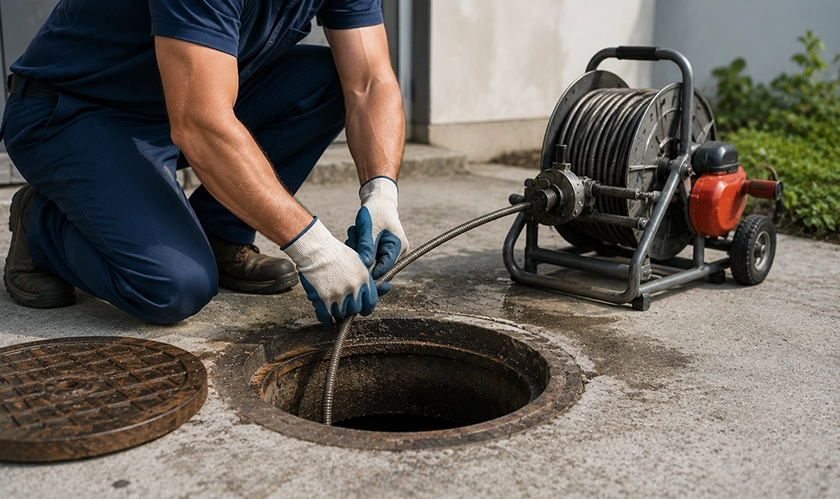
High-pressure water systems are used when buildup is spread along interior walls, while mechanical tools are applied when the obstruction is compact or tightly packed. Each method is chosen to match the resistance identified during inspection.
Before cleaning starts, technicians set up access points and position equipment to ensure complete reach across the affected section. This preparation ensures the entire area identified earlier is treated effectively.
After setup is complete, technicians begin removing the material that is limiting flow inside the line. This stage focuses on clearing all forms of obstruction discovered during inspection in a controlled and structured manner.
Materials commonly removed include:
Hardened residue from household wastewater
Intrusive root growth inside underground lines
Compact debris reduces internal passage space
Accumulated organic material along pipe surfaces
Each material is carefully extracted to reopen the pathway while maintaining pipe integrity. As removal progresses, wastewater movement gradually improves through the system.
Once the obstruction is cleared, the line is flushed with controlled water flow to remove remaining loose particles. This helps reset internal conditions and ensures that no residual material remains inside the pipe. Flushing also allows technicians to observe how water moves through the system after cleaning. It provides a clear transition from removal work to performance confirmation.
The final stage confirms that the sewer and drain line is operating correctly after the cleaning process. Water is run through the system to verify smooth and uninterrupted movement through the cleaned section. A professional drain cleaning service may also perform a final camera inspection to confirm that the interior of the pipe is fully clear and stable. Once a consistent flow is observed, the system is considered restored and ready for regular use.
The sewer and drain cleaning process follows a structured sequence that ensures each stage contributes to restoring proper wastewater movement. From inspection to final verification, every step plays a specific role in achieving reliable flow conditions. When carried out professionally, this process supports efficient drainage performance and long-term system stability.





















































 consultants ltd.jpg)


Comments