
Home Industry Architecture and interior design Can "Sponge City" Blueprint of...
Architecture And Interior Design
CIO Bulletin
,
12 June, 2026
Author:
Sambhrant Das
By discarding concrete pipes for natural floodplains, the visionary designer is transforming flood-prone urban environments into self-sustaining ecological parks.
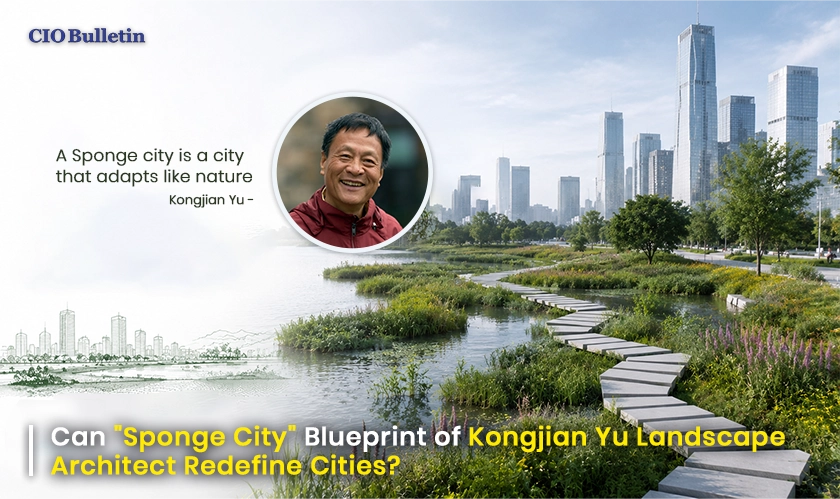
Most modern cities are built to push back at nature, using miles of concrete drains and underground piping to shove storm water away as fast as possible. The trouble with this approach is that this old-school engineering style is not practically designed, so major metropolitan areas end up underwater when a massive storm rolls in. Turning this broken framework completely on its head, Chinese Kongjian Yu landscape architect, has spent his career as a professor and later as the owner of the design firm Turenscape showing that natural dirt and plants handle extreme weather far better than gray concrete ever could. By ripping out rigid retaining walls and letting rivers breathe, his projects turn destructive floodwaters into a valuable resource that cools down entire neighborhoods.
What drives this idea is pretty straightforward: make the city behave like a giant sponge, this being inspired by simple farming methods from back in the day. Instead of spending millions to rush rainwater out of town through costly industrial tubes, the aim is to trap, purify, and actually use each drop right where it lands.
Making Pervious Green Spaces: Concrete plazas get replaced with open, layered soil beds and specialized greenery that suck up early downpours on impact.
Winding the Waterways: Straight, cement-lined canals are intentionally broken apart and reshaped into curvy, slow-moving dirt creeks that reduce dangerous water speeds.
Building Seasonal Retention Ponds: Low areas are turned into wide, interconnected urban marshes that can safely fill up with deep river overflows without damaging homes.
The real genius of this ecological design strategy is that these heavy-duty flood zones double as beautiful public getaways. Instead of hiding ugly water treatment plants behind locked metal fences, these nature-based setups put active wetlands right in the center of busy neighborhoods. Unused dirt lots, shuttered factories, and soggy dead zones are remade into lively parks with boardwalks, wild birds, and noticeably cleaner air. It also shows that planning for climate change is not automatically the same as turning a city into some kind of a fortress; local residents get a calmer place to meet, walk, and breathe while their basements stay dry.
Moving toward these green sponge layouts offers a massive financial break for city planners who are tired of paying for expensive pipe repairs. When massive steel and concrete drainage systems are involved, it takes a serious chunk from municipal budgets, and the manufacturing side adds a big carbon footprint, too. Natural wetlands, on the other hand, adjust to shifting seasonal rain patterns without needing heavy machinery, which helps them save cities money on emergency cleanup and constant infrastructure repairs.
Instead of treating water as an enemy to be controlled, it should be welcomed.
As global warming creates a disruptive pattern of sudden flash floods, then long dry breaks in between, cities have to rethink their layouts. Storing water inside open urban basins serves more than one purpose; it refills tired underground aquifers and also keeps a ready reserve supply in place for the hot stretch of summer. This smart landscape planning ensures that modern city systems can handle wild weather swings without running out of resources or breaking down. CIO Bulletin views this development as a mandatory blueprint for modern municipal design, proving that working alongside natural hydrology is the single fastest path toward building secure, future-proof urban spaces.


















































 consultants ltd.jpg)


