
Home Technology Artificial intelligence How AI-Driven SEO Is Transform...
CIO Bulletin
,
15 December, 2025
Author:
CIO Bulletin Team
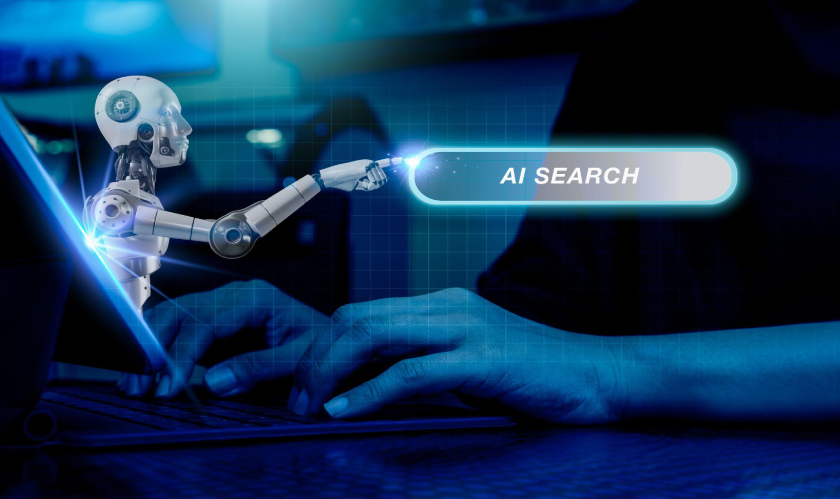
In today’s rapidly evolving digital landscape, modern enterprises are under constant pressure to stay ahead of competitors, personalize customer experiences, and scale their marketing operations efficiently. Traditional SEO strategies, while still essential, are no longer sufficient on their own. With search engines becoming smarter and user behavior more dynamic, businesses need intelligent optimization methods that provide deeper insights and faster execution.
This is where AI-driven SEO is playing a game-changing role. From real-time data analysis to automated content optimization and predictive analytics, AI is reshaping how enterprises approach digital marketing, customer targeting, and long-term growth.
This detailed guide explores how AI-driven SEO is transforming digital marketing strategies and highlights practical ways modern enterprises can leverage this shift to gain a competitive advantage.
AI has moved beyond being a support tool. It is now the backbone of enterprise SEO. Search engines like Google increasingly rely on machine learning, natural language processing (NLP), and entity recognition to understand user intent, evaluate content quality, and reward relevance.
AI tools can analyze vast datasets to understand how users search, click, scroll, and engage. This makes it easier for enterprises to refine their targeting strategies, improve UX, and uncover new search patterns.
A key part of this evolution is Search Intent Optimization, where businesses focus on optimizing pages to fulfill exact user expectations rather than simply ranking for keywords. AI-powered tools allow marketers to categorize user intent as informational, transactional, or navigational with far greater accuracy.
AI systems group related keywords into clusters, helping enterprises create topic-focused content libraries rather than isolated articles. This improves domain authority and supports long-term visibility.
Content remains the core of SEO, but AI is transforming both how content is created and how well it performs.
AI tools generate content outlines, FAQs, headlines, and even complete drafts based on trending queries and SERP patterns. This helps enterprises produce high-quality, optimized content faster than ever before.
AI-based analytics platforms evaluate content performance based on engagement metrics, keyword difficulty, E-E-A-T signals, and competitive benchmarking. These insights enable continuous optimization and help brands stay aligned with algorithm expectations.
Enterprises are now leveraging machine learning to personalize content recommendations for users. This boosts session time, reduces bounce rates, and increases overall SEO value.
Technical SEO is complex and often time-consuming, especially for large websites with thousands of pages. AI tools streamline and automate these workflows, ensuring faster implementation and fewer errors.
AI-driven audit tools analyze site architecture, indexing issues, page speed, Core Web Vitals, structured data, and broken links in a fraction of the time.
AI systems automatically map out internal linking structures and suggest optimal anchor text to improve page authority distribution.
AI tools can now predict how a specific change, like adding schema markup or rewriting meta tags, might impact rankings.
Link building remains one of the most challenging aspects of SEO, and AI is helping enterprises simplify the process.
AI tools evaluate domain authority, traffic quality, topical relevance, and link toxicity far faster than manual analysis.
AI identifies "backlink gaps" by comparing your link profile with top-ranking competitors, highlighting opportunities you may have missed.
AI systems can instantly detect broken link opportunities, unlinked brand mentions, or new citations to help marketers secure more backlinks.
Modern SEO and paid marketing are no longer isolated. AI connects them more efficiently.
Machine learning helps businesses understand which audiences respond best to which formats, improving ROI significantly.
For example, AI insights explain why advertisers from enterprises to political campaigns invest heavily in strategic ad placements.
AI analyzes performance trends to recommend optimal spending levels across channels, devices, and time zones.
Enterprise brands are focusing more on personalized experiences, and AI makes this possible at scale.
For enterprises that need to connect search visibility with account-level engagement, ABM Agency combines account-based marketing with AEO expertise and AI tools. Its services span 1:1 and 1:few campaigns, content marketing, SEO, paid search, programmatic and LinkedIn advertising, plus reporting and sales enablement. This can help teams translate audience and intent insights into coordinated campaigns rather than treating SEO as an isolated channel.
AI tools automatically customize landing pages based on:
user demographics
past browsing behavior
device type
geographic location
With the rise of smart devices and visual recognition, AI helps brands optimize for:
conversational keywords
image-based queries
multimodal search behaviors
Large businesses often struggle with the operational overhead of managing SEO across many teams and regions.
AI introduces automation in:
content scheduling
indexing requests
A/B testing
metadata optimization
reporting and dashboards
This reduces manual work and increases scalability.
AI’s evolution indicates several important shifts for enterprises.
Google has already introduced AI Overviews and improved semantic interpretation. Ranking is shifting from keywords to context, relevance, and expertise.
AI-based monitoring tools help brands predict volatility and adjust their strategy quickly to reduce ranking fluctuations.
Future SEO will rely on AI-generated forecasts such as:
traffic predictions
ranking probabilities
content topic opportunities
conversion likelihood
As business landscapes grow more competitive, modern enterprises can no longer rely on outdated or manual SEO processes. AI-driven SEO empowers organizations to analyze data at scale, understand user intent more deeply, personalize content, manage technical challenges, and predict future market shifts.
Enterprises that embrace AI-led optimization will experience:
higher search visibility
better user engagement
more efficient marketing operations
stronger long-term digital authority
In the next 2 to 3 years, AI will become inseparable from digital marketing, and brands that start adapting today will lead tomorrow.
















































 consultants ltd.jpg)


