
Home Technology Artificial intelligence Elon Musk Announces Mega AI Ch...
CIO Bulletin
,
24 March, 2026
Author:
CIO Bulletin Team
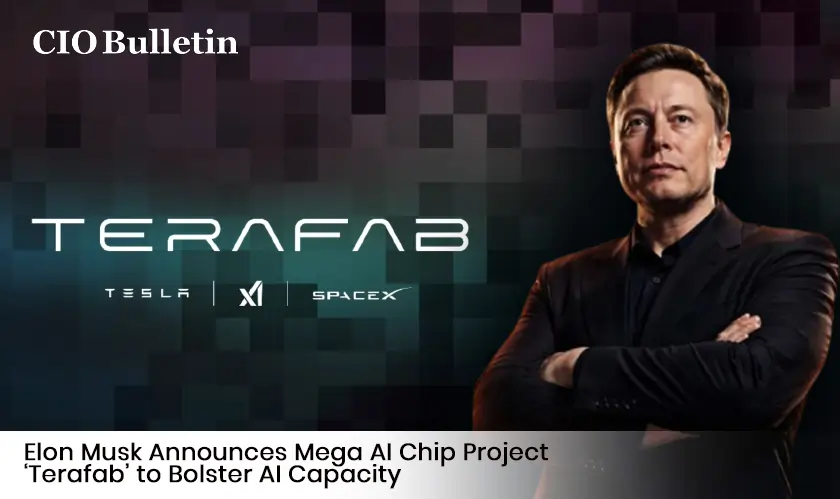
Elon Musk launches "Terafab" in Austin to produce a terawatt of AI computing power for Tesla, SpaceX, and xAI.
SpaceX and Tesla founder Elon Musk recently Elon Musk his ambitious plans to build chips for artificial intelligence, robotics, and data centres in space. With this announcement, the world’s richest person marked a new chapter in his list of bold projects. He said that the “Terafab” would be a manufacturing facility based near Austin, Texas. This facility will target the production of one terawatt of computing power annually. A terawatt is equivalent to one trillion watts. The unprecedented scale of Musk’s target output—50 times the current global AI compute—is notable. Only the total power generation capacity of the United States eclipses it by a small margin. Terafab is a joint endeavor of Tesla and xAI, following SpaceX’s merger with xAI earlier this year.
Furthermore, the project is capital-intensive, with an estimated cost of tens of billions of dollars. Separately, Tesla plans to increase its spending to $20 billion in 2026. This is up from less than $9 billion in 2025. However, the company’s 2026 spending forecast does not include Terafab expenditure. Despite Musk’s lack of prior expenditure in semiconductors and the high costs, the project received the go-ahead. It is intended to meet Tesla and SpaceX’s future computing power demand for designing AI applications, including robo-taxis and robots. This is significant, as none of the global chip suppliers has the capacity to meet the scale of their needs.
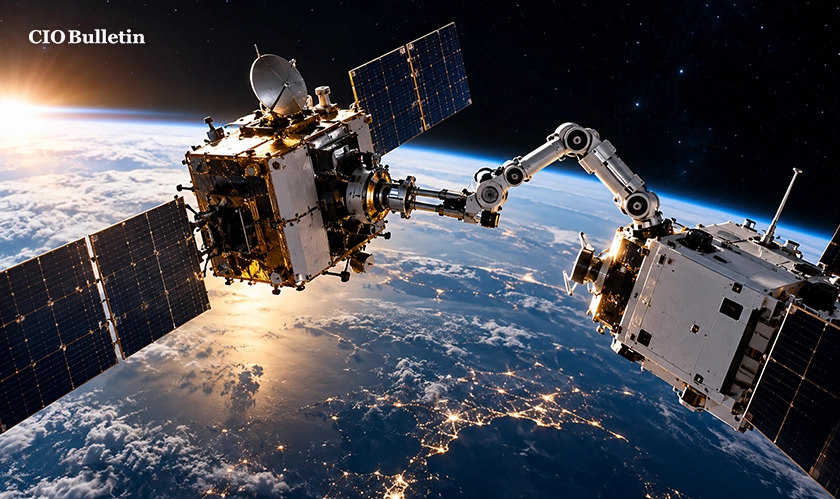
Moreover, the state-of-the-art facility focusing on two-nanometer nodes aims to produce prototypes in 2027 and achieve increased production volumes by 2028. Designing, manufacturing, testing, and improving each chip would take place at an “advanced technology fab” in Austin. The project’s long-term vision is to make chips that support 100 to 200 gigawatts of computing power on Earth, and a terawatt in space. According to Musk, “Terafab would ultimately help humanity become a ‘galactic civilization’ capable of harnessing the resources of other planets and stars.” CIO Bulletin views this development as a watershed moment in AI development that would chart the trajectory of future developments in the field.



















































 consultants ltd.jpg)


