
Home Other Blogs Transforming the Space Economy...
CIO Bulletin
,
22 October, 2026
Author:
Ravathi Sunil
For more than sixty years, the space industry has followed a highly costly approach that was throwaway in nature. Satellites costing millions of dollars were launched into space with a strict expiry date that was mainly determined by one thing: the amount of fuel they had. When the propellant on board was used up or when a single electronic component failed, these advanced machines suddenly became multi-ton amounts of high-tech space junk, floating uselessly in either low Earth or geostationary orbit.
That single-use era is officially coming to a close. The emergence of dynamic satellite servicing is sparking a monumental paradigm shift across global space logistics, turning disposable orbital assets into long-term, maintainable infrastructure.
The Dawn of Orbital Mechanics and Longevity
It's like taking a luxury sports car off the lot at the dealership, driving it across the country, and then leaving it by the side of the highway just because the fuel tank is empty; it may sound absurd, yet that was the standard operating procedure in orbit for decades.
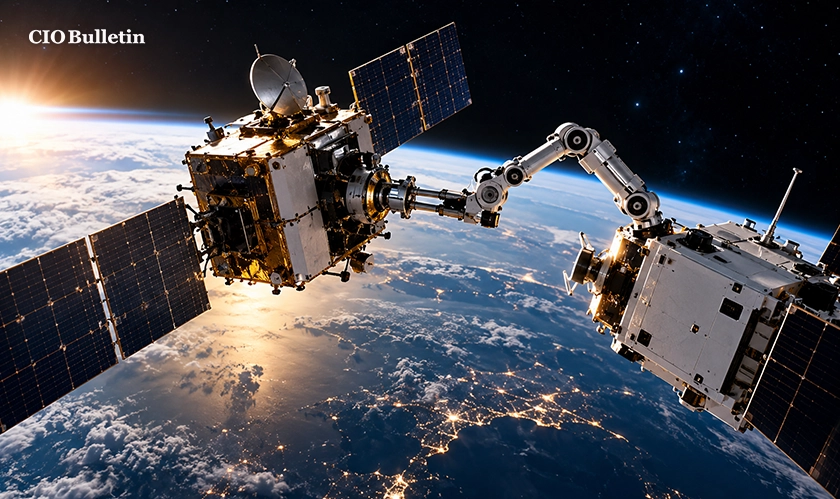
At present, autonomous robotic space tugs and dedicated servicer spacecraft are altering those previous operational rules. They achieve this by bringing themselves into position with target satellites that are floating thousands of kilometres above Earth, then attach securely to the client vehicles using advanced vision sensors, robotic grapples, and special docking interfaces.
This robotic intervention unlocks three game-changing operational pathways:
In-Orbit Refueling: Refilling the spent fuel containers to regain the primary engine functionality.
Orbit Maneuvering and Maintenance: Connecting external propulsion units to the aged satellites for performing precise maneuvers.
Upgrades and Inspections: Utilizing robotically controlled arms for repairing the damaged solar panels or other malfunctioning components.
Through these tailored interventions, modern in-orbit satellite servicing allows commercial operators and government agencies to extract maximum value from assets already placed high above our atmosphere.
Refueling and Repair: Core Drivers of Extended Utility
The main factor responsible for this industry is the direct delivery of fuel. Satellites use a large amount of their onboard propellant just to stay in their designated orbital position against the effects of gravity and solar radiation pressure. By the time the fuel is exhausted, the main scientific equipment, that is, the cameras, the transponders, and the high-band sensors, is generally still working perfectly.
By utilizing advanced satellite repair technology, mechanic satellites can rendezvous with stranded assets to refuel their propulsion units or dock permanently to act as surrogate thrusters. This capability directly achieves true satellite life extension, adding five to ten years of profitable active service to platforms that would otherwise have been written off as total financial losses.
Consider the economic implications for communications and earth observation constellations:
Asset Optimization: Extending an operational life window allows companies to defer massive, capital-intensive replacement launches for years.
Debris Mitigation: Active life extension reduces the total volume of dead hardware cluttering high-density orbital bands, dramatically lowering collision risks for active constellations.
Payload Adaptability: Servicing spacecraft can install external computing modules or software-defined hardware, upgrading legacy systems without launching an entirely new bus structure.
Building a Sustainable Orbital Infrastructure
Robotic space mechanics not only enable individual satellites to be saved from early retirement but also form the basic structure of a circular space economy; instead of always sending single-use hardware up from Earth's surface, the future of space exploration will depend greatly on carrying out maintenance, assembly, and recycling of components directly in space.
In new generations of satellite designs, standardized docking ports are being set as the factory's default option, so that rendezvous and maintenance procedures become as common as pit stops do in motor racing. With autonomous navigation sensors and robotic arms becoming more advanced, the ability to carry out servicing will extend to include complex assembly in orbit, the construction of huge solar arrays, deep-space communication stations, and crewed habitats directly in microgravity.
The transition toward commercial satellite servicing is not merely a technical triumph; it represents a mature, sustainable philosophy for space operations. By shifting our perspective from disposable hardware to long-term orbital maintenance, we are opening the door to resilient communications networks, lower operational costs, and a far safer orbital environment for generations to come.
Ready to Lead the Conversation in In-Orbit Satellite Servicing?
CIO Bulletin empowers your organization to gain the market visibility it deserves while staying at the forefront of orbital logistics and space technology innovations reshaping global communications. Share your satellite life extension insights with industry leaders, stay ahead of the in-orbit maintenance curve, and turn your space engineering expertise into a defining industry milestone!
Subscribe Today for Exclusive Insights: https://ciobulletin.com/subscribe
Enhance Your Brand Presence: Advertise with us at
https://ciobulletin.com/advertise



















































 consultants ltd.jpg)


Comments