
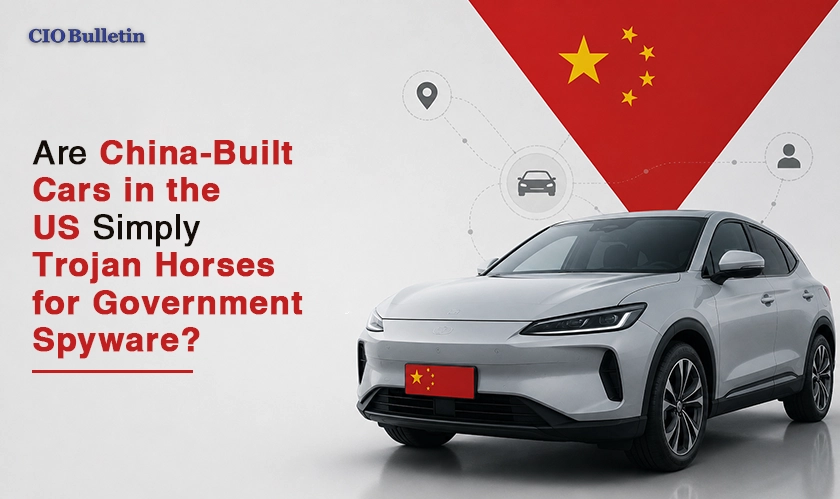
Home Industry Automobile Are China-Built Cars in the US...
CIO Bulletin
,
16 June, 2026
Author:
Gayathri Sr
Top automakers scramble for survival licenses as strict national security crackdowns threaten to turn popular showroom imports into illegal spyware.
The American automotive industry is facing a brutal moment of truth that exposes a terrifying reality: Detroit is completely hooked on foreign technology, and the government might be about to pull the plug. A massive regulatory storm is forcing major corporations like Ford to beg the U.S. Commerce Department for special permission to keep selling their vehicles. According to investigative tracking by CIO Bulletin, a strict federal ban on adversarial software has left automotive executives in a blind panic over the fate of popular China-built cars in the US.
At the heart of the controversy is a chilling national security threat. Modern vehicles are essentially smartphones on wheels, capable of tracking location data, recording biometric info, and mapping American infrastructure. Washington regulators fear this data could flow straight to foreign adversaries.
The immediate fallout is exposing just how deeply dependent American brands have become on overseas manufacturing:
The Ford Crisis: The flagship Lincoln Nautilus is manufactured entirely overseas, requiring urgent government intervention before the software ban cripples its 2027 model rollout.
The Ownership Trap: Brands with heavy foreign backing are realizing that their corporate structures might make their entire lineups illegal to sell on American soil without massive restructuring.
The Hardware Time Bomb: While software restrictions hit first, a much more devastating hardware ban loom, forcing brands like General Motors to frantically order suppliers to scrub their manufacturing lines.
Automakers are trapped in an opaque, secretive licensing process with no guarantee of survival. For years, these corporations prioritized cheap labor over domestic security, and now the bill has come due. Pulling these supply chains apart will cost billions, and the transition is proving to be an absolute nightmare.
The friction is vibrating through every level of the global supply network. Highlighting the sheer complexity of the software decoupling, global researchers at the Rhodium Group warned:
“Hardware restrictions are likely to be more cumbersome and require more time for automakers to adapt.”
As federal deadlines rapidly approach, the auto industry is running out of time. If Washington refuses to grant these emergency licenses, American consumers might witness a historic corporate collapse where iconic brands are legally blocked from selling their own vehicles to the public.















































 consultants ltd.jpg)


