
Home Industry Banking and finance High-Value Investments: Why Fi...
CIO Bulletin
,
13 October, 2026
Author:
Guest
What do you think will happen if your next luxury purchase offers more than just a pride boost? As investors reconsider what makes an asset truly valuable, fine colored gemstones are gaining attention for reasons beyond their beauty.
However, not every emerald, ruby, or sapphire deserves a place in a serious investment portfolio. Actually, understanding the difference between an expensive jewel and a valuable asset is where your smart luxury investing begins.
Your designer handbag, for instance, may lose its appeal with changing fashion trends and your evolving preferences, but an exceptional gemstone, on the other hand, can retain its allure for ages to come. For most investors, emeralds, rubies, and sapphires represent something beyond prestige: an opportunity to own a rare natural treasure that has enduring collector appeal.
Some helpful references, like Bain & Company's 2026 luxury market update, report that worldwide personal luxury goods spending reached an estimated €358 billion in 2025, with promising growth projected by the end of 2026. It does not, however, guarantee returns on individual purchases like yours, even with this seemingly rapid growth in the luxury market. That is why some regional discussions about gold price volatility can offer you a timely reminder that even widely recognized tangible assets nowadays can easily experience price swings.
Unlike many branded accessories these days, natural gemstones cannot be reproduced with identical geological characteristics. Some factors, like color, clarity, size, origin, and treatment history, influence their desirability, while rare combinations can attract serious collectors.
When you really want to bet your money on these valuables today, the Gemological Institute of America (GIA) can help you with identification, origin analysis, and assessment of these characteristics whenever you need them. For more seasoned investors in the field, documented quality is quite crucial; a beautiful stone lacking reliable records may be harder to authenticate, insure, or resell at its most reasonable price.
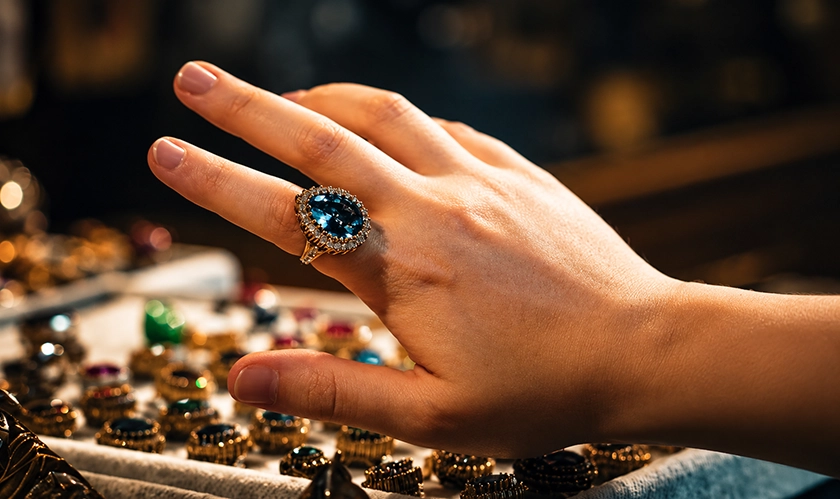
It is easier for you to blend personal enjoyment with fine jewelry, especially with potential long-term value and pieces with exceptional natural gemstones. For instance, some renowned and carefully selected emerald rings can showcase a desirable green gemstone in a wearable setting that can easily become a cherished heirloom for generations to come.
However, the present setting alone does not make your ring a wise investment. An emerald's quality, treatment disclosures, independent laboratory documentation, craftsmanship, and purchase price all warrant a closer look. Some measures, like those in the GIA emerald buying guide, say that subtle differences in color and transparency can significantly impact value.
With today's eco-conscious trend, responsible sourcing is another valuable consideration, especially for modern luxury gemstone patrons like you. Some factors like mining conditions, environmental impact, and supply chain transparency can hugely affect how these precious stones are assessed, especially for "traceable ownership conscious" collectors and buyers.
It's quite essential nowadays to ask sellers about origin documentation, treatment history, and sourcing practices before committing funds. Also, independent verification can help you reduce a lot of uncertainties. But no certification, however, can really guarantee your gemstone's future increase in value or ethical sourcing by itself.
You may need to approach fine colored gemstones as specialized collectibles rather than a 100% guaranteed substitute for stocks, bonds, or other investments. They can be quite difficult to value, expensive to insure, and challenging to sell quickly at a favorable price.
So, before you make a huge investment today, you need to first compare independent assessments, examine the seller's return policy, and understand some calculations of their resale values. Your smartest luxury investment these days is not simply the rarest stone you've been wanting to buy, but rather one whose quality, documentation, price, and potential market appeal you can assess with absolute confidence.



















































 consultants ltd.jpg)


Comments