
Home Other Blogs CIO Bulletin’s Guide to the ...
CIO Bulletin
,
04 September, 2026
Author:
Gayathri Sr
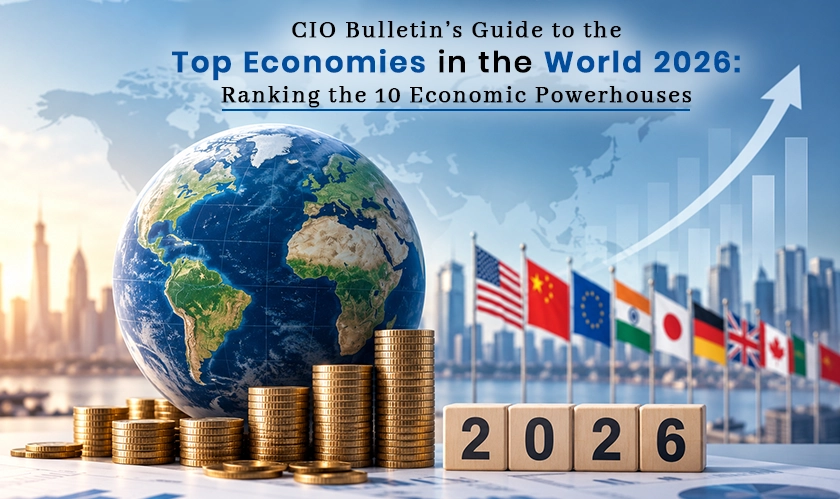
Economic strength is often measured in numbers, but its real impact is felt in everyday life. It influences employment opportunities, business expansion, technological innovation, infrastructure development, and the overall standard of living. The world's leading economies not only shape their own futures but also influence global markets, investment trends, and international trade.
As 2026 progresses, the global economy continues to evolve amid rapid technological advancements, digital transformation, geopolitical shifts, and changing consumer behaviors. While established economic giants remain dominant, emerging nations are creating new opportunities and reshaping the balance of economic power.
Understanding the top economies in the world offers valuable insight into where innovation is flourishing, where businesses are investing, and which nations are likely to influence the next decade of global growth. At CIO Bulletin, we continuously analyze economic trends because they provide a roadmap for business leaders, investors, entrepreneurs, and decision-makers seeking to stay ahead in a competitive world.
Economic strength goes far beyond the total amount of money a country generates. Several factors contribute to a nation's economic position and influence.
Gross Domestic Product (GDP): GDP remains the most widely accepted measure of economic performance. It represents the total value of all goods and services produced within a country over a specific period. Economists use GDP to compare economic output across nations and evaluate overall economic health.
Purchasing Power Parity (PPP): PPP adjusts economic output based on local purchasing power and living costs. This measurement helps provide a more realistic comparison of how much economic value is generated within different countries.
Several additional indicators help determine economic strength:
Employment levels
Inflation rates
Industrial production
Consumer spending
Export performance
Technological innovation
Infrastructure development
Together, these indicators paint a comprehensive picture of a nation's economic capabilities.
Based on the latest IMF projections, these nations continue to lead the global economy through a combination of innovation, industrial output, financial strength, and global influence.
Estimated GDP: $32.38 Trillion
The United States remains the world's largest economy and continues to serve as a global center for innovation, finance, and entrepreneurship. Its economy is powered by technology, healthcare, financial services, manufacturing, and consumer spending.
Home to some of the world's most influential companies, the United States continues to lead advancements in artificial intelligence, cloud computing, biotechnology, and digital transformation. Its financial markets remain among the most important drivers of global capital flows.
Estimated GDP: $20.85 Trillion
China maintains its position as the world's second-largest economy and remains a manufacturing powerhouse. Over the past few decades, the country has transformed itself into a global leader in exports, infrastructure development, renewable energy, and technology.
China's investments in advanced manufacturing, electric vehicles, and digital innovation continue to strengthen its economic position while expanding its influence across international markets.
Estimated GDP: $5.45 Trillion
Germany remains Europe's largest economy and a global leader in engineering, automotive manufacturing, industrial equipment, and exports.
Its reputation for precision manufacturing and technological excellence has allowed Germany to remain one of the most competitive economies despite challenges related to energy costs and demographic changes.
Estimated GDP: $4.38 Trillion
Japan continues to demonstrate remarkable resilience through its leadership in robotics, electronics, automotive production, and advanced manufacturing.
Despite an aging population, Japan's commitment to innovation and productivity keeps it among the world's most influential economic powers.
Estimated GDP: $4.26 Trillion
The United Kingdom remains one of the most important financial centers globally. London continues to attract international investment, while sectors such as technology, healthcare, professional services, and finance drive economic growth.
The country's ability to adapt to changing global trade dynamics has helped maintain its position among the world's leading economies.
Estimated GDP: $4.15 Trillion
India continues to rank among the fastest growing economies in the world, driven by a young population, rapid digital adoption, infrastructure investments, and a thriving entrepreneurial ecosystem.
The country's technology sector, digital payment systems, manufacturing initiatives, and expanding middle class are creating significant economic momentum. Many analysts view India as one of the most promising economic success stories of the coming decade.
Estimated GDP: $3.60 Trillion
France benefits from a highly diversified economy supported by aerospace, luxury goods, manufacturing, tourism, and energy sectors.
Its strong industrial foundation and emphasis on innovation continue to make France a critical contributor to European economic growth.
Estimated GDP: $2.74 Trillion
Italy combines industrial expertise with globally recognized luxury brands, fashion, automotive manufacturing, and tourism.
The country's network of small and medium-sized enterprises remains a key driver of economic activity and export success.
Estimated GDP: $2.66 Trillion
Russia continues to play a significant role in global energy markets and natural resource production. While geopolitical challenges remain, its vast reserves of oil, gas, and minerals contribute significantly to economic output.
Estimated GDP: $2.64 Trillion
Brazil rounds out the Top 10 Largest Economies list with strengths in agriculture, mining, manufacturing, and energy production.
As Latin America's largest economy, Brazil plays an essential role in global commodity markets and international trade.
Artificial Intelligence Is Becoming an Economic Driver: AI is no longer a future concept. Governments and businesses are investing billions into artificial intelligence infrastructure, automation, and advanced computing systems. Countries leading in AI adoption are gaining competitive advantages across multiple industries.
Digital Transformation Continues to Accelerate: Digital platforms, cloud technologies, cybersecurity, and e-commerce have become critical components of economic growth. Nations investing heavily in digital infrastructure are seeing stronger productivity gains.
Green Energy Investments Are Expanding: Renewable energy projects, electric vehicles, battery technology, and sustainable infrastructure investments are creating new economic opportunities worldwide.
Emerging Markets Are Gaining Momentum: Several developing nations continue to experience strong growth due to urbanization, technological adoption, and increasing consumer demand, making them important contributors to future global economic expansion.
The Largest Economies influence international trade agreements, investment decisions, technological innovation, and financial markets. Their policies often affect supply chains, commodity prices, interest rates, and business strategies worldwide.
For companies exploring international growth opportunities, understanding economic rankings provides valuable guidance on market potential, consumer demand, and future investment destinations.
This is one reason CIO Bulletin closely follows economic developments and emerging business trends. Understanding where economic growth is occurring helps organizations identify opportunities before they become mainstream.
The top economies in the world continue to shape global business, innovation, trade, and investment in 2026. While the United States and China remain dominant economic forces, countries such as India are demonstrating extraordinary momentum and attracting increasing global attention.
Economic leadership is no longer defined solely by size. Innovation, technology adoption, sustainability initiatives, and workforce development are becoming equally important factors in determining long-term success.
At CIO Bulletin, we remain committed to providing readers with meaningful insights into the economic trends, technological advancements, and business developments shaping tomorrow's world. As global markets continue to evolve, staying informed about the top economies in the world can help businesses and leaders make smarter decisions for the future.
Everything you need to know about this news
The leading economies include the United States, China, Germany, Japan, the United Kingdom, India, France, Italy, Russia, and Brazil.
GDP measures the total value of goods and services produced within a country, making it the most widely accepted indicator of economic output.
India continues to be recognized as one of the fastest growing economies in the world, supported by strong domestic demand, technology adoption, and infrastructure investments.
GDP measures economic output using market exchange rates, while PPP adjusts for local costs of living and purchasing power.
Economic rankings help businesses identify growth opportunities, understand market trends, evaluate investment destinations, and plan long-term expansion strategies.


















































 consultants ltd.jpg)


Comments