
Home Other Blogs CIO Bulletin’s Guide To The ...
CIO Bulletin
,
04 September, 2026
Author:
Sambhrant Das
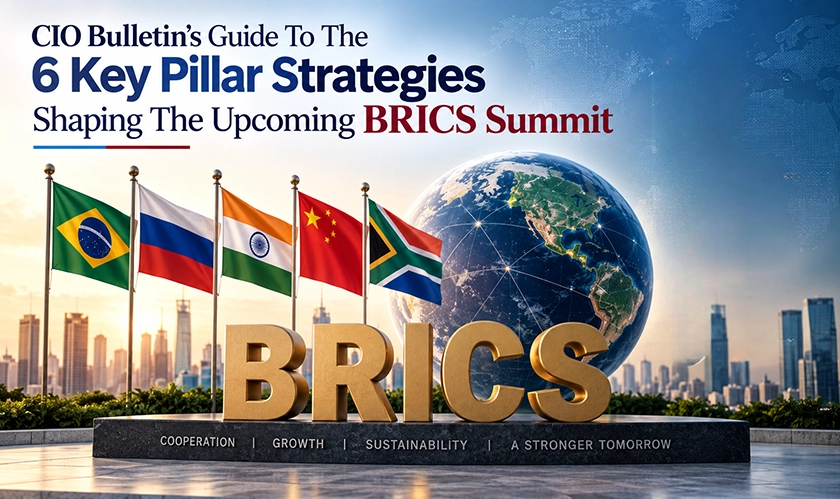
Due to the shift in international diplomacy and the balance of power in light of a transition to new economies, India will host the summit for nations from the Global South. The event is expected to alter various aspects, including commerce, technology, and economic security sectors. The event is likely to determine how leaders will build solutions to current geopolitical problems.
The upcoming event allows countries to look for changes to financially serviced market and supply chain systems that are dominated by the West. The upcoming forum will expand the number of countries interested in promoting bilateralism in various areas and thus will become a leader in terms of the creation of new rules. To help executives understand what is at stake for international business, here is CIO Bulletin's guide to the upcoming BRICS summit.
The 6 Strategic Pillars Framing the New Delhi Agenda
Developing a robust framework for non-dollar bilateral trade remains the top economic priority for the bloc. Member states are actively testing interoperable digital currencies and localized payment messaging systems to bypass traditional SWIFT rails. By expanding cross-border trade settlements in national currencies, the BRICS summit delegates aim to shield emerging economies from sudden foreign exchange volatility and Western financial sanctions.
The emergence of artificial intelligence has transformed from being merely an innovation into a vital aspect of national security and economic independence. Lasting initiatives for establishing sovereign AI systems and shared frameworks around open-source models among BRICS nations will be the focus of the BRICS summit India talks. These initiatives seek to circumvent monopolistic tendencies of silicon tech companies while simultaneously enhancing computation infrastructure that meets specific needs of developing nations.
Critical minerals, rare earth metals, and agriculture supply chain security will be among the most important parts of discussions. The agenda is concentrated on constructing barrier-free trade corridors for lithium, cobalt, and critical rare earth elements crucial for the change of energy systems.
Cries for systemic reform among international financial institutions, including the IMF and the World Bank, only keep rising. The representatives are expected to focus on enhancing the lending capacity and project portfolio of the New Development Bank (NDB) to lend substantial funds for large-scale infrastructure projects in local currencies, meaning that developing nations will enjoy sustainable debt financing without any binding political conditions.
Balancing decarbonization goals with rapid industrial growth requires dedicated financial and technological backing. A core pillar of the strategy revolves around building a unified climate finance strategy designed specifically for the Global South. Rather than adopting Western green mandates, member states intend to share clean energy technology, expand solar and nuclear capacity, and secure fair climate adjustment funding for developing economies.
In addition to economic cooperation, the meeting serves as a vital platform to discuss issues of regional security, maritime safety, and anti-terrorism initiatives. With several new members joining the alliance, it will be vital to agree on a firm security plan and keep neutral mediating channels open to ongoing regional conflicts.
What Makes New Delhi the Center of Attention at the Significant Meeting?
What makes the particular meeting so appealing for world politicians and global corporate leaders?
The reason for this is the peculiar diplomatic standing of India. As the BRICS Summit host, India serves as an important link between Western economies and the rest of the world. While some countries in the bloc favor a strictly anti-Western agenda, India adopts a non-Western multipolar stance on issues, where cooperation is favored over conflict.
When choosing the official BRICS Summit 2026 venue, India decided to host the event in its capital to highlight the country’s growing industrial and technological power and neutral diplomatic position. The decision to hold the BRICS Summit in New Delhi gives the country a great opportunity to create an agenda that balances its own needs with contacts with Western states.
Considering the Strategic Influence of an Expanded Bloc
The development of BRICS brings not only great economic advantages but also some serious obstacles for world leaders to face.
On the positive side, an expanded and unified bloc gives member nations unprecedented bargaining power on the global stage. By pooling energy reserves, agricultural output, and tech manufacturing, these economies can create self-sustaining trade ecosystems. The push for local currency trade and shared infrastructure opens massive new market opportunities for enterprise tech companies, green energy developers, and industrial exporters across Asia, Africa, and Latin America.
On the negative side, rapid expansion brings deep internal contradictions. Managing political friction between member nations, navigating differing exchange rate regimes, and aligning diverse regulatory frameworks present serious execution hurdles. Furthermore, replacing established global financial standards with new, unproven settlement mechanisms carries operational risks that could slow down international trade during the transition period.
Despite these geopolitical friction points, the conclusions from the BRICS summit testify that the transition toward a multipolar world economy is irreversible. Companies that take immediate action to align production, supply chains, and financing strategies with emerging trade routes will be set for growth in the new world.
Action Plan for Enterprise Leaders
To modify your business strategy for a multipolar economic environment, concentrate on these key operational steps:
Diversify international payment infrastructure: Study local currency settlement mechanisms to minimize reliance on foreign currency systems.
Evaluate essential minerals supply chain: Ensure long-term supply agreements for commodities within new trade corridors.
Keep track of national technology requirements: Align corporate IT implementations with regional data sovereignty & national AI regulations.
Create flexible market entry strategies: Design an effective operational framework that can react quickly to changing tariffs and customs in emerging markets.


















































 consultants ltd.jpg)


Comments