
Home Other Blogs Why Recycling Metals Is Becomi...
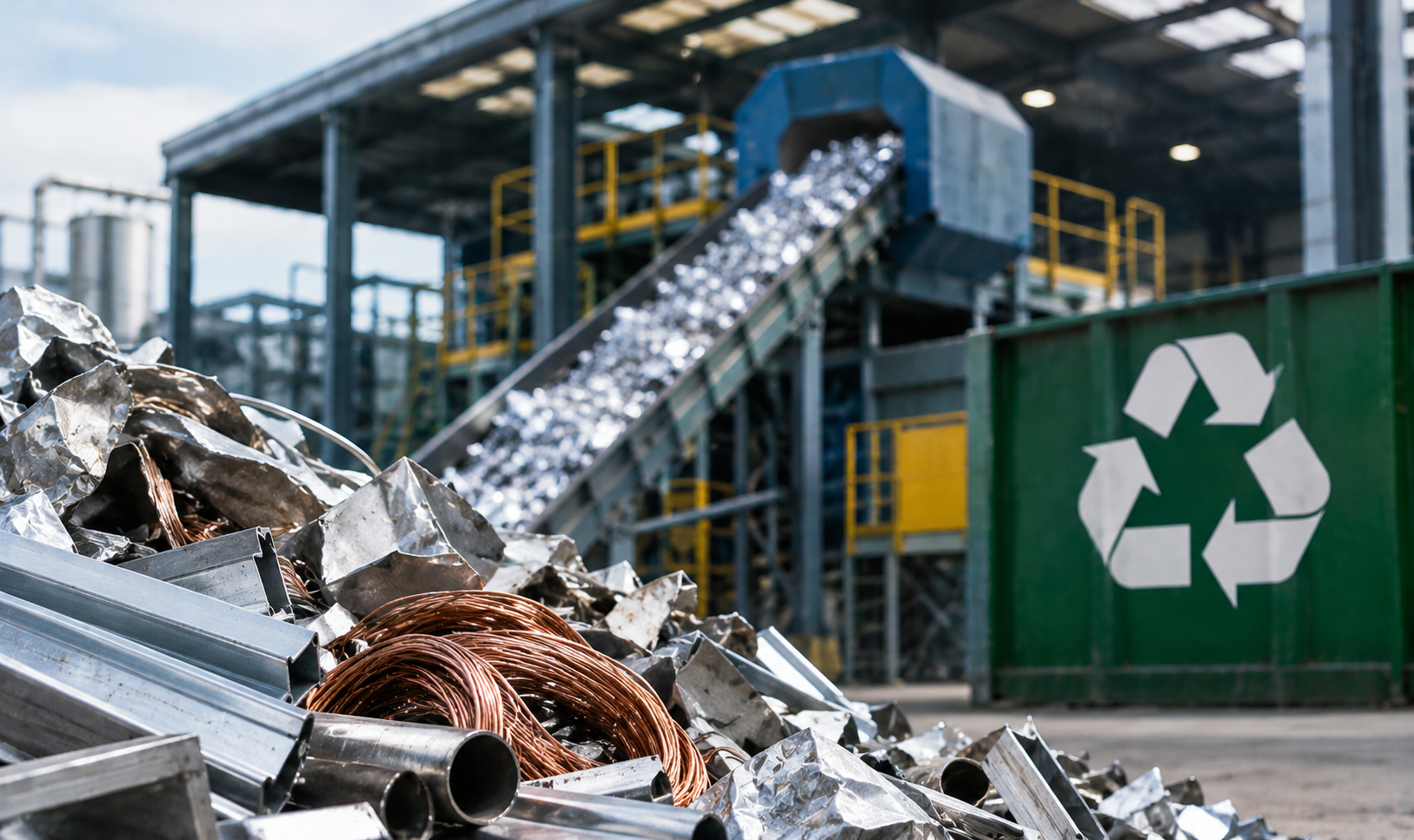
CIO Bulletin, 13 November, 2026
Author:
Ravathi Sunil
Recycling metals is key to the circular economy, as it's the most sensible way to keep industry supplied without digging up new ore. Metals don't wear out. Steel, aluminium and copper can be melted down and reformed pretty much infinitely, and the amount of energy required to do that is a tiny fraction of what it takes to mine and refine the ore in the first place. As ore grades decline, emissions regulations get stricter, and supply chains get more and more fragile; scrap has in fact become one of our most valuable resources.
Making aluminium from scrap uses circa 95% less energy than making it from bauxite. The same applies to copper and steel. That isn't a minor point at all. For a manufacturer who's equally concerned about their power bills and their carbon reports, that changes the equation completely.
Think about what's behind a single new metal part. Someone had to drill it, blast it, haul it, crush it, and smelt it before it ever got to the factory floor. The recycled equivalent skips most of that journey. Less fuel, less water, less waste in the tailings dams that nobody wants to live near.
The vast majority of a country's critical metals are imported from a very small number of places. A trade dispute, a port strike, or a new export rule can see a production line effectively frozen in a matter of weeks. Anyone who's been through the shortages of the past few years will know how quickly that can happen.
Scrap is a different sort of security. Old cables, old appliances, end-of-life vehicles, and derelict buildings are in effect urban mines right in our own backyards. Some cities actually have more copper in their wiring than is left in the nearby geological deposits. Mining that stock reduces our reliance on imports and gives us a buffer that no overseas contract could possibly provide.
Investors have taken notice. The recycling metals economy is no longer just the domain of the scrap dealer with a weighbridge and a yard. It's now a serious proposition with pension funds, automakers and battery makers all looking to secure a supply of lithium, nickel and cobalt. They want a guaranteed supply without the long wait for new mines, which take ten years to come online.
There are a number of recycling industry trends all pointing in the same direction. Sorting facilities are increasingly deploying sensors and machine vision to separate alloys that previously would have all been mixed together. The automakers are locking in long-term supply agreements for recovered material. Governments are starting to enshrine minimum recycled content requirements in both procurement and product legislation. All of these developments are rewarding those companies that treat scrap as feedstock rather than waste.
None of this is easy. Mixed materials are a nightmare. A phone contains dozens of different elements in very small quantities, all of which are bonded together in such a way that separation is prohibitively expensive. Collection systems are very patchy in many places, and a large proportion of e-waste still ends up in the informal channels where recovery is basic and in some cases quite hazardous for the people involved.
Price fluctuations add another dimension to the problem. When virgin metal becomes cheap, recyclers feel the impact immediately, and some plants will be shut down for months as a result. There's also the issue of habit. Designers don't tend to think about how a product is going to be taken apart at the end of its life, so the recyclers are left with the puzzles that they didn't have any part in creating.
Sustainable metal recycling is all about the decisions taken long before the product becomes scrap. Design for disassembly, clear labelling of alloys, and take-back schemes all go a long way to making the recovery process cheaper and cleaner. Policy can help in a number of ways by providing incentives for the use of recycled content and by putting a stop to illegal dumping so that the legitimate operators aren't undercut by the ones who are doing things the cheap way.
Individuals have a part to play too (however a small one). Taking old electronics to the appropriate collection points, buying products that are repairable, and asking the retailers if they have a take-back scheme are all ways of feeding the system with better material. It's the little things, done by millions of households, that add up so quickly.
It's actually a very straightforward case. Every tonne of metal we recover is a tonne we don't have to dig up, ship, and smelt from scratch. It saves energy, it secures the supply, and it keeps value in the economy rather than it just going down the drain into landfill. Recycling metals won't fix all the environmental issues, but few other measures offer such a significant benefit with technology that already exists. The countries and companies that build strong recovery systems now are the ones that are going to be in a position to have a reliable supply when all the others are panicking.
CIO Bulletin helps your organization earn the industry recognition it deserves while keeping you at the center of sustainability, business transformation and the circular practices reshaping global manufacturing. Share your expertise in scrap recovery, smart sorting technology, urban mining and responsible resource management with decision-makers across the sector. Stay ahead of the trends shaping the metal recovery landscape in 2026, showcase your most forward-thinking strategies, and turn your company’s achievements into a defining milestone for the circular economy.
Subscribe Today for Exclusive Insights: https://ciobulletin.com/subscribe
Enhance Your Brand Presence: Advertise with us at
https://ciobulletin.com/advertise



















































 consultants ltd.jpg)


Comments