
Home Industry CBD 7 Expert Tips for Taking A CBD...
CIO Bulletin,
14 January, 2026
Author:
CIO Bulletin Team
Are you grappling with chronic sleep deprivation?
Well, you’re not alone. According to estimates, insomnia affects over 16% of the global population.
Sleeplessness can diminish mental concentration and hamper your daytime productivity. The condition is also associated with several chronic ailments, including anxiety disorders and heart disease.
Numerous sleep medications exist. But while these drugs are somewhat effective, they’re known to trigger severe adverse effects.
That explains the gradual shift from conventional sleep pills to alternative remedies like cannabidiol (CBD).
CBD has proven effective at combating insomnia and associated effects, including mental slump.
This cannabis derivative exerts its influence by impacting the endocannabinoid system. It notably treats sleep deprivation without inducing worrying adverse effects, making it a welcome replacement for traditional sleep medications.
However, you must proceed cautiously to unlock cannabidiol’s therapeutic benefits.
Here’s a guide to using CBD for sleep and focus, with an emphasis on CBD tinctures.
CBD tinctures are cannabidiol extracts infused in an alcoholic solution. They differ from CBD oil, which is oil-based.
To prepare a high-quality CBD tincture, manufacturers first process cannabis raw materials to obtain cannabidiol.
Different extraction methods exist. However, Supercritical Carbon Dioxide (CO2) Extraction is preferable as it yields pure and incredibly potent products.
After extracting cannabidiol, manufacturers add measured amounts of a high-proof alcohol (such as ethanol) to the compound to produce CBD tinctures.

Cannabidiol tinctures are remarkably soothing. Their calming properties enable them to reduce sleep onset latency, helping you slip into deep sleep much sooner.
Besides, taking CBD tinctures at bedtime may extend your sleep duration.
That’s due to cannabidiol’s ability to treat sleep-disruptive conditions, such as post-traumatic stress disorder (PTSD), REM sleep behavior disorder (RBD), and restless leg syndrome (RLS).
By having restful sleep, CBD tinctures let you wake up more physically energized and mentally stimulated.
Before taking cannabidiol tinctures for sleep (or for any reason), it's prudent to consult a licensed healthcare provider.
Initial consultations are particularly important if you're suffering from an underlying illness or are already taking certain sleep medications.
The healthcare provider will review your medical history and assess your current condition as part of prequalifying you for CBD tinctures.
If they’re a medical marijuana doctor, the provider may also offer CBD prescriptions based on your needs.
The efficacy of CBD tinctures for sleep and focus largely depends on the quality of the products you use.
Therefore, always exercise due diligence while shopping for these supplements.
Choose products that come with analytical reports as evidence of extensive screening in independent laboratories. The report should highlight pertinent information, such as CBD potency and the presence of contaminants in the tested batch.
Besides, insist on tinctures formulated from organically-grown cannabis. Remember to also read online reviews for insights into a seller’s reputation.
There are various fancy methods to take cannabidiol tinctures. For instance, you can mix CBD tincture into salad dressings, infuse it into beverages, or even apply it topically.
But for fast-acting benefits, insist on the traditional sublingual method.
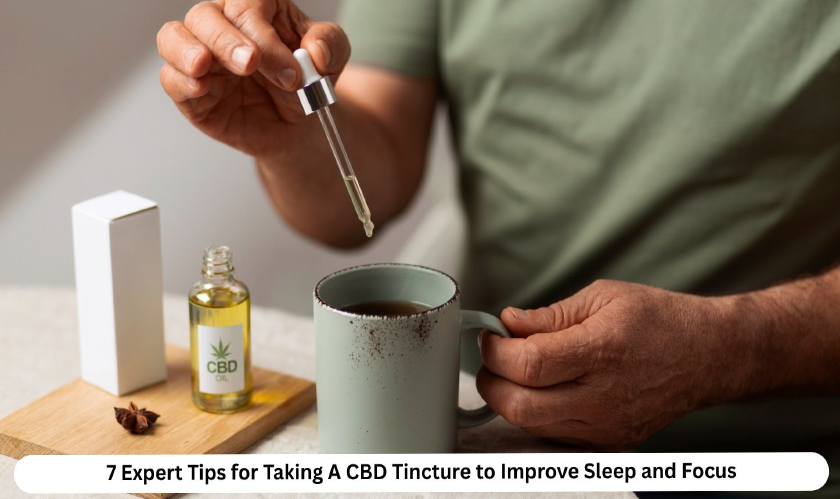
Use a graduated dropper to measure your desired dosage. Then, administer the drops underneath your tongue and hold for up to 60 seconds before swallowing.
When consumed this way, the active cannabinoids in CBD tinctures enter the body almost instantly through the sublingual glands underneath the tongue. Effects can set in within 10 - 30 minutes.

Timing impacts cannabidiol’s overall effects.
If you’re taking CBD tinctures for sleep, consider an evening routine. Consume the products at specific times each night to maximize their effects.
Meanwhile, a morning routine would be ideal if you’re looking to fire up your daytime productivity.
You could integrate CBD tinctures into your breakfast or consume them ahead of mentally demanding tasks, such as painting or brainstorming.
Bigger may be better in many contexts. But when it comes to cannabidiol tinctures, a smaller dosage can make a significant difference.
Don’t go all out on CBD tinctures if you’re new to cannabidiol.
Instead, smart with smaller portions of about 3 milligrams (mg) per serving. Let your body acclimatize to cannabidiol first before you can increase the dosage.
And even if you must dose up, do so gradually until you achieve the intended effects.
As noted, there are multiple ways to consume CBD tinctures. These products readily absorb into the bloodstream if taken sublingually.
But if you choose to consume CBD tinctures orally, it’s best to take them on an empty stomach.
Ingested cannabidiol absorbs faster when there’s already some digestion going on. More importantly, accompany CBD tinctures with a fat-based meal. Research has shown that fatty foods enhance cannabidiol’s bioavailability.
Consider healthy fat sources like avocado and olive oil. Besides ramping up CBD’s absorption, these foods can also maximize the compound’s therapeutic efficacy.

Cannabidiol tinctures relieve insomnia by shortening sleep onset time and extending sleep duration. These products may also address various sleep-disrupting conditions, including PTSD and RBD.
Restful sleep translates to improved mental focus, better stress management, and optimized daytime productivity.
If you’ve grappled with chronic sleep deprivation and have tried several interventions to no avail, integrating CBD tinctures into your bedtime routine can make a significant difference.
However, note that different users respond to CBD tinctures differently. Overall effects will vary by your cannabis tolerance and the severity of your condition.





















 consultants ltd.jpg)


