
Home Technology Cyber security Best 6 MDR Providers for Manuf...

CIO Bulletin
,
26 September, 2026
Author:
Guest
Factory networks break the assumptions most security tooling is built on. Machines run software that cannot be patched without stopping production, controllers cannot host monitoring agents, and the containment action that protects a corporate laptop can halt an assembly line if applied to the wrong host.
Those three constraints together explain why most manufacturers now buy detection and response as a service. Building a round-the-clock security operation internally requires staffing most plants cannot justify, while the consequences of slow detection are measured in production downtime rather than data loss alone.
The six providers below take noticeably different approaches. What separates them is less the technology than the operating model: who investigates, who acts and what happens on the plant floor at three in the morning.
Four questions matter more here than in a standard office deployment.
Where does visibility come from on devices that reject software agents? A large share of plant equipment will never accept endpoint software. Unless the service can see those devices through network-level or passive collection, they sit outside its coverage entirely.
Who is authorised to act, and on what? Automatic isolation is standard practice. On a production network it needs boundaries, with written rules separating the actions a provider may take unilaterally from those that need sign-off by an engineer who knows what the affected machine is doing.
How are unpatchable systems handled? Not as remediation targets, but as monitored exceptions with compensating controls and an accepted risk that appears in reporting.
What does the response figure actually measure? Providers publish different metrics under similar names, so establish whether a number refers to alerting, first action or full resolution before comparing it with anything.
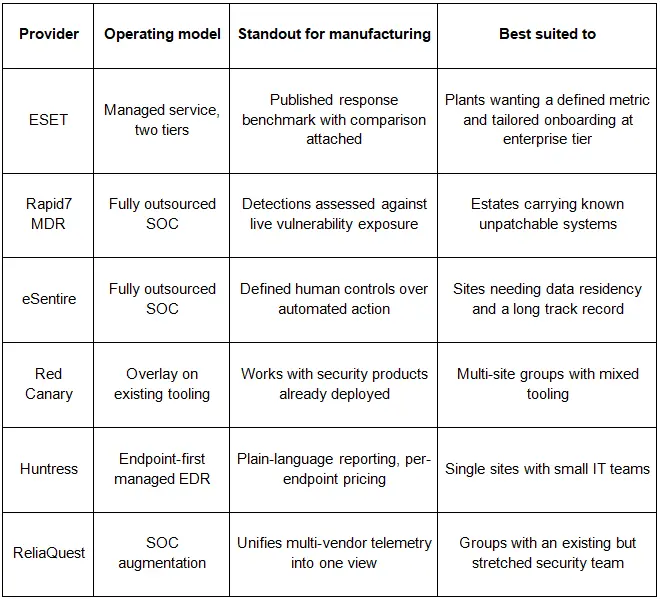
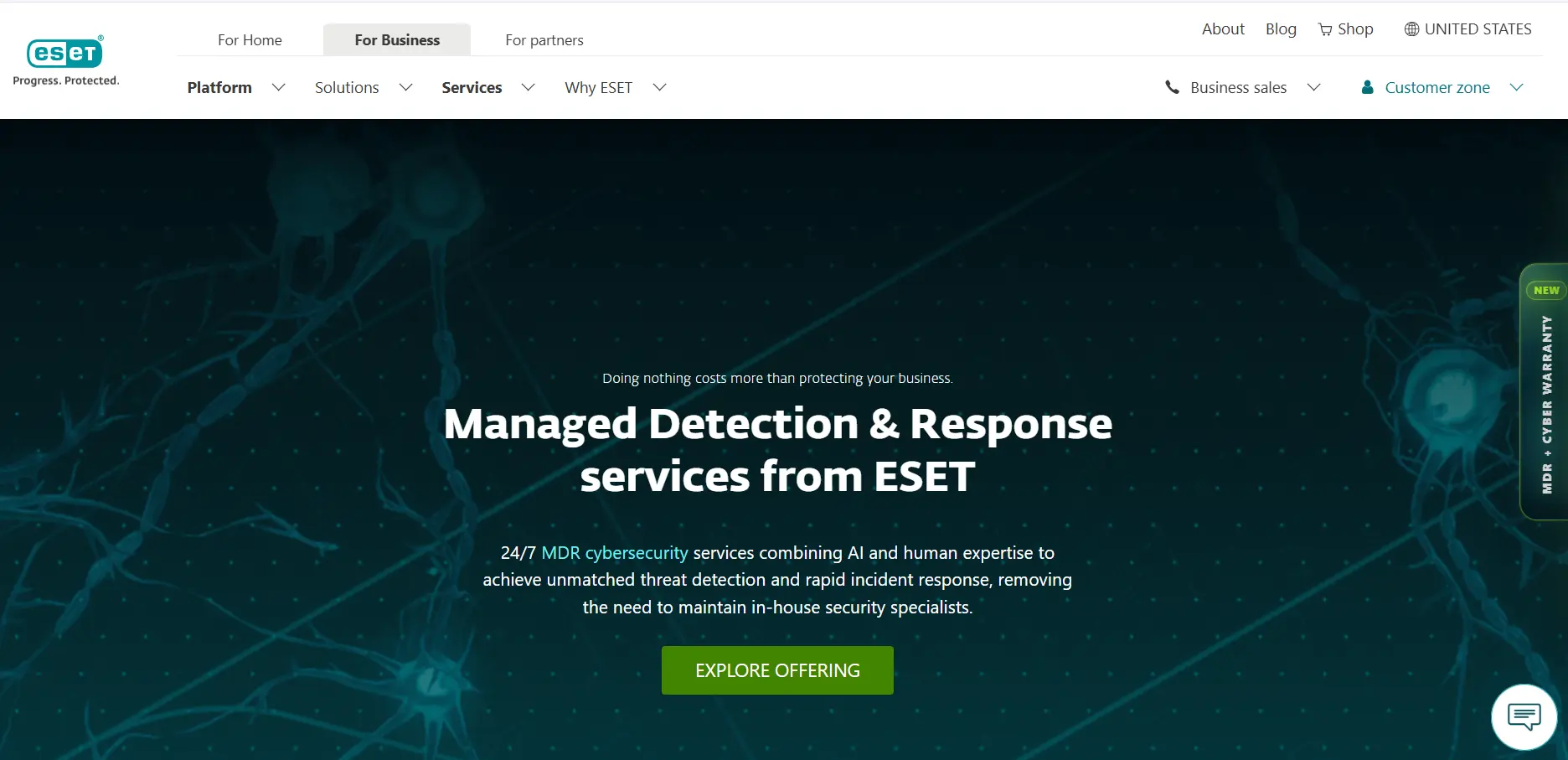
ESET runs a managed service combining AI-driven detection with human analysts, offered in a standard tier for small and mid-sized businesses and an Ultimate tier for enterprise-scale organisations.
It publishes its response benchmark with the comparison attached rather than in isolation, citing a mean time to respond of six minutes against 22 minutes for average MDR providers, set against a median breach discovery time of 24 days. The figures draw on the Verizon 2025 Data Breach Investigations Report and public MDR provider materials as of July 2025.
Detection tuning runs through behavior pattern and exclusion optimization, with a behavior patterns library, both included in the standard tier rather than reserved for enterprise customers.
Tuning of that kind is worth probing on any plant network, where industrial protocols generate traffic that looks anomalous to logic calibrated on office behaviour.
Its published MDR customer story is Raicam Group, an automotive company founded in 1982, which uses the 24/7 service to track its network security without adding internal security resources. The provider also participates in the Joint Cyber Defense Collaborative led by CISA, and was named a Market Leader in the KuppingerCole Leadership Compass 2026.
At the Ultimate tier, each engagement starts with an assessment of the customer's environment, infrastructure and requirements, producing a security profile built around that operation, with experience drawn from a range of industry verticals. It is positioned explicitly as the opposite of one-size-fits-all.
Best for: manufacturers that want a defined response benchmark, with enterprise-tier onboarding shaped around the site rather than a standard template.
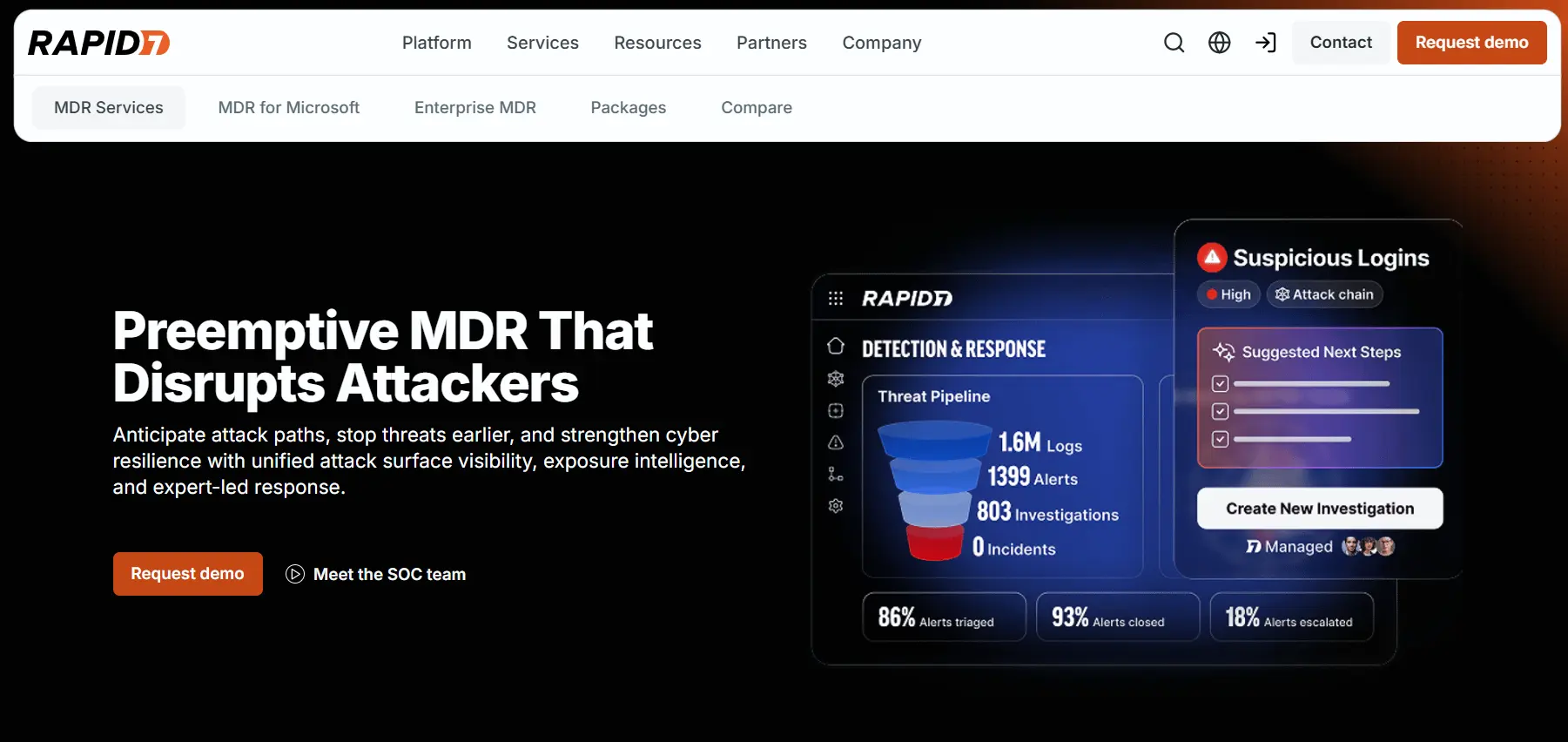
Rapid7 approaches managed detection from a vulnerability management heritage, and that shapes what the service is good at.
Its analysts work with threat intelligence and vulnerability data in the same platform, so a detection can be assessed against what is actually exposed in the environment rather than in isolation. For manufacturers carrying known unpatchable systems, that context changes how alerts are prioritised.
Coverage spans endpoints, network and cloud, with the service positioned as an alternative to running an internal security operations centre rather than an augmentation of one.
The trade-off reported by practitioners is depth of incident response. The service handles detection and triage well, but organisations expecting extensive forensic work should confirm what is included before assuming it. That distinction matters after an incident, when the question shifts from what happened to how it happened and what else was touched.
Best for: plants with a large inventory of known vulnerabilities that need detection prioritised against real exposure.

eSentire has been in this market since 2001, longer than most of its peers, positioning its current model around what it calls Controlled Autonomy, pairing AI agents with defined human judgement controls rather than handing decisions to automation outright.
That framing matters in an industrial setting. The question is not whether a service can act quickly, it is whether the fast action is the right one when the affected host controls a physical process.
The company operates its own security operations centres, and opened a US facility in July 2026 offering domestic data residency, which is relevant for manufacturers with contractual or regulatory constraints on where telemetry is stored.
Pricing is quoted rather than published, and the service is positioned toward the upper end of the mid-market. Manufacturers evaluating it should expect a scoping conversation rather than a published rate card, which lengthens procurement but usually produces a closer fit.
Best for: manufacturers that need data residency guarantees and a mature provider with a long operating history.
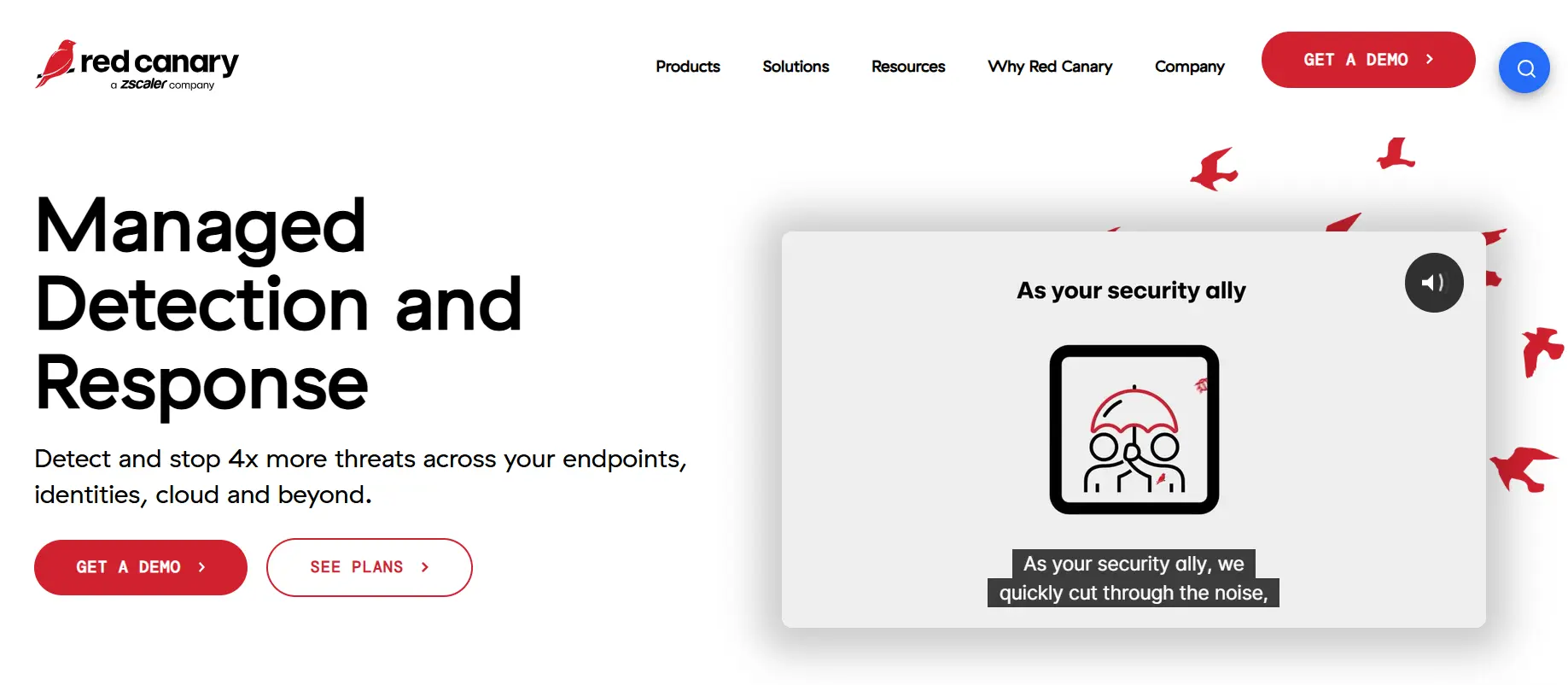
Red Canary operates as a security operations layer over tooling a customer already owns, rather than requiring its own detection stack.
For manufacturers that have already invested in endpoint protection, or that inherited different tools across acquired sites, that model avoids a rip-and-replace project. The provider ingests telemetry from what is in place and supplies the investigation and response capability around it.
This suits multi-site groups particularly well, since plants acquired at different times frequently run different security products, and standardising them is a multi-year exercise nobody wants to front-load.
The consideration is that the quality of what the service can see depends on the quality of what is already deployed. A weak sensor estate limits what any overlay can do, so an honest audit of current coverage should come before the vendor conversation rather than after it. Comparing current endpoint protection tools against what the service expects to ingest is a sensible first step.
Best for: multi-site manufacturers with mixed tooling who want one investigation layer across all of it.

Huntress is built around endpoint decisiveness for organisations with lean IT teams, which describes a large share of single-site and regional manufacturers.
Its reports are written in plain language rather than security notation, which matters when the person reading them at 2am is an IT generalist rather than a security analyst. The service coexists with Microsoft Defender rather than replacing it, keeping deployment simple.
Pricing is per endpoint and straightforward, avoiding the scoping exercise that makes enterprise MDR quotes difficult to compare across vendors. For a plant manager who needs a number to put in front of finance, that alone shortens the decision.
The scope limit is worth stating plainly. This is endpoint-first, so organisations needing deep identity, SaaS or network telemetry correlation will need to pair it with something broader. For a single plant with a modest device count, that limit may never be reached in practice.
Best for: single-site manufacturers with small IT teams who need clarity over breadth.
ReliaQuest sits in the SOC augmentation category, aimed at organisations that already have a security function and want to extend rather than replace it.
The platform unifies telemetry from multiple vendors into a single operating layer, so an internal team works in one place instead of pivoting between consoles. For manufacturers with an established security team stretched across several plants, that consolidation is the value.
This is not the right fit for an organisation with no internal security capability, since the model assumes people on the customer side to work alongside. Where that team exists but is stretched thin across sites, the consolidation of tooling into one operating view is what recovers their time.
Evaluation tends to be longer here than for fully outsourced services, because the internal team has to assess how the platform fits their existing workflow rather than simply whether the outcomes are acceptable.
Best for: larger manufacturing groups with an existing security team that needs leverage rather than replacement.
Start by deciding whether you are replacing a function or extending one. That single distinction eliminates roughly half this list immediately, and it is a question about your organisation rather than about any vendor.
Then test the response boundary during evaluation. Ask what the provider would do automatically if a compromised host turned out to be a production controller, and what it would escalate instead. The answer tells you whether the service understands operational technology or simply says it does.
Check how unpatchable assets are treated in reporting. A monthly list of the same systems with no compensating controls attached is a scanner output rather than a managed service.
Confirm what the response metric measures before comparing figures between vendors, since the same word covers alerting, first action and resolution depending on who is using it.
Finally, look at how the provider handles a first false positive during a trial. Tuning quality and communication style both show up there, and both matter more over a year than any capability on a datasheet. The same evaluation discipline applies when comparing financial services MDR requirements, where the regulatory drivers differ but the operating questions are identical.
No single provider suits every manufacturer. The decision turns on whether an internal security function exists, how mixed the tooling is across sites, and how much operational risk sits behind each potential containment action.
The most useful filter is not a feature comparison. It is asking each provider to walk through a real incident on a network like yours, from detection through containment to reporting, and listening for whether they understand that stopping the line is sometimes worse than the threat.
Everything you need to know about this news
Coverage differs a great deal between providers, so press for specifics instead of taking a broad claim of industrial capability at face value. Find out which system types are actually monitored, what happens where no agent can be installed, and what the provider is permitted to do on the production side.
Managed endpoint protection focuses on securing devices. MDR covers a wider set of surfaces including network and cloud, and includes investigation and response rather than alerting alone. The two solve related but distinct problems and are often bought together.
Inventory the estate, including controllers and sensors, and segment plant systems from business systems. Monitoring deployed before those two steps produces alerts without the context needed to act on them.
Not on its own. A fast automated action on a production controller can cause the outage it was meant to prevent. What matters is speed combined with a defined escalation boundary, so the provider acts immediately where it safely can and escalates where it cannot.



















































 consultants ltd.jpg)


Comments