
Home Industry Edtech DDR5 RAM Speed vs Timings: Wha...
CIO Bulletin
,
21 September, 2026
Author:
Guest
If you’re trying to build or upgrade a PC, RAM specs can look like a wall of letters and numbers designed by someone who dislikes sleep. You’ll see DDR5-5600, CL36, EXPO, XMP, and plenty of strong opinions in comment sections. Underneath the jargon, the question is simple: what gives you better real-world performance? Once you break speed and timings into plain terms, choosing memory gets much less mysterious and a lot more practical.
A lower CL number looks better, but clock speed affects the actual delay you feel. Real latency is measured in nanoseconds, and it depends on both the CAS latency and the transfer rate.
That’s where many buyers get tripped up. A DDR5-6000 CL30 kit can deliver excellent responsiveness because the speed helps offset the cycle count. In fact, Lexar calculates DDR5-6000 CL30 latency at 10 nanoseconds, which gives you a useful reference point when comparing kits across different specifications.
This matters because spec sheets can be deceptive if you read them too quickly. A higher-frequency kit with worse timings may still outperform a lower-speed option in some scenarios. Real latency puts the numbers into context, which is what your PC cares about, even if marketing departments prefer giant speed labels.
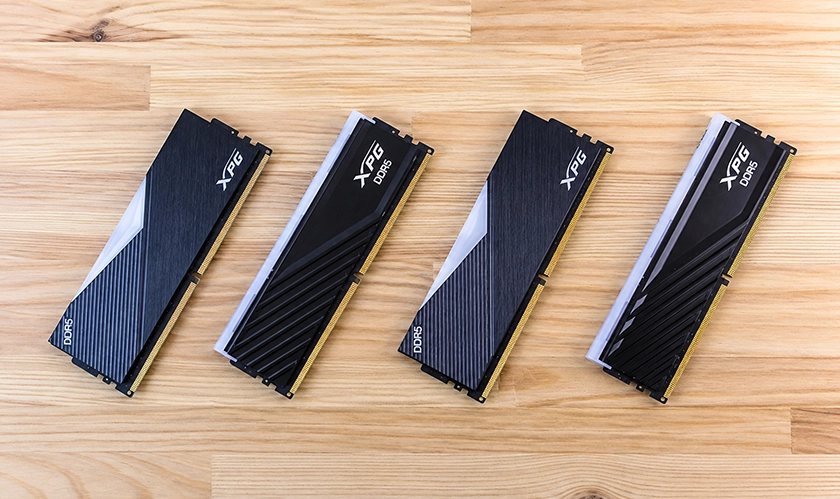
RAM speed tells you how fast your memory can move data. With DDR5, you’ll usually see a number like 5600MT/s or 6000MT/s. Higher numbers mean more bandwidth, which helps your system handle data-heavy tasks more efficiently.
Timings, on the other hand, measure delay. CAS latency, shown as CL, is the most quoted one. CL30 means your RAM waits 30 clock cycles before delivering a requested piece of data. That sounds annoying, but speed and latency work together.
A kit with higher speed and looser timings can sometimes perform similarly to a slower kit with tighter timings. You’re not looking at one stat in isolation. You’re judging how the whole package behaves, a bit like checking both horsepower and fuel economy before buying a car.
DDR5 didn’t just replace DDR4 with shinier packaging. It increased memory bandwidth, improved power management, and introduced architectural changes that matter for modern platforms. That’s part of the reason why builders now spend more time comparing 5600 CL36 to 6000 CL30 than they used to.
Newer CPUs, especially from AMD and Intel, can benefit from DDR5 in different ways depending on the motherboard, memory controller, and workload. Gaming rigs often respond well to faster, better-tuned RAM, while productivity systems may gain more from extra capacity than from shaving a few nanoseconds off latency.
The result is a market where the “best” RAM depends heavily on your use case. There’s no universal winner, which is slightly inconvenient if you wanted one neat answer and a snack.
If you mainly care about gaming, memory tuning can affect frame rates, frame consistency, and loading behavior, though not always dramatically. Open-world games, competitive shooters, and simulation titles tend to be more sensitive to memory performance than lighter esports games.
For many current systems, DDR5-6000 with reasonably tight timings is often a sweet spot. It offers strong balance without entering the expensive territory where performance gains shrink fast. You may notice a few extra frames, but the bigger benefit can be smoother lows and better responsiveness in CPU-heavy scenes.
That said, RAM won’t rescue a weak GPU or outdated processor. If your budget is limited, put your money where the bottleneck lives. Chasing ultra-premium memory while using an entry-level graphics card is classic enthusiast behavior, but not always wise enthusiast behavior.
For productivity, the answer shifts. If you edit large video projects, run virtual machines, compile code, or work with heavy datasets, capacity often matters more than ultra-tight timings. Going from 16GB to 32GB can make a bigger difference than moving from CL36 to CL30.
Bandwidth still matters in some workloads. Applications that stream large amounts of data, including certain rendering, scientific, and AI-related tasks, can benefit from faster memory. Still, the gains vary a lot by software. Some programs love bandwidth. Others barely notice.
You should also think about stability. If your machine is for paid work or school deadlines, a slightly less aggressive kit that runs reliably every day can be more valuable than a faster one that occasionally crashes. Nothing kills workflow like a system freeze right before export. That kind of drama belongs in group chats, not workstations.
RAM doesn’t operate in a vacuum. Your motherboard BIOS, CPU memory controller, and supported profiles all influence whether a kit will run at its advertised settings. Buying fast memory is easy. Getting it to behave can be the sport.
AMD users often look at EXPO kits, while Intel users may lean toward XMP, though many boards support both to varying degrees. QVL lists from motherboard makers can help, even if they aren’t exhaustive. They at least show which kits have been validated under test conditions.
You should also know that two kits with similar specs may perform differently on separate platforms. Some CPUs handle high-speed DDR5 effortlessly, while others get fussy past certain ranges. Before you buy, check your motherboard support page, update expectations, and save yourself from late-night troubleshooting sessions with forum tabs multiplying like rabbits.
A smart RAM purchase starts with your actual workload and budget. Don’t shop by one spec or one viral recommendation. Look at the system as a whole and decide where memory fits into your performance goals.
Here’s a practical way to narrow it down:
- Choose capacity first: 16GB for basic gaming, 32GB for most serious users, more for specialized work
- Target balanced DDR5 speeds such as 5600 to 6000 for mainstream modern builds
- Prefer tighter timings when the price gap is reasonable
- Check motherboard compatibility and profile support before ordering
- Read real benchmarks for your CPU and applications, not generic averages
- Avoid paying premium prices for tiny gains unless you enjoy benchmark flexes
The best kit is usually the one that fits your platform cleanly, runs stable, and delivers noticeable performance for the money. Specs matter, but context matters more. Once you understand speed, timings, and latency together, RAM shopping stops feeling like a spreadsheet ambush and starts feeling manageable.




















































 consultants ltd.jpg)


Comments