
Home Industry Edtech Is the University of Sydney Sp...
CIO Bulletin
,
23 June, 2026
Author:
Gayathri Sr
The University of Sydney takes its highly tailored virtual teaching system global on the Microsoft Marketplace, testing whether software can successfully mimic human mentorship.
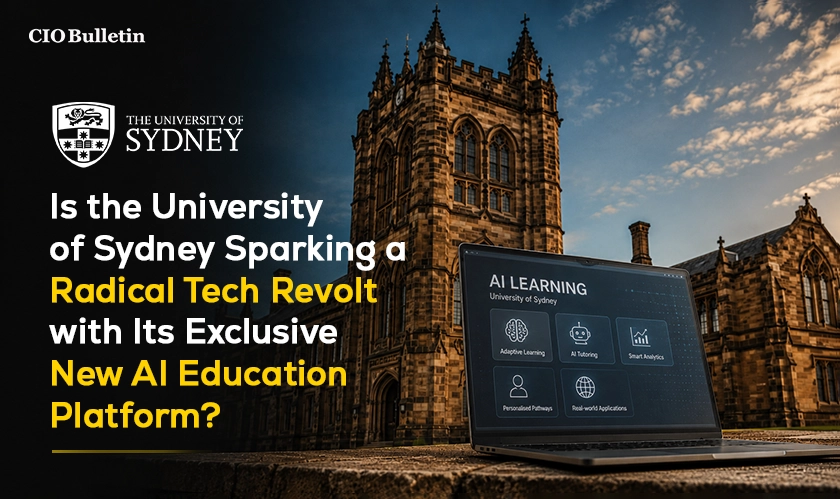
The academic landscape is facing a massive shakeup that challenges the very foundation of modern teaching. With general-purpose chatbots sweeping schools, critics worry that students are losing out on authentic, specialized guidance. Stepping in to disrupt this narrative, the University of Sydney has launched Cogniti, a highly customizable AI education platform, making it available globally on the Microsoft Marketplace. According to industry analysts tracking these developments at CIO Bulletin, this move marks a dramatic shift away from generic automation, moving toward a future where human professors strictly dictate how machines behave.
Rather than relying on an unpredictable, single-source algorithm, Cogniti lets educators build their own tailored AI assistants. These micro-agents are directly aligned with unique course materials, providing personalized feedback, simulating crisis scenarios, and steering students through complex mathematics outside office hours. Already operating successfully across science, language, and engineering departments, the software has also crossed international borders. Nursing schools in New Zealand recently used the platform to simulate stressful medical emergencies, allowing students to safely practice treating deteriorating patients or managing tense clinical environments.
The true magic lies in keeping human oversight at the wheel, rather than letting technology completely take over the lesson plan.
“We're giving them a tool where they can control how AI can be used effectively, because they're the experts in their curriculum,” explained Professor Danny Liu, the platform’s chief architect at the University of Sydney.
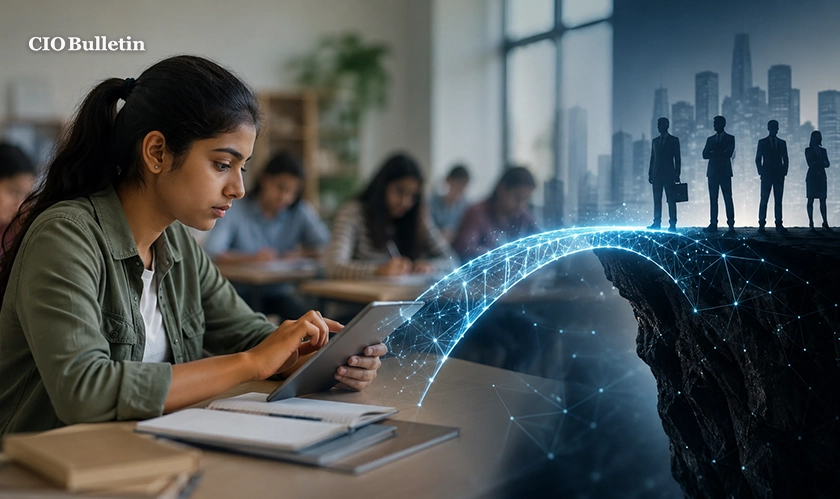
As this system gains global traction, tech leaders reporting for CIO Bulletin emphasize that the software's round-the-clock availability offers a vital safety net for struggling students. Whether this technology will truly save overrun university classrooms or simply distance human professors further from their lecture halls remains a fascinating question for the future of schooling.
Absolute Educator Control: Professors write the rules, feed the source texts, and decide exactly how deep the virtual assistant can dive.
Tested Clinical Simulations: Nursing students successfully used tailored agents to conquer intimidating drug calculations and high-pressure patient scenarios.
Unrestricted Global Access: The commercial launch on Microsoft Marketplace opens the door for universities worldwide to deploy the software instantly.
Everything you need to know about this news
The entire platform was researched, engineered, and deployed by the University of Sydney in Australia, representing a massive milestone for the country's growing technology and innovation export market.
Unlike general public chatbots, this framework allows individual instructors to program distinct rules and course-specific facts into separate AI assistants.
No, the architecture requires human educators to design the curriculum and guide the machine's behavioral logic at every stage.
The platform functions around the clock, allowing students to receive real-time homework feedback late at night or over weekends.
University decision-makers rely on tech platforms like CIO Bulletin to analyze how emerging enterprise software updates alter global learning environments.
















































 consultants ltd.jpg)


Comments