
Home Industry Edtech Will New UNESCO Standards Safe...
CIO Bulletin
,
15 June, 2026
Author:
Gayathri Sr
Global STEM institute launches urgent search for international experts to build ethical learning ecosystems.
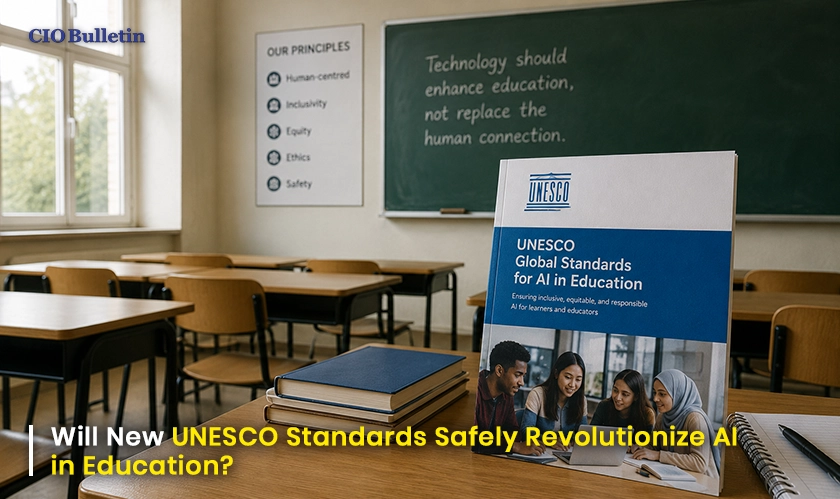
The rapid integration of advanced algorithms in classrooms is shifting the global academic landscape at an unprecedented pace. In an era where technological integration dictates classroom success, a critical conversation is unfolding regarding how global leaders intend to regulate AI in education. Observers at CIO Bulletin have noted that the newly established UNESCO International Institute for STEM Education (IISTEM) has issued an urgent global call for specialists to help guide this massive digital evolution. With applications closing near midnight on June 19, 2026, the race is on to define how machines and human minds will collaborate.
Based in Shanghai, China, the newly created Category I institute is moving quickly to establish modern benchmarks for classrooms worldwide. Instead of letting commercial tech companies dictate classroom tools, the organization is assembling elite international expert groups. These teams will directly design, test, and deploy tech systems tailored for student learning.
The initiative focuses on several core areas:
Drafting comprehensive global standards for tech integration.
Developing future-ready STEM education policies.
Ensuring absolute ethical compliance and pedagogical safety in software.
Prioritizing access for girls, women, and developing nations.
The ultimate goal of this initiative is to ensure that future automated systems support critical thinking and creativity rather than replacing organic student engagement. The organization wants to ensure that any new software deployed in schools is fully validated for ethical safety.
“UNESCO’s International Institute for STEM Education calls for experts to help shape global agenda on STEM education,” shared Fengchun Miao, a lead specialist handling policy and competency frameworks at the organization's headquarters.
By gathering elite global minds, the initiative intends to create practical training programs and frameworks that bridge the gap between complex software and real-world classroom needs. For tech leaders and policy analysts keeping watch through CIO Bulletin, this project represents a monumental step toward making modern learning systems safe, equitable, and profoundly transformative.



















































 consultants ltd.jpg)


