
Home Industry Food and beverage Making Food and Beverage Manuf...
CIO Bulletin
,
15 December, 2023
Author:
CIO Bulletin Team
Wastewater treatment and resource recovery are transforming the industry
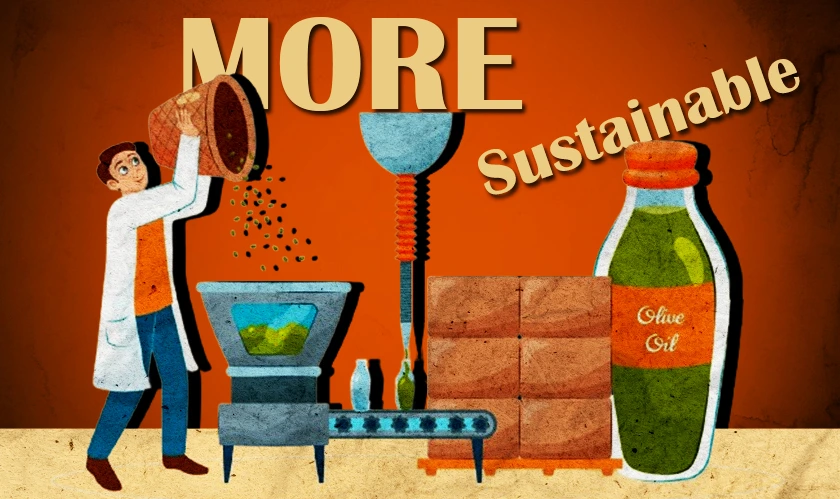
Food and beverage (F&B) manufacturing is the third most water-intensive industrial sector in the United States. Can wastewater treatment make it more sustainable?
Yes. A cleaner stream of treated effluent has many sustainability benefits, systems for recovering resources in wastewater treatment make operations more financially viable, and more efficient treatment enables processing and packing plants to reduce energy costs.
Cleaner Effluent
Food and beverage wastewater typically carries an extremely high organic load that includes fat, oil, and grease, a load that is environmentally damaging to discharge and challenging to treat. But a clean stream of treated effluent improves both environmental and financial sustainability.
When manufacturers contaminate local surface water bodies with high-nutrient F&B waste, the result is often excess bacteria, toxic algal blooms, and oxygen-depleting eutrophication -- which harms both ecosystems and human health. The environmental damage is also a public relations disaster that can erode local support for companies and invite tougher regulation and fines. In contrast, a clean outfall makes good neighbors of F&B operations.
Many food and beverage operations rely on local municipal utilities to do the job. However, if a plant relies on local infrastructure that is not designed to handle high-load wastewater, utilities tend to bill at an unsustainable rate. Onsite treatment for an F&B operation can reduce its utility bills.
But a clean stream of effluent that has been treated per standards for non-potable reuse does not need to be environmentally discharged. It can be reused many times within the plant -- for example, as boiler water and washing water -- lowering water bills and reducing withdrawals from natural water resources. The plant can also sell the treated effluent to farms for irrigation or to other operations that have a use for non-potable effluent.
Recovering Resources from Food and Beverage Wastewater
If you know how to do it, you can extract enough energy from even run-of-the-mill domestic wastewater to more than power its own treatment. But high-load F&B wastewater carries perhaps the most energy of any wastewater stream, making it a top candidate for energy recovery.
Anaerobic digestion efficiently purifies hard-to-purify F&B wastewater while simultaneously recovering high-methane biogas that, like fossil-derived natural gas, can fuel electricity generators. The energy thus generated can then, in turn, power the treatment process, other plant operations, and vehicles.
In addition to energy, manufacturers can also recover liquid digestate and solids from wastewater, which can be used in agriculture. And let’s not forget that water itself is becoming an increasingly valuable resource for recovery.
More Efficient Wastewater Treatment
Over the years, water treatment in the food and beverage sector has become more efficient.
The advanced real-time monitoring made possible by smart sensing technology increases the efficiency of industrial water management. By routinely optimizing water treatment, automation reduces energy consumption.
Technologies like reverse osmosis and microfiltration, nanofiltration, and ultrafiltration enhance the efficiency and longevity of membranes and membrane-based processes.
Ion exchange demineralizes water by exchanging ions in the water with ions attached to an ion-exchange resin.
Biofiltration, electrocoagulation, and artificial wetlands also reduce the environmental impact of F&B operations.
Zero Liquid Discharge
The final frontier of sustainable industrial water management is zero liquid discharge (ZLD), which combines many technologies and strategies to reduce discharges to almost zero. Instead of using water for a single application and discharging it as waste, ZLD systems treat the used water and use it again and again, in the end discharging none of it or almost none of it.
Unfortunately, the more water one recovers, the more expensive it is to treat it. Getting 80% to 90% recovery is harder and more expensive than getting from 50% to 60%. It’s also necessary to identify applications that can use the treated effluent. For most companies, it is probably more realistic to implement less ambitious and thus less costly minimal liquid discharge systems that still recover an impressive 70% to 90% of water.
Catalysts for Change
Almost two-thirds of companies are already reducing the amount of freshwater they withdraw—or at least holding that amount steady. Yet only 4.4% of businesses report progress toward their targets for reducing water pollution. However, waste-to-energy incentives provided by the Bipartisan Infrastructure Law, the rise of ESG investing, tougher water pollution standards, and climbing water costs make it likely that the F&B manufacturers will soon adopt more sustainable practices. While the transition may be challenging, a level-up in sustainability is arguably worth it.















































 consultants ltd.jpg)


