
Home Industry Food and beverage Coke and Pepsi Roll Out QR Cod...
CIO Bulletin
,
23 June, 2026
Author:
Ravathi Sunil
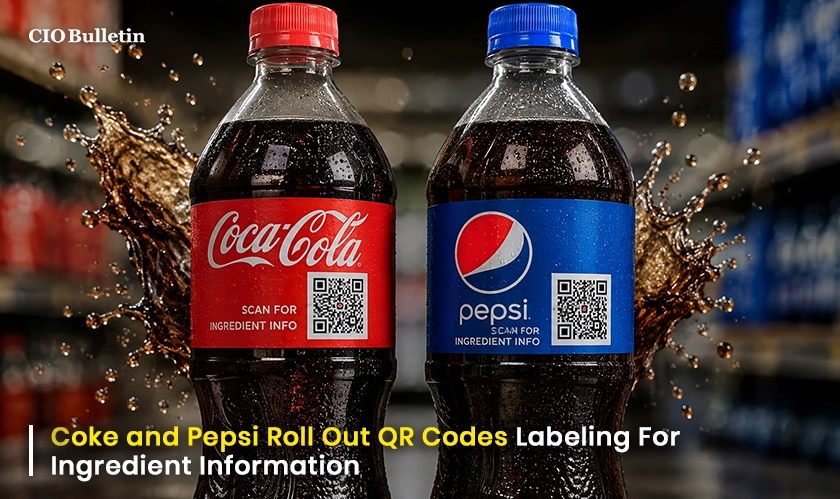
Coca-Cola and PepsiCo are introducing QR code labeling on product packaging, giving consumers quick digital access to detailed ingredient information and supporting greater transparency in food and beverage labeling.
The largest nonalcoholic beverage businesses in America will provide consumers with additional information about the ingredients of their goods by adding ingredient safety data to drink packaging QR codes labeling connections.
The effort is led by the American Beverage Association, a trade group representing the biggest beverage companies like Keurig Dr. Pepper, PepsiCo and Coca-Cola Co. The often-competitive businesses are working together on this project in a rare show of unity.
Each ingredient is briefly described, other foods or beverages that contain the ingredient are identified and whether or not it has been approved for use by food safety authorities such as the Food and Drug Administration, the European Food Safety Authority and Health Canada is stated.
"Consumers want greater transparency and deserve to have confidence in the safety of their foods and beverages.” - Kevin Keane, American Beverage CEO
Pepsi has already linked the website to its beverage QR codes. Keurig Dr. Pepper is expected to add the feature later this year while Coca-Cola will complete its rollout this month.
Some of the compounds listed will be familiar to the customers, but some such as Lion's Mane and L-Carnitine are less known. The website does not list the ingredients for each brand so customers still need to check the label on their can or bottle to find out exactly what it contains.
Under Secretary Robert F. Kennedy's "Make American Healthy Again" campaign, the U.S. Department of Health & Human Services has advocated for more comprehensive nutrition information and denounced ultra-processed foods.
According to NIQ research, about 25% of Americans currently use nutrition apps, and 63% of users say they trust the information from those apps just as much as information from the brands themselves.
CIO Bulletin views that this adoption of QR code labeling is indicative of a larger trend in consumer goods toward digital transparency and technology, allowing companies to offer more current and comprehensive ingredient information without packaging being overly crowded.
Everything you need to know about this news
Product packaging has a QR code label that provides ingredient access.
Ingredients, nutrition, and allergen information are all accessible digitally.
To provide more thorough information without packaging that is too crowded.
No, the majority of smartphone cameras are capable of directly scanning QR codes.
No, they are intended to supplement current packaging data.















































 consultants ltd.jpg)


Comments