
Home Platforms Google The Quiet Revolution: How Sund...
CIO Bulletin
,
25 March, 2026
Author:
CIO Bulletin Team
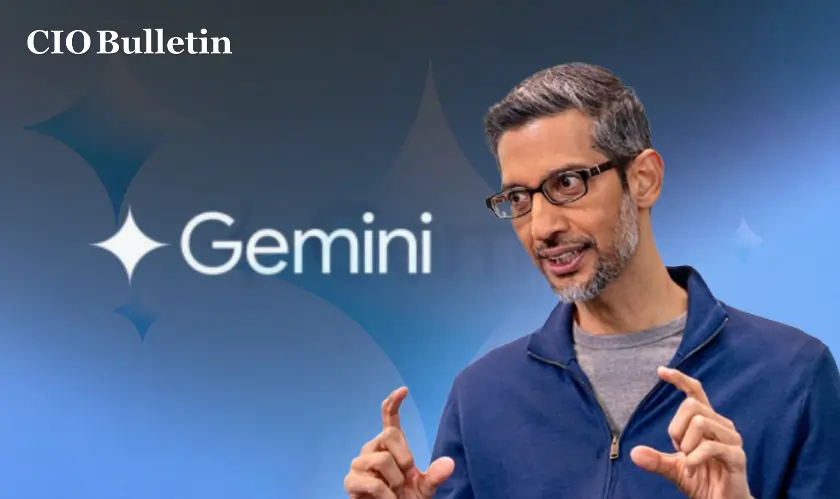
When ChatGPT took the world by surprise in 2022, even Sundar Pichai admitted it was a wake-up moment. But instead of falling behind, Google moved fast. Today, the company is not just catching up; it’s setting the pace with its powerful AI model, Gemini.
As covered by CIO Bulletin, Pichai’s vision is to make AI an integrated part of everyday life. From search and emails to video calls and even self-driving technology, Gemini is being built into everything Google offers.
The Early Vision That Almost Got Left Behind
Pichai declared an AI-first world as far back as 2015. He pictured helpful assistants woven into every part of life. Then OpenAI dropped ChatGPT, and suddenly everyone noticed what Google’s own labs had quietly built. Instead of freezing, Pichai called a “Code Red.” Teams dropped side projects to speed up real products. Bard arrived quickly but felt rough around the edges, so Google refined it into the Gemini experience we know now.
Founders Larry Page and Sergey Brin stepped back in too. Brin joined code reviews and hiring sessions, firing up the entire team. “Having the founder sweating the details with engineers is incredibly motivating,” Pichai later shared. This blend of fresh urgency and deep roots set the stage for something bigger.
Gemini 3 Pro Changes the Game
Fast-forward to November 2025. Google unveiled Gemini 3 Pro, and it didn’t just compete, it topped benchmarks against OpenAI and Anthropic models by clear margins. A lighter, zippy Gemini 3 Pro Flash version followed in December. Both now power Search, apps, and more. Even OpenAI’s Sam Altman admitted the momentum had shifted.
Alphabet’s stock more than doubled after a slow start in 2025. By January 2026, the Apple partnership to run Siri features on Gemini pushed the company past a $4 trillion market cap. Skeptics who once predicted search revenue would collapse under AI pressure are rethinking their stance. CIO Bulletin notes how Google’s vast product ecosystem, from Gmail to Waymo robotaxis, gives it natural places to test and improve AI daily.
AI Overviews and Everyday Tools That Actually Help
Open any Google app today and you’ll spot the difference. AI Overviews in Search deliver quick, clear summaries before the usual blue links appear. Users asked for deeper chats, so Google added AI Mode, a separate tab for back-and-forth questions that feels more like talking to a smart friend.
The same technology shows up elsewhere. Gmail now flags urgent messages automatically. Meet lets you ask Gemini to catch you up mid-call. Android swapped the old Assistant for Gemini as its go-to helper. Even Nest cameras send simple daily text recaps of what they saw. Waymo cars tap the model for tricky spots, like handling a vehicle on fire ahead.
One fun breakout moment came with Nano Banana, an image-editing tool that went viral in summer 2025. Swap a hoodie for a sparkly jacket in seconds? People shared creations like wildfire, boosting Gemini app downloads past ChatGPT for a stretch. Version 2 arrived in February 2026 and kept the buzz alive.
AI agents are the next quiet revolution. Early experiments already handle tasks like researching and booking a rental car. They’re not perfect yet, sometimes slow or off-target, but they point to a future where AI handles the heavy lifting while you stay in control.
Smart Infrastructure and a Decade-Long View
None of this happens without muscle. Google builds its own Tensor Processing Unit chips and pours billions into data centers across Texas, India, and beyond. That control over hardware and cloud keeps costs manageable and responses lightning-fast.
In April 2023, Google merged its Brain and DeepMind teams into one focused unit. The move sharpened research into products people actually use. Demis Hassabis now leads the combined group, with Jeff Dean as chief scientist. This unity helps new models reach internal teams faster, so features roll out across apps at once.
Pichai still warns against forcing AI everywhere just because it’s trendy. “Users push back when it feels unnecessary,” he says. That’s why Google tests ads carefully in AI Overviews and commerce links with partners like Target and Walmart. It refuses to rush paid promotions that could erode trust.
Why This Matters for Business Leaders Right Now
Google’s approach proves big companies can reinvent themselves without losing what made them strong. Search still matters, but AI Overviews and AI agents make it smarter. Hardware like Pixel and Nest gets new life. Cloud customers gain enterprise-ready tools that AWS and Azure envy.
As CIO Bulletin observes from its analysis of reports across Business Wire, the New York Post, and industry filings, the real edge comes from integration. Gemini isn’t one flashy chatbot, it’s the quiet intelligence inside tools billions already open every day.
Pichai takes a ten-year lens. He believes solving real user problems always creates lasting value. That calm confidence, backed by serious resources, is exactly why Google feels poised to make Gemini the AI most people reach for first.
FAQs
It’s Google’s latest flagship AI model that outperforms rivals on key tests for reasoning, coding, and creativity. Businesses see it powering faster search results and smarter apps without extra hassle.
They add short, helpful summaries at the top of results so you get answers instantly. Follow-up questions feel natural, and classic links still appear when you want them.
Absolutely. Free tiers of Gemini handle daily tasks, while paid plans unlock deeper features like advanced AI agents and priority access to new models.
A Google product manager named it on a whim at 2:30 a.m. The photo-editing magic inside it exploded on social media, showing how fun AI can spark real user excitement.
Not aggressively. The company tests relevant promotions carefully and focuses first on building trust so people keep coming back.




















































 consultants ltd.jpg)


