
Home Industry Healthcare What Makes the World's First O...
CIO Bulletin,
09 July, 2026
Author:
Ravathi Sunil
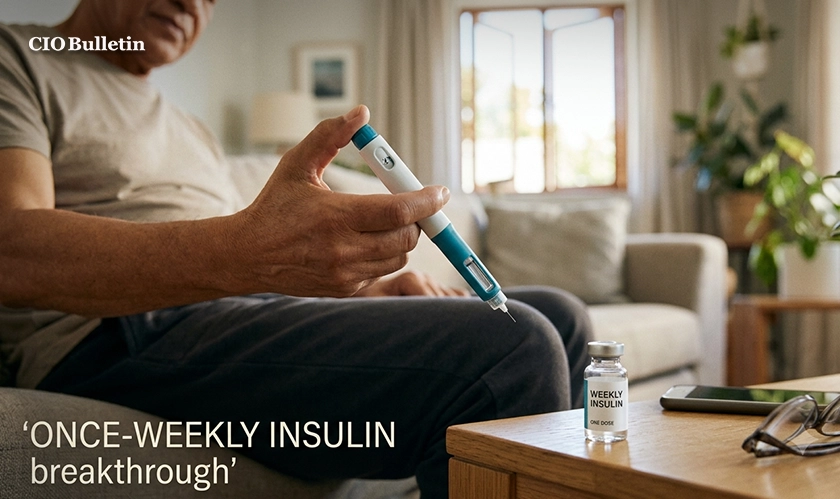
India's launch of the World's first weekly insulin marks a major breakthrough in diabetes care, offering patients an effective treatment option with just one injection per week instead of daily doses.
Awiqli or insulin icodec, the world's first once-weekly insulin for adults with Type 1 and Type 2 diabetes, is launched by Danish pharmaceutical company Novo Nordisk. This represents a major change in the management of diabetes by reducing the number of insulin injections from 365 to just 52 each year. There are around 10.1 crore diabetics and 13.6 crore prediabetic patients in India. Additionally, more than 9 lakh people in the nation have type 1 diabetes, an autoimmune disease for which insulin therapy is the mainstay of treatment.
In order to prevent glucose (sugar) from accumulating in the bloodstream, the hormone insulin helps transfer glucose into cells. To maintain blood sugar levels within a healthy range, patients with type 1 diabetes or advanced type 2 diabetes must take insulin, often once daily but occasionally several times.
"We believe Awiqli will reduce the psychological and physical barriers to insulin initiation." - Vikrant Shrotriya, India Managing Director, Novo Nordisk.
Insulin therapy is also required for about 10% of people with type 2 diabetes, which is usually caused by metabolic issues as a result of the body's improper utilization of insulin. According to the reports tracked by CIO Bulletin, Novo Nordisk now produces four of the top five insulin brands in India, including Ryzodeg and Mixtard. For the nationwide distribution of these treatments, the pharmaceutical company has partnered with Abbott.
Awiqli is administered once a week via a pen device called FlexTouch, as opposed to traditional basal insulins, which must be taken daily. According to the company, patients who are reluctant to begin medication may be encouraged to start insulin earlier, and treatment adherence may be improved by the streamlined regimen. Given that India has one of the highest rates of diabetes in the world, the launch is significant. The frequency of high blood sugar has sharply increased in both urban and rural populations, according to recent National Family Health Survey (NFHS)-6 data. Awiqli outperformed once-daily insulin glargine U100 in terms of HbA1c (a marker of blood glucose) decrease and "time in range" while keeping a similar safety profile, according to clinical data from the ONWARDS-1 program.
Everything you need to know about this news
Insulin is a hormone that helps regulate blood sugar levels by allowing glucose to enter the body's cells for energy. People with diabetes may need insulin when their body does not produce enough or cannot use it effectively.
By lowering the amount of insulin injections, it offers a significant improvement in diabetes management and may enhance patient convenience, adherence to treatment, and quality of life.
As directed by a medical practitioner, the insulin is meant for qualified people with diabetes. Regulatory permits and specific medical requirements determine its use.
There are several types of insulin, including rapid-acting, short-acting, intermediate-acting, long-acting, and ultra-long-acting insulin, each designed to manage blood sugar in different ways.
No. Insulin does not cure diabetes, but it is an essential treatment that helps control blood sugar levels and reduces the risk of diabetes-related complications.


















 consultants ltd.jpg)


Comments