
Home Industry Law ethics and legal services Ghost Gun Charges: Key LegalÂ...
Law Ethics And Legal Services
CIO Bulletin
12 January, 2026
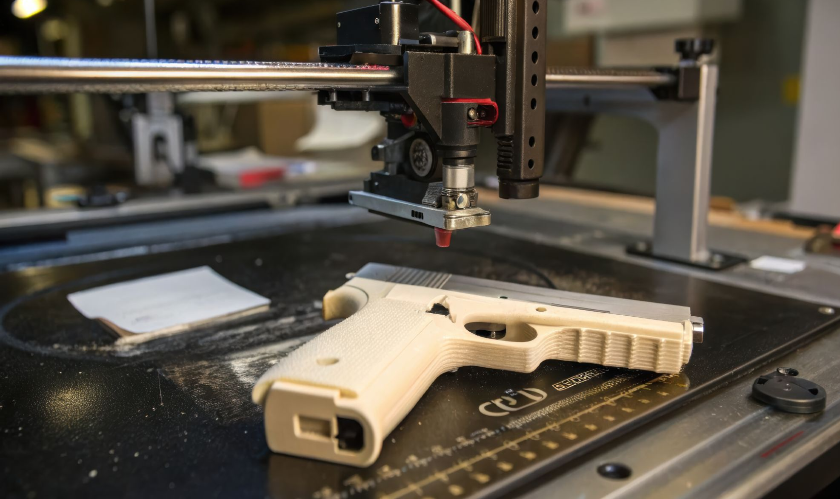
The proliferation of so-called "ghost guns" or untraceable firearms assembled from parts, kits, or created using 3D printers, has prompted aggressive new law enforcement initiatives and sweeping regulatory changes at both federal and state levels. Individuals involved with these firearms, even tangentially, can face severe criminal exposure, often with heightened penalties compared to traditional weapons charges.
Navigating this evolving legal landscape requires a clear understanding of the distinct risks associated with ghost guns, as ignorance of the law is seldom a viable defense in court. These legal risks typically stem from the fundamental characteristic of ghost guns: the absence of a serial number and the circumvention of standard federal firearm regulations. What might begin as a hobbyist project or an attempt to exercise perceived rights can rapidly escalate into a multi-faceted criminal prosecution.
Below are the key legal risks to know about ghost gun charges:
At the federal level, the Bureau of Alcohol, Tobacco, Firearms and Explosives (ATF) has significantly broadened its regulatory reach. Some key risks under federal law include:
Possession of an unserialized firearm: Under updated ATF rules finalized in 2022, the definition of a "firearm frame or receiver" has been expanded. The rule, "Definition of Frame or Receiver and Identification of Firearms," effectively classifies many partial kits and components as firearms themselves, requiring serialization and background checks prior to sale. Simply possessing an unserialized firearm assembled from a kit purchased after this rule’s effective date is a federal offense.
Manufacturing firearms without a license: Individuals who engage in the regular assembly and sale of firearms for profit are required to hold a Federal Firearms License (FFL). Prosecutors may argue that even a limited number of sales, or intent to sell, constitutes "engaging in the business" of manufacturing without a license, a felony punishable by up to five years in prison.
Possession by prohibited persons: It’s a federal felony for any person prohibited from owning firearms, such as convicted felons, individuals subject to restraining orders, or unlawful drug users, to possess any firearm, serialized or not. The ease of access to ghost gun kits can make this a particularly common and serious charge.
Given the complexity and severe consequences of such charges, which can include lengthy prison sentences and lifelong loss of firearm rights, consulting with specialized legal counsel is a critical first step. Individuals facing investigation or charges should immediately seek to hire a ghost gun lawyer to protect their rights and develop a robust defense strategy.
Several factors can turn a simple possession charge into a decades-long prison sentence. Prosecutors frequently seek sentencing enhancements for the following:
Adding a high-capacity magazine to a ghost gun is a severe aggravating factor. This combination is typically prosecuted as a separate felony, invoking mandatory minimum sentences. In jurisdictions with assault weapon laws, this feature can cause the firearm itself to be classified as an illegal assault weapon, dramatically escalating the charges from simple possession to a more serious crime with substantially enhanced prison time.
The presence of an untraceable weapon like a ghost gun during any other criminal act triggers powerful sentence-enhancing statutes under both state and federal law. These enhancements apply whether the firearm was built from purchased gun parts, lower receivers, or via 3D printing technology, bypassing licensed gun dealers. The statutes mandate lengthy prison terms for the firearm violation run consecutively to sentences for the underlying crime.
For law enforcement, establishing probable cause for the initial stop or search is critical, but once proven, this combination can easily add a decade or more to a defendant's total incarceration time.
A defendant's prior record, particularly any previous felony, can be a primary tool for prosecutors seeking maximum impact. It’s used to argue for the upper term of sentencing ranges, deny probation conditions, and oppose diversion programs or alternative sentencing like drug treatment. For individuals with strike offenses, a new ghost gun felony can result in a "second strike" sentence, doubling the standard prison term.

Law enforcement leverages advanced forensic and digital techniques to construct robust ghost gun cases. Forensic experts can perform toolmark analysis on polymer components, potentially linking them to a specific 3D printer or commercial jig used in assembly. Electron microscopy may reveal unique manufacturing signatures from particular kits.
Simultaneously, investigators can meticulously subpoena digital footprints, including browser histories for design files, financial records for kit purchases, and social media communications discussing manufacture or assembly. This digital evidence is crucial for establishing intent and tracing the weapon's origin.
Prosecutors, aiming to dismantle manufacturing chains, aggressively charge all participants. By applying gun laws concerning conspiracy and aiding-and-abetting, they target individuals involved at every stage—from acquiring firearm components or gun assembly kits, to printing and gun assembly, through distribution and final possession. This strategy allows law enforcement to address not just the end possession but the entire network behind the criminal activity. The presence of these unserialized firearms at crime scenes can further intensify these cases, substantially increasing potential jail time for all involved.
Given the severe, multi-layered penalties, intricate web of overlapping laws, and aggressive prosecution strategies, facing ghost gun charges without expert counsel is exceptionally perilous. A knowledgeable attorney is critical to challenge the legality of searches, contest the classification of components, negotiate with regulators and prosecutors, and develop a defense strategy tailored to the nuances of both federal and state firearm laws. The consequences of a conviction, including imprisonment, hefty fines, and the permanent loss of civil liberties, are far too grave to leave for chance. By keeping the information mentioned above in mind, individuals can effectively navigate this high-stakes area of criminal law.

Insurance and capital markets





















 consultants ltd.jpg)


