
Museums hold a rare power. They take the abstract, history, science, culture, wonder, and make it tangible. A well-designed exhibit does more than display objects. It invites people to step closer, to question, to feel something real. When fabrication falls short, that invitation collapses. Visitors sense the difference between something carefully made and something merely assembled. In a time when attention is scarce and authentic experiences matter more than ever, the companies that design and build these spaces carry quiet but lasting responsibility. Their work shapes how communities remember, learn, and imagine.
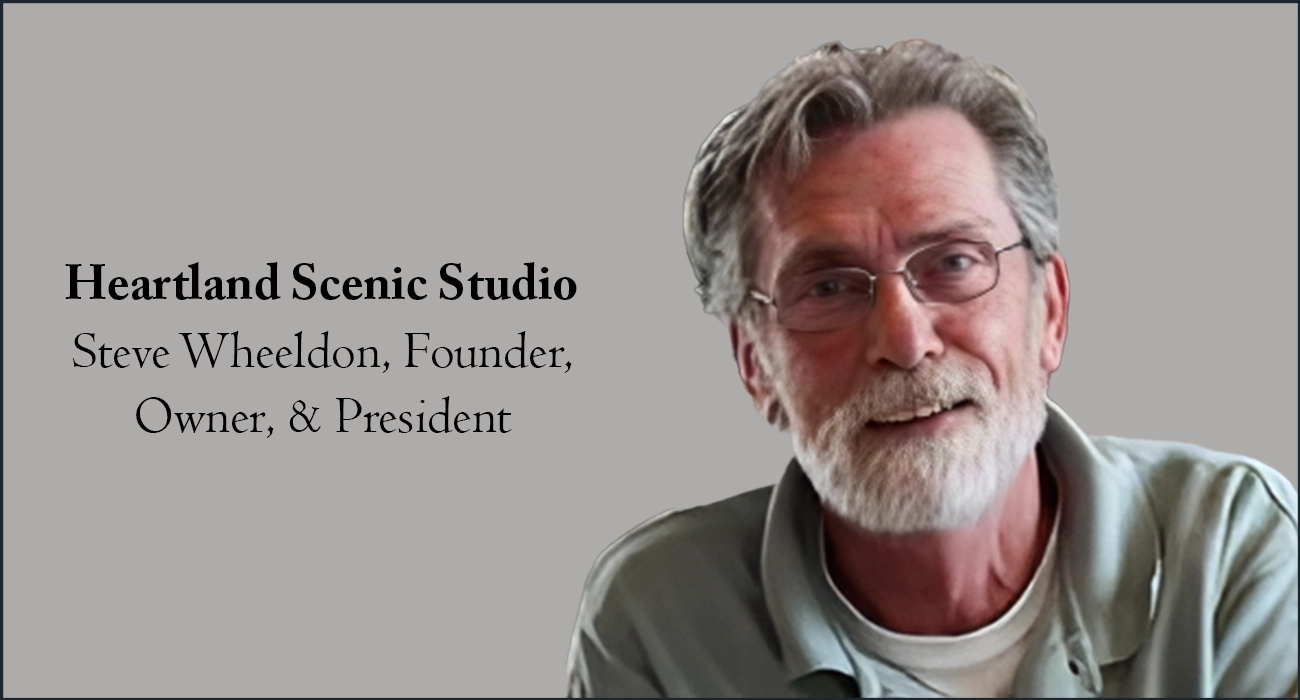
Heartland Scenic Studio has carried that responsibility since 1983. Founded as a theatrical lighting, scenery design, and fabrication company, the firm grew steadily into one of the Midwest’s most trusted names for museum exhibits and related environments. From its 26,000-square-foot headquarters and production facility in Riverfront Industrial Park, northwest of Eppley Airfield and conveniently close to downtown Omaha, the company has built a reputation for high-quality, cost-effective work delivered on time and on budget. What began in the theater has expanded into museums, retail spaces, theaters, convention centers, houses of worship, and multi-use facilities. Through every project, Heartland Scenic Studio has stayed grounded in the same principles: commitment, collaboration, curiosity, creativity, innovation, and integrity.
The people behind the work define the difference. The team brings expertise in lighting, engineering, fabrication, prototyping, finishing, and, above all, creative problem-solving. They describe themselves as professionals who remain interpersonal, skilled yet adaptable, patient and understanding. They aim to be the kind of partners clients want to work with, the ones who start strong and finish stronger, who treat every detail with care, and who understand that their true product is reputation. Talent and skill combine with grit and a positive mindset. Empathy guides the process: staff members are encouraged to see projects through the eyes of the client and the eventual visitor. The question is never simply whether something can be done. It is how it can be done well.
Design and Fabrication That Honor the Vision
Heartland Scenic Studio approaches every project as a collaboration rather than a transaction. Working alongside general contractors, designers, and other trades in both new construction and remodels, the team sees its role clearly: bring definition to the idea, support the larger vision, offer practical suggestions, solve problems, and then fabricate with precision. The goal remains consistent—to exceed expectations by listening carefully and working side by side with clients.
Capabilities span the full range of modern exhibit production. Project management sits at the center, providing budgeting, scheduling, cost estimates, budget control, vendor negotiation, and production oversight. Graphics move from concept through design briefs, creation, feedback, and final artwork into high-quality production across multiple materials. Woodworking covers laminating, finish carpentry, and assembly. Metalworking includes welding, machining, and cutting. Plastics, industrial paint finishes, dioramas, scale models, laminate applications, fiberglass, scenic treatments, custom sculpting and casting in metals, resins, plaster, and foam, hand-painted murals, backdrops, faux finishes, and specialized coatings all fall within the studio’s reach.
Lighting remains a core strength. As one of the region’s largest suppliers of theatrical equipment, Heartland Scenic Studio provides lighting and dimming systems, rigging, paint, fabrics, and hardware, along with consulting and installation services for theaters, schools, houses of worship, museums, television studios, offices, and retail spaces. Integrated lighting, AV and show-control systems, service, training, and rigorous inspections complete the offering. The same careful thinking applied to permanent installations extends to traveling exhibits, including crating, transportation, and full support services.
Project Management and Value That Protect the Outcome
Clients never navigate the process alone. A seasoned project manager serves as the single main point of contact, coordinating weekly or bi-weekly conference calls and keeping designer, owner, and general contractor aligned. Quality control runs throughout: routine shop inspections, oversight of subcontracted work, and continuous attention during installation ensure that every element meets contract specifications. Schedules are tracked closely. Meetings are organized with clear agendas and follow-up. Resource materials are compiled into complete production packages. Submittals are reviewed for accuracy and compliance; revisions are managed carefully; final inspections confirm readiness. Delivery, installation, and a thorough closeout package of technical documentation, training materials, and as-built drawings close the loop.
Value engineering forms a natural part of the process. The studio follows a disciplined six-step approach: gather information and manage expectations around time and labor; think creatively and generate ideas freely; evaluate options rigorously; develop and analyze through sketches, prototypes, material samples, and walkthroughs; present discoveries that enhance value without compromising purpose; and implement changes with consistent follow-through. The result is maximum function and features maintained within realistic cost and schedule boundaries.
From Design-Build Partnerships to Living Interactives
Design-build projects reveal the studio’s collaborative strength most clearly. By bringing designers, fabricators, and other partners together early, issues of cost, schedule, and constructability surface and resolve before they become problems. Single-point responsibility reduces paperwork and allows clients to focus on the experience rather than contract management. Innovation finds room because value engineering begins at the outset rather than as a late correction. Heartland Scenic Studio actively seeks partnerships with design firms and construction companies, whether for a single project or longer-term relationships.
Graphic design is treated as targeted problem-solving. Ideas move from software into precise imaging and production, with the team and its partners guiding clients through every stage. Installation itself becomes a unifying moment—the point at which architects, contractors, museum staff, and fabricators see the design become real. Exhibits are engineered for straightforward installation with minimal field modifications. Front-end planning and field verification visits reduce surprises. Because the same builders often serve as installers, continuity remains high and disruption stays low.
Interactives receive special attention. Physical activity, clear outcomes, technology, and information are balanced carefully. Development begins with essential questions: What are the objectives? Who is the audience? What alternatives exist? How can efficiency be built into the process? The answers shape experiences that invite visitors to touch, move, and discover rather than simply observe.
Heartland Scenic Studio does not claim magic. It claims steady craft, honest partnership, and a deep respect for the places where people come to learn and wonder. In the quiet work of turning concepts into spaces that matter, that respect makes all the difference.
















































 consultants ltd.jpg)


