
Home Industry Management consulting When Systems Fail, Look at the...
CIO Bulletin,
02 July, 2025
Author:
CIO Bulletin Team
- Aria Foster
“We doubled the team, launched new products, and hired a COO, yet revenue stalled for three consecutive quarters.”
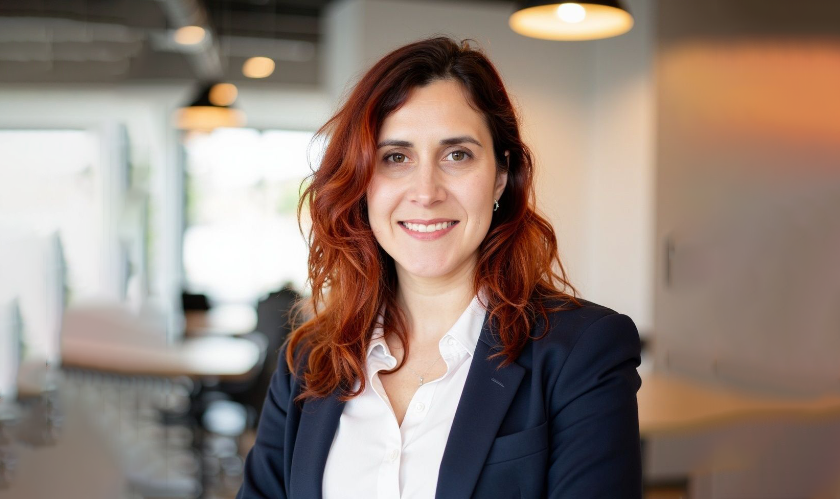
The founder of a 30-person marketing agency sat across from Anna Ortynska and described a series of decisions that, on paper, should have produced growth. The company had implemented new project management software, reworked reporting lines, and introduced monthly all-hands meetings. The systems were in place, but the results did not follow.
This pattern appears with striking consistency across growth-stage companies, professional services firms, and knowledge-based organizations. Leadership teams introduce Agile sprints, cascade OKRs, and formalize standups, assuming structure alone will produce results. When performance still falls short, consultants are often brought in to “fix” the problem by adding new layers of process to systems that were already breaking down, reinforcing complexity rather than restoring effectiveness.
The agency had followed this playbook closely. And, like many organizations facing coordination breakdowns, it had diagnosed the problem backwards.
Organizations experiencing growth-stage chaos tend to fall into a predictable pattern. They adopt a framework, train their teams, observe limited adoption, attribute failure to execution, and then move on to the next methodology. This cycle repeats not because teams are incapable, but because the underlying problem remains unaddressed.
Traditional transformation efforts focus almost entirely on what to implement: which framework to choose, which templates to complete, which methodology to roll out. Far less attention is given to how work actually happens day to day, or to the mindset and practical capability required to apply these tools under real operational pressure.
Ms. Ortynska, who has spent seventeen years leading transformations across corporate, technology, and research environments, recognizes this disconnect immediately. “No methodology works if you ignore the people expected to build and run the system,” she explains. “Organizations are built by people, and a well-supported team will consistently outperform even the most refined framework.”
In practice, this disconnect shows up as three tightly linked gaps. The first is purpose: teams track targets but struggle to explain why those targets matter or how daily decisions contribute to them. The second is communication: information exists, but it does not reach the right people at the right time or in a form that supports action. The third is adoption: processes are documented, yet teams lack the confidence and skill to use them when conditions become complex or unpredictable.
When these gaps are addressed in isolation, progress quickly unravels. New systems are introduced without clarifying purpose, leading teams to measure activity rather than impact. Strategic goals are defined without fixing communication, and departments optimize their own work while the organization as a whole falls short. Methodologies are taught without hands-on application, and whatever knowledge was gained disappears the moment real pressure appears.
Lasting transformation does not come from better frameworks alone. It comes from aligning purpose, communication, and capability so people can think clearly, act decisively, and sustain results long after the methodology fades into the background.
Ms. Ortynska’s approach addresses all three challenges simultaneously. She has applied this model across diverse organizations and sectors, consistently achieving results in environments where traditional, methodology-driven transformations had failed.
Its effectiveness lies in a fundamentally different starting point. Rather than imposing tools or frameworks first, systems are designed around how people actually coordinate their work, with tools selected only after those patterns are clear and purposeful.
Shared purpose, in this context, extends beyond posting OKRs on a wall. Each individual understands how their specific contribution connects to broader business outcomes. This is not motivational theater but a driver of operational efficiency. When a designer sees how decisions influence client retention, they act with greater ownership than when simply executing assigned tasks.
Structured communication is treated as a deliberate design choice. Meeting cadence reflects real interdependencies in the work, not executive convenience. Information flows are made explicit who needs what, from whom, and when reducing friction across teams.
Facilitated adoption emphasizes coaching during change rather than training in advance. Teams develop capability as new ways of working are implemented, grounded in daily reality instead of isolated workshops.
The underlying insight is simple yet decisive. Process without people results in systems that sit unused. People without process depend on unsustainable heroics. Enduring effectiveness emerges only when systems are intentionally built around how people truly work together.
Back at the marketing agency, Ms. Ortynska facilitated workshops with teams at every level of the organization. What emerged was largely invisible from the leadership vantage point.
Goal disconnects were pervasive. When team members were asked what achieving a target meant for their role, many could not answer, while others offered conflicting interpretations. Although they knew the company’s objectives, they lacked clarity on how their work contributed in practice.
Departments functioned as largely independent units. Account management had limited visibility into what creative teams were developing, while creative teams lacked clarity on client timelines and priorities. In the absence of structured data, decisions were shaped more by assumptions than evidence.
The agency also relied heavily on hero culture. A small number of top performers repeatedly stepped in to save outcomes through individual effort. When they were unavailable, projects stalled or failed altogether, exposing the risks of parallel individual work rather than coordinated team execution.
The turning point was not the introduction of new processes, but the diagnostic work itself. By surfacing misalignment across goals, communication flows, and team capability, it revealed conditions leadership could not see from inside the system.
The transformation unfolded over six months through three aligned workstreams. Organizational redesign reshaped the structure around end-to-end client value creation, replacing functional silos with service-model teams accountable from strategy through execution. Dependencies moved inside teams, reducing friction and delays.
In parallel, a structured problem-solving framework replaced blame culture with disciplined root-cause analysis. Daily management rhythms ensured problems surfaced early and were treated as opportunities for improvement.
The third stream centered on sustained leadership coaching. Weekly sessions focused on real decisions under real pressure, building capability strong enough to sustain change after external support ended.
By the fourth quarter, the agency reached its revenue target for the first time in over a year. Client ROI doubled from 1.5x to 3x. Hero culture gave way to distributed ownership, and problems were resolved faster because they became visible earlier.
Every growing organization eventually faces coordination breakdowns. What distinguishes effective organizations is whether leadership recognizes these breakdowns for what they are: people challenges that surface as process failures.
Before launching another transformation effort, leaders should pause and ask three questions. Can every team member explain how their work advances company goals? Do teams understand their dependencies? When problems occur, does the response build collective capability or reinforce reliance on a few high performers?
If the answer to any of these is no, the limitation is not the methodology. It is the organization’s people infrastructure.
When people sit at the center of transformation design, systems begin to function as intended. When they do not, organizations remain trapped in an endless cycle of new frameworks, mistaking motion for progress and wondering why change never endures.
Anna Ortynska is an organizational transformation expert whose work focuses on people-centered operational design. She holds Lean Six Sigma Black Belt and ICF Associate Certified Coach credentials and has applied her integration approach across corporate, technology, and research environments. She teaches operational management and crisis leadership, focusing on building systems that deliver sustained results by strengthening team capability.















 consultants ltd.jpg)


