
Home Industry Market analysis Breaking Barriers: The U.S. an...
Market Analysis
CIO Bulletin, 05 March, 2026 Author: CIO Bulletin Team
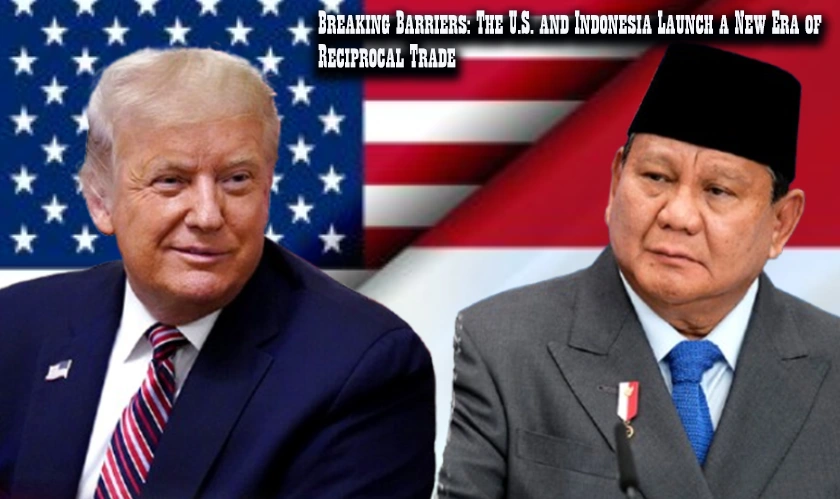
The United States and Indonesia have recently signed an Agreement on Reciprocal Trade (ART), an instrument designed to further their strong bilateral ties. This pact intends to remove long-standing obstacles in bilateral relations by prioritizing economic security. In terms of the larger geopolitical context, the pact seeks to bring the Western hemisphere’s largest economy and Southern Asia’s burgeoning powerhouse closer by building a more resilient partnership.
The agreement provides for “reciprocity and mutual benefit” in relations by addressing both tariff and non-tariff barriers. This enables it to go beyond being a mere collection of trade rules to actively setting the framework for strengthening national and regional economic security. How the two nations interact, trade and grow together by complex international market will be watched by the global community.
Why is This Reciprocal Trade Agreement Happening Now?
It is no coincidence that the trade agreement has taken place during this particular period. The two countries acknowledged that their current trade and investment connections established their initial basis for cooperation. However, these trade connections required upgrading to match current economic conditions. The establishment of a reciprocal trade agreement between two countries has become necessary because of multiple essential conditions, which include the following elements:
Resilient Supply Chains: Both parties showed their joint dedication to creating strong supply networks, which will maintain operational effectiveness during times of worldwide uncertainty.
Addressing Trade Deficits: The United States uses this agreement to solve its ongoing goods trade deficits, which have been occurring every year, through the establishment of more equitable trade practices.
Economic Security: Both countries want to achieve a common understanding of national and regional economic security issues because they believe economic stability directly impacts national security.
Market Parity: The United States and Indonesia reached an agreement, which will enable them to improve mutual market access conditions through the establishment of equal market access rights that both countries will provide to each other, thus ending any previous system of unbalanced trade advantages.
The ART identifies its strategic "whys" because they enable it to create commercial activities, which in turn extends into high-level geopolitical and economic strategies.
Modernizing the Market: Tariffs and Quotas
The U.S.-Indonesia ART introduces new border control regulations, which will affect how products are transported between countries, because all trade agreements require goods to move between nations. The agreement defines the duties that will apply to "originating goods" from both countries according to established duty schedules.
Indonesia’s Commitments
Indonesia has committed to remove or decrease customs duties for multiple U.S. products. All goods in the "EIF" (Entry Into Force) category will have their duties removed completely as soon as the agreement takes effect. Indonesia uses Tariff-Rate Quotas (TRQs) to control the importation of specific items, which are sensitive in nature. The key examples include the following products:
Pork Products: A duty-free quota of 3,000 metric tons per year.
Wine and Distilled Spirits: Specific quotas with an in-quota duty rate of only 5%.
Agricultural Purchases: Indonesia has committed to facilitating the purchase of massive quantities of U.S. goods annually, including 2.5 million metric tons of soybeans and 1.3 million metric tons of wheat.
The U.S. Reciprocal Approach
United States is applying a "revised reciprocal tariff rate" to all goods imported from Indonesia. The U.S. will impose additional ad valorem rates on certain goods up to 19% while establishing a zero reciprocal tariff rate for Indonesian textile and apparel products which meet specific volume requirements. The mechanism establishes a strategic connection to U.S. cotton and man-made fiber exports, thereby creating a circular trade benefit.
Dismantling Non-Tariff Barriers
Non-tariff barriers (NTBs) have the power to create greater trade obstacles than tariffs, which typically receive more publicity. The ART takes aggressive steps to remove these "hidden" hurdles.
Import Licensing: Indonesia has pledged not to use import licensing as a tool to restrict U.S. goods. The rules for non-automatic licensing should include transparent procedures, which treat all users equally, while avoiding unnecessary operational challenges.
Standards and Technical Regulations: The agreement promotes the acceptance of U.S. standards and technical regulations. U.S. goods that meet either U.S. standards or international standards will receive entry approval from Indonesia without the need for extra compliance assessments.
Digital Trade: In a major win for the tech sector, both nations have agreed not to impose customs duties on electronic transmissions. Furthermore, Indonesia will prohibit the application of digital services taxes, which treat U.S. companies differently compared to other businesses.
Strengthening Intellectual Property and Services
A modern trade agreement must protect the "brainpower" behind the products. Indonesia will provide complete protection for all intellectual property rights, which includes protection for patentable ideas and industrial designs. The protection framework consists of the following elements:
International Treaties: Ratifying and fully implementing key treaties like the Berne Convention and the Madrid Protocol.
Enforcement: The system requires both civil and criminal enforcement functions, which will prevent people from infringing IP rights on the web.
Geographical indications: Ensuring that the market access for U.S. products is not restricted due to protecting geographical terms (like specific cheese or meat names).
The services sector in Indonesia is currently developing its existing barriers, which includes the commitment to stop any future restrictions that would give domestic or third-country suppliers the upper hand against U.S. suppliers.
Economic and National Security: A Unified Front
The security provisions of this agreement both command security matters, which exceed normal levels of national agreement. The ART establishes a framework, which identifies "complementary actions" that protect against third-country trade threats. Indonesia will adopt equivalent restrictive measures if the U.S. enacts national security restrictions on a third country. Moreover, it will establish the following measures:
Review Inbound Investment: Establish mechanisms for authorities to screen inbound foreign investments based on their national security risks.
Cooperate on Export Controls: The United States export controls will apply to sensitive technologies, which will prevent those technologies from reaching restricted entities on both the U.S. SDN and Entity Lists.
Combat Duty Evasion: The parties will work together to find solutions for stopping duty evasion through the creation of duty evasion cooperation agreements, which will stop goods from being moved for the purpose of avoiding U.S. trade regulations.
Labor and Environmental Stewardship
The ART creates a trade relationship which lays down the social and environmental standards for both parties to follow. By 2025, Indonesia is expected to fulfill its obligation, which includes banning all products made from forced labor. The pact also requires internationally recognized labor rights to be protected, including freedom of association and collective bargaining.
The parties have agreed to enforce their environmental laws effectively while they tackle illegal logging activities and wildlife trade operations. Established trade agreements now enforce stricter environmental standards and better working conditions for all workers.
Looking Ahead: Challenges and Opportunities
The U.S.-Indonesia Reciprocal Trade Agreement is a monumental achievement. At the same time, it has its fair share of potential drawbacks.
For instance, certain “safeguard” provisions can induce volatility in trade. Critics point to how either party can cite the need to protect national security and remedy “import surges” by imposing additional tariffs. Furthermore, the agreement’s termination clause allows either county to exit by providing just 30 days’ notice. Moreover, the U.S. has the unilateral right to terminate the pact if it considers its essential interests being threatened by Indonesia entering into new trade deals with other countries. These provisions, while protective in nature, can deter long-term investors who desire absolute stability in trade.
However, the positive momentum generated by the deal far outweighs these challenges. The U.S. and Indonesia are bridging the gaps in traditional trade barriers by reducing tariffs on critical minerals, energy, and agriculture. Hence, this agreement is wider in scope than just a list of commodities. It represents a reposing of faith in working towards a secure, prosperous future in the Indo-Pacific.
FAQs
The U.S.-Indonesia ART is a landmark trade pact which the United States and Indonesia use to build stronger relations with each other. The trade agreement implements reciprocal trade principles to achieve greater economic and national security.
U.S. exports to Indonesia will receive duty elimination for all goods which enter Indonesia after the Entry Into Force date while establishing low-rate quotas for pork wine and distilled spirits. The U.S. will impose no reciprocal tariffs on a specific volume of textile and apparel products which link directly to U.S. cotton and fiber export products.
The ART establishes a modern digital economy through its prohibition of Customs Duties. Both nations agree not to impose duties on electronic transmissions which include digital software or media products. Indonesia agreed not to impose Digital Services Taxes which will discriminate against U.S. tech companies. The deal prohibits both countries from forcing companies to share their source code or proprietary algorithms as a requirement for conducting business operations.
Indonesia must enforce a complete ban on the production of goods which use forced labor within two years after the agreement. The two parties must protect all internationally recognized rights which include freedom of association and collective bargaining. Both nations commit to effectively enforcing their environmental laws while they combat illegal logging operations and wildlife trade activities.
Yes. The agreement includes a termination clause which protects both countries while it gives them the freedom to make treaty changes. Any country involved in the pact has the right to terminate it by delivering written notice 30 days before the planned end date. The U.S. reserves the right to end the agreement if Indonesia establishes new trade pacts with other nations which will harm vital U.S. interests.



















 consultants ltd.jpg)


