
Home Technology Mobile Will China Smartphone Shipment...
CIO Bulletin
,
14 July, 2026
Author:
Ravathi Sunil
A prolonged memory chip crisis drags down overall mobile sales across Chinese tech markets
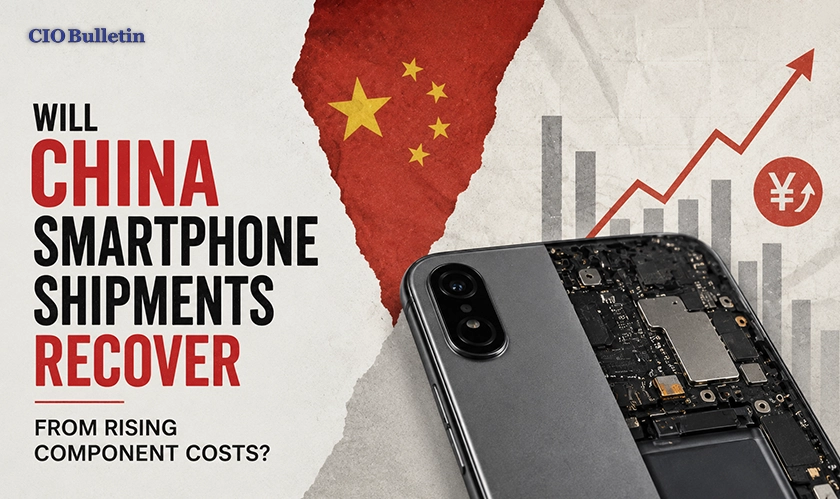
The global electronics landscape is feeling a massive squeeze as budget-conscious buyers delay updating their personal devices. According to new analytical data from research firm IDC, China smartphone shipments dropped by 4.3% year-over-year during the second quarter of 2026, dropping down to 66 million total units.
The downturn marks the fifth straight quarter of overall market decline, signaling a deep cooling trend for hardware developers trying to maintain their margins. Reports evaluated by CIO Bulletin reveal that rising component costs are forcing manufacturers to adjust their retail strategies at the expense of volume.
"Huawei and Apple held their prices steady while competitors were raising theirs, and that gave hesitant buyers a reason to go ahead and purchase in a quarter when most of the market was giving them a reason to wait". - Arthur Guo, a Senior Analyst, IDC China
At the absolute heart of this sharp slump is a steep, unexpected climb in raw manufacturing expenses.
Component Pressures: Surging prices for crucial hardware components, particularly vital memory chips, forced brands to adjust their pricing structures.
Shifting Portfolios: In response, most Android developers either hiked retail prices or severely scaled back on their low-cost, budget-friendly models.
Fading Support: Additionally, the fading impact of previous local government purchase subsidies removed a vital buffer that previously supported buying activity.
Against all odds of the market chaos, two big premium consumer electronics brands successfully defied the downturn trend. Huawei Technologies Inc. and Apple emerged as the only two brands that registered growth in shipments, with growth rates of 19.4% and 24.4%, respectively.
This pricing strategy resulted in a major rearrangement of the players in terms of competitiveness. Specifically, Huawei won the leading place in the market, accounting for 22.6% of all market shares, while Apple came second, taking 18.1% of the market. However, the less prepared competitors suffered a significant loss; Xiaomi had their shipments decrease by 21.7% in the second quarter, Oppo decreased shipments by 9.7%, and Vivo lost 11.4% of their shipments. The shortage of low-cost components stocks previously accumulated is finally over.
Everything you need to know about this news
The major factor is cost. Rising prices for essential hardware parts like memory chips forced many brands to hike retail prices, prompting consumers to delay upgrades.
They successfully kept their product prices stable while rivals raised theirs. This stability, coupled with high brand equity, motivated hesitant buyers to purchase.
Xiaomi faced the heaviest loss with a 21.7% shipment drop, while Vivo fell by 11.4% and Oppo declined by 9.7% during the same three-month period.
In previous quarters, state subsidies kept retail demand artificially strong, but the fading effect of those programs removed a crucial economic cushion for buyers.
Market researchers estimate that a stable, industry-wide recovery will not arrive until roughly 2028 or 2029, catalyzed by a massive AI-driven upgrade cycle.
















































 consultants ltd.jpg)


Comments